

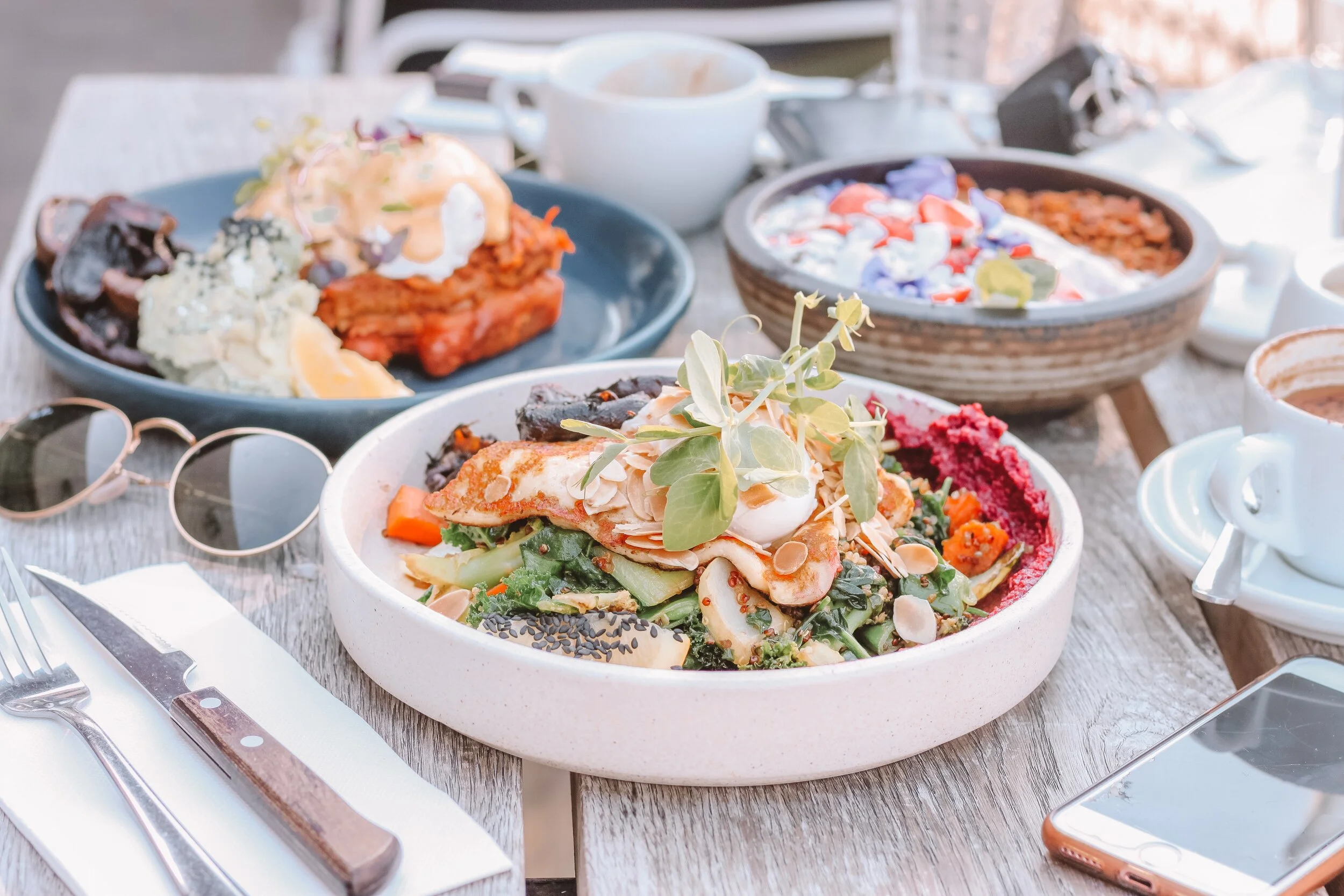
Photo by Annie Spratt on Unsplash
In short: Intuitive eating is a way of eating that sets diets and food rules aside and helps you trust your body again. You learn to recognise hunger and fullness, make peace with all foods, enjoy what you eat and care for your health out of kindness rather than fear. It isn’t “eating whatever you like all day”; it’s a practice of listening, and it takes a little time after years of rules.
It’s Sunday evening and you’re making plans for the week. No bread from Monday. No sugar. Only fruit after six, or maybe nothing after six. You feel motivated, almost relieved: this time you’ll be good. By Wednesday afternoon you’re tired, hungry and fed up, and by Thursday evening you’ve eaten everything you promised yourself you wouldn’t, standing in the kitchen. And on Sunday the plan begins again.
If you know this cycle, you know how exhausting it is. You spend so much energy thinking about food that there’s hardly any left to enjoy it. Intuitive eating offers a way out of that cycle. Not with a new set of rules, but by helping you find the wisdom you were born with, the one that knew when you were hungry and when you’d had enough long before anyone handed you a diet sheet.
What is intuitive eating?
Intuitive eating encourages you not to fear food and to listen to your body. It rejects the diet mentality and respects what your body needs, instead of sorting foods into “good” and “bad” or keeping a list of forbidden ones, as diets usually do. Eating becomes something positive again, and you regain your freedom around food.
In practice, it means eating when you’re hungry and stopping when you’ve had enough. It means making your own food choices with confidence, rather than letting a diet, or your mood of the moment, decide for you. And it means appreciating your body for everything it does for you, and for the incredible way it works every single day.
Where does intuitive eating come from?
The term was made popular by two American dietitians, who noticed that the people they worked with kept dieting, kept regaining and kept feeling worse about themselves. They put together a set of principles to help people step off that roundabout. Since then, intuitive eating has spread all over the world, and many health professionals use it.
But the idea itself is much older. Watch a small child eat: they ask for food when they’re hungry, they lose interest when they’re full, and they can leave half a biscuit on the plate without a second thought. Intuitive eating is about finding your way back to that natural relationship, with an adult’s knowledge of nutrition alongside it.
What are the principles of intuitive eating?
I like to put them simply. Intuitive eating invites you to:
Let go of the diet mentality, and the hope that the next plan will be the one that works.
Recognise and honour your hunger, by feeding yourself regularly and enough.
Make peace with food, giving yourself permission to eat all foods, so that none of them has power over you.
Quieten the food police, that inner voice that calls you good or bad depending on what’s on your plate.
Find satisfaction, because food you enjoy, eaten in a pleasant setting, fills you up in a way that “diet food” never does.
Respect your fullness, noticing when you’ve had enough.
Honour your feelings without using food to fix them, by finding other ways to comfort, calm and care for yourself.
Respect your body, the one you have today.
Move because it feels good, rather than to burn off what you ate.
Honour your health with gentle nutrition, choosing foods that taste good and make you feel well.
Does intuitive eating mean eating whatever I want?
This is the question everyone asks, and it’s a very fair one. Yes, all foods are allowed. But that permission is only half the picture. The other half is listening: to your hunger, to your fullness, to how foods make you feel an hour later.
When you know you can have chocolate whenever you want, something surprising happens: it loses its magic. You eat a couple of squares, enjoy them, and the bar stays in the cupboard. And when you really listen to your body, you’ll notice that it often asks for a bowl of soup, a crunchy salad or a plate of lentils with a poached egg. Bodies like to feel good. Diets taught us not to trust that, and intuitive eating gives it back.
Why is it so hard to trust my body after years of diets?
Because diets ask you to ignore it. Eat at this time, this much, never that. Hungry? Drink a glass of water. Still hungry? Be strong. After years of overriding your signals, it’s no wonder they’ve gone quiet, or feel confusing.
Restriction also makes the body anxious. When food is scarce, your body turns up the volume on hunger and makes you think about food all day. Then, when the diet ends, it makes sure you eat plenty. Your body is simply protecting you, the way it was designed to. I explained what this does to body and mind in The harmful effects of crash diets on your body and mind, and why I stopped believing in diets altogether in Let’s talk about diets.
The signals are still there. They just need some quiet, some regular meals and some patience to come back. I share the practical steps for finding them again in Beyond dieting: pay attention to your body’s hunger cues.
Is intuitive eating healthy? Does nutrition still matter?
Nutrition matters very much, and it’s part of intuitive eating. It simply comes in at the right moment, once the fear and the rules have loosened their grip. If you start with nutrition while you’re still in diet mode, “eat more vegetables” quickly turns into one more rule to obey, and one more way to fail.
Gentle nutrition means asking: what would make this meal more nourishing, and more satisfying? Some protein so it lasts. A handful of vegetables for colour and crunch. Some healthy fats, olive oil, walnuts, a piece of cheese, for flavour and fullness. Carbs you enjoy, like good bread, potatoes or buckwheat. It’s about adding, rather than taking away. And there’s room for pleasure too: a slice of tarte aux pommes on a Sunday is part of a healthy life.
Can intuitive eating work in midlife and menopause?
Absolutely, and I think it matters even more at this stage of life. Your body is changing, sometimes quickly, and the temptation to go back on a strict diet is strong. Yet eating too little in midlife costs you muscle and energy, which is exactly what you want to keep. I explain why in Why you need more food, not less.
Intuitive eating helps you notice what your body needs now, which may be different from what it needed at thirty. Perhaps more protein at breakfast. Perhaps less wine because it ruins your sleep. Perhaps a proper lunch so you’re not ravenous at five. These are choices made from listening, not from fear. I wrote more about this phase in How to eat when menopause hits.
What helps?
When I work with someone who wants to eat more intuitively, these are the steps I usually take with them, gently and in this order.
1. Notice the diet voice
For a few days, just listen to the thoughts that come up around food. “I shouldn’t.” “I’ve been bad.” “I’ll make up for it tomorrow.” You don’t have to argue with them. Just notice them, and perhaps write them down. Most people are astonished at how many there are. Seeing them clearly is the first step to not obeying them.
2. Eat regularly, and enough
Your hunger can’t guide you if it’s always either silent or screaming. So start with three real meals a day, and a snack if you need one. A breakfast with some protein, like eggs or yoghurt with an apple and walnuts. A proper lunch. A calm dinner. Within a couple of weeks, many people find their hunger becomes gentler and easier to read.
3. Make peace with one food
Choose one food you’ve always felt guilty about. Buy it, put it on a plate, sit down and enjoy it, slowly, without anything else going on. Do it again a few days later. You’ll find that the more ordinary it becomes, the less it calls you. This takes courage, and you can go as slowly as you need.
4. Ask what would satisfy you
Before a meal, ask yourself: what do I really feel like? Warm or cold? Soft or crunchy? Savoury or sweet? Then eat with attention, so you notice the moment when you’re comfortably satisfied. I share many ways to practise this in my FAQs on mindful eating.
5. Care for your body as it is today
Wear clothes that fit you now. Move in ways you enjoy: a walk with a friend, a gentle yoga class, dancing in the kitchen. Thank your body for one thing it did for you today. Respect comes before change, never after it. If this part feels hard, Your body, your story is a good place to start.
What doesn’t help?
Turning intuitive eating into a new diet. “Only eat when you’re hungry” can easily become one more strict rule. It’s fine to eat because a meal is ready, or because it’s your friend’s birthday.
Expecting it to happen overnight. After years of rules, trust comes back slowly. Be patient.
Judging every meal. Some days you’ll eat past fullness, some days you’ll forget lunch. That’s normal eating. Notice, learn, carry on.
Doing it alone when food feels really frightening. Some people need more support, and that’s perfectly fine.
Try this for one week
At each meal this week, ask yourself two little questions. Before you start: “How hungry am I?” And halfway through: “How does this feel now?”
Don’t change anything else. Don’t aim for the right answer. Just ask, and listen.
Each evening, write one sentence in a notebook about what you noticed. At the end of the week, read it back. You may find you’re hungrier in the morning than you thought, or that you stop at a different point when you eat slowly. Whatever you find is your body speaking to you, and it’s the beginning of trusting it again.
Frequently asked questions
What is intuitive eating in simple words?
It’s eating by listening to your body instead of following diet rules. You eat when you’re hungry, stop when you’ve had enough, enjoy all foods without guilt and choose foods that make you feel well.
Can I lose weight with intuitive eating?
Intuitive eating isn’t a weight-loss plan, and it doesn’t promise any particular weight. Its aim is a peaceful relationship with food and a body that feels well cared for; some people’s weight changes along the way, and some people’s doesn’t.
How long does it take to learn intuitive eating?
It’s different for everyone. Some people notice a change in a few weeks; for others, especially after many years of dieting, it takes months. It’s a practice, and every meal is a chance to learn something.
When should I talk to my doctor?
Please talk to your doctor first if you have diabetes or another condition where food and medicines need to be carefully balanced, if you take medicine that changes your appetite, or if you have ever had an eating disorder. In those cases, intuitive eating is best learned with professional support. And if food feels out of control or fills your thoughts, you deserve help with that too.
Would you like some help?
Learning to trust your body again is much easier with someone beside you, especially on the days when the old diet voice gets loud. It’s one of the threads running through my group programmes in nutrition and health, such as Six Tuesdays in Montignac, where we eat, talk and learn to listen together. If you’d like to hear when the next group opens, send me a note at hello@catherinepolet.coach.
If you’d rather go at your own pace, one to one, I also coach online. Book a free 20-minute call, and we’ll look at where you are with food today and what a first gentle step could be.
About Catherine
I’m Catherine Polet, a holistic nutrition health coach, yoga and autogenic training teacher for more than 30 years, author and speaker. I help people find a way of eating and living that suits their own body, online in English, French, Spanish and German, and in person in Southwest France.

