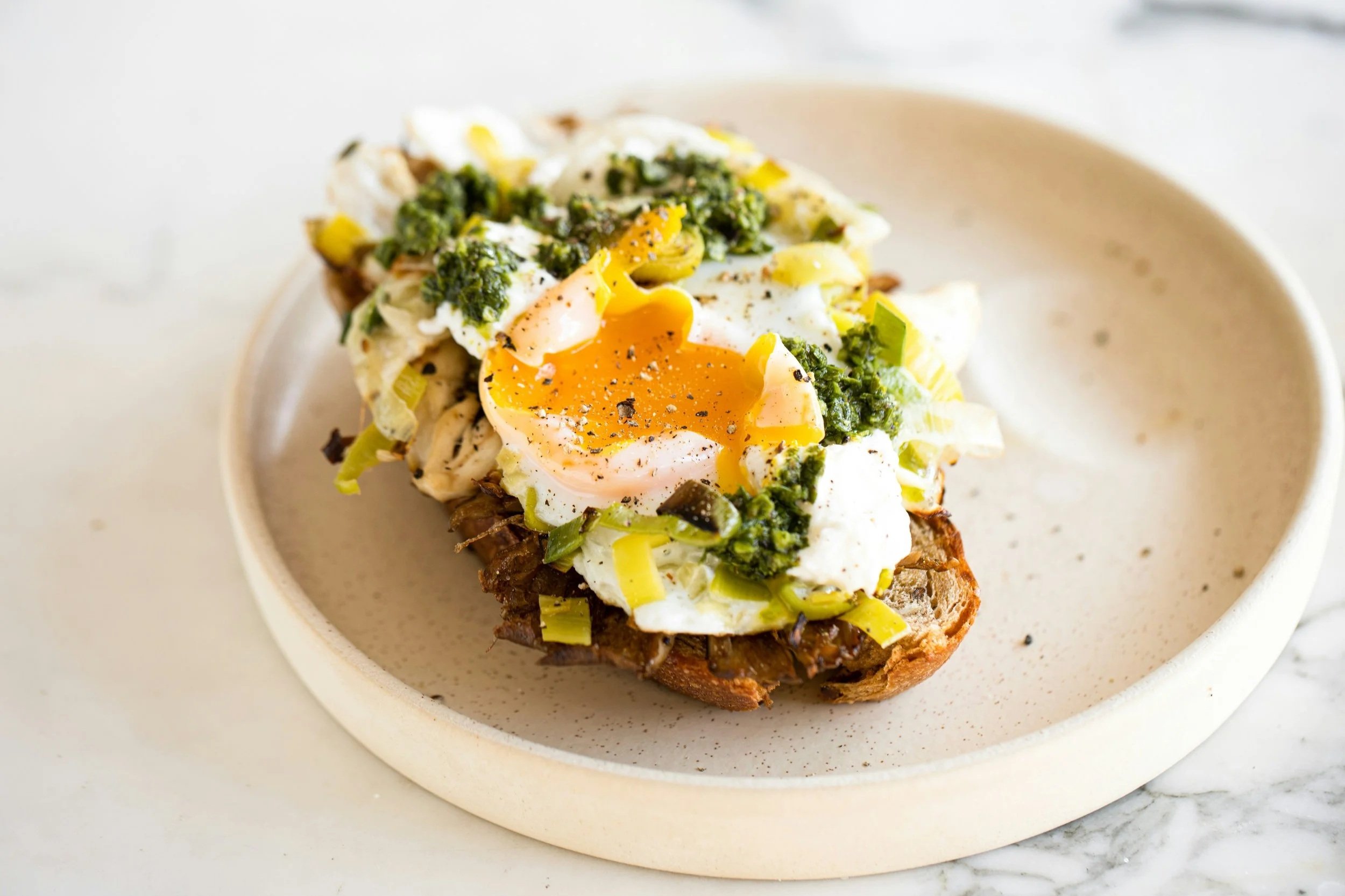
Photo by Bakd&Raw by Karolin Baitinger on Unsplash
In short: After 50, your muscles need a clearer message from your plate, so it helps to have a proper portion of protein at every meal, not just at dinner. You don’t need to count anything. Think of a palm-sized piece of fish or chicken, two eggs, a generous bowl of lentils or a good pot of yoghurt at each meal. For most of us, breakfast is the place to start.
It’s half past seven. The kettle has boiled, there’s a slice of bread in the toaster, and the butter and the apricot jam are already on the table. It’s the breakfast you’ve had for years, and it’s a lovely one. By eleven you’re hungry again and a bit flat, and you put it down to a short night.
Now look at that plate with one question in mind: where’s the protein? There’s hardly any. And at this stage of life, that matters more than it did when you were thirty. Let me explain why, and then show you what enough protein looks like on a real plate, with real food from the market. No scales, no apps and no powders.
Why do we need more protein after 50?
Protein is what your muscles are made of, and much more besides: your skin, your hair, your nails, the enzymes that digest your food, the defences that fight off a winter cold. When you eat an egg or a piece of fish, your body takes the protein apart into tiny building blocks, rather like taking a wall down into bricks. Then it uses those bricks to repair and rebuild you, every single day.
Two things about this are worth knowing.
Your body has no cupboard for protein. It can store fat, and it can store a little sugar. But protein comes in, gets used over the next few hours, and then the builders sit and wait for the next delivery. That’s why one big protein meal in the evening can’t make up for a morning with almost none.
With age, muscle becomes a little hard of hearing. When we’re young, a small amount of protein in a meal is enough for the muscle to hear “time to build”. Later in life, that same small amount is a whisper. The muscle needs a clearer, louder message, which means a more generous portion of protein in one meal to get the building going.
I find that image helps people enormously. You haven’t done anything wrong. Your body has simply changed what it needs, and your plate can change with it.
Why does muscle matter so much as we get older?
Because we lose it quietly, a little at a time, without noticing. Muscle is what gets you up the stairs with the shopping, down on your knees in the vegetable garden and back up again, out of a low armchair without using your hands. It keeps your balance steady on a slippery autumn path. It helps your body handle the sugar from your meals, too: your muscles are like a sponge for sugar, and the bigger the sponge, the steadier your energy.
For women, the years around menopause add another layer. The hormone changes of this time make it harder for muscle to repair and rebuild itself, so it’s a wonderful time to start paying attention to protein and to movement. I wrote more about eating through this stage of life in How to eat when menopause hits.
How much protein do I need a day?
I know you were hoping for a number. I’m going to give you something more useful: a way of seeing it on your plate that you can carry around in your head, without weighing or counting anything.
Here’s what I suggest to the people I work with: a proper portion of protein at each of your three meals. Your own hand is the measure, because it’s always with you and it’s in proportion to you: a bigger person has bigger hands and needs a bigger portion.
Fish, chicken or meat: a piece the size and thickness of your palm.
Eggs: two, or three in an omelette.
Lentils, beans or chickpeas: a generous bowlful, about two cupped hands, as the heart of the meal.
Yoghurt, fromage blanc or skyr: a good bowl, roughly the size of your fist, or a bit more.
Tinned sardines or mackerel: a whole tin.
Cheese: a piece about the size of two fingers is a lovely addition, though on its own it’s usually not quite enough for a whole meal.
Then half the plate goes to vegetables, with some healthy fats (olive oil, walnuts, a little butter) and some carbs on the side. That’s the plate I come back to again and again.
And of course, this is a starting point. Someone who works in the garden all day, or who walks for hours, needs more than someone who’s recovering from an operation and has very little appetite. That’s bio-individuality: there’s no one plan that fits everybody, and the right amount for you depends on your body, your life and your health.
How much protein should I have at each meal?
Let’s look at a very common day. Breakfast: bread, butter, jam and coffee, so almost no protein. Lunch: a bowl of vegetable soup and some bread, so a little. Dinner: a big piece of meat or fish, and nearly all of the day’s protein in one go.
Picture the builders again. They stand around all morning with nothing to do. In the afternoon they get a few bricks. Then in the evening, a lorry tips the whole load at the gate, far more than they can use in one go. Spreading your protein more evenly over the day just makes sense: three deliveries, three clear messages to your muscles.
And there’s a bonus you’ll feel the very same day. Protein slows a meal down and keeps you full for longer. So that hungry, flat feeling at eleven tends to soften, and so does the afternoon energy dip. And a well-fed day also makes the evening much calmer around food, as I explained last week in Comfort eating in autumn.
What does enough protein look like on a real plate?
This is the part I love, because it’s where it becomes easy and delicious.
At breakfast. Two eggs, boiled, scrambled or fried in a little butter, with your slice of bread and your coffee. Or a good bowl of yoghurt or fromage blanc with a grated apple, a handful of walnuts and a spoonful of seeds. Or a slice of bread with goat’s cheese and an egg. Your bread and coffee stay. We’re only adding.
At lunch. Here’s the question I ask about soup: where’s the protein? A vegetable soup with bread is a lovely lunch, and it’s half a meal. Stir a handful of lentils or white beans into the pot, and have an egg or a piece of cheese beside it. A bowl of green lentils with leeks and carrots and a little goat’s cheese crumbled on top. A whole tin of sardines on toasted rye bread with grated carrot and beetroot and a squeeze of lemon. All simple, all filling, and all on the table in minutes. For seasonal ideas, have a look at Eating with the seasons: an autumn guide.
At dinner. This is the meal most of us already manage well. A palm-sized piece of chicken or fish with a big pile of roasted squash and greens. A three-egg omelette with mushrooms and a green salad with walnuts. A buckwheat galette with an egg and a little cheese.
Nothing exotic, and no extra meal on top of the ones you already eat. We’re simply changing what’s on the plate. You’ll find plenty more ideas among my recipes.
Can I get enough protein from plants?
Yes, absolutely. Lentils, chickpeas, white beans, tofu, nuts and seeds all bring protein, and if you eat eggs and dairy, those count too.
Two things change. Plant foods are a little less concentrated in protein, so the portions need to be generous: a real bowl of lentils as the main event. And different plants bring different building blocks, so it helps to mix families over the day. Lentils with bread or rice. Chickpeas with a yoghurt dressing. Buckwheat with beans. You don’t need to combine them in the same mouthful; your body is cleverer than that. I wrote about this in How to meet your nutritional needs on a plant-based diet.
Is eating more protein bad for your kidneys?
This is the worry I hear most often, so let me answer it clearly. If your kidneys are healthy, eating a proper portion of protein from ordinary food at your meals is part of a normal, balanced way of eating. We’re talking about two eggs at breakfast and lentils at lunch, not huge steaks three times a day.
Kidney disease is a different matter. When the kidneys work less well, the waste from protein can build up in the blood, and doctors often ask people to adjust how much protein they eat. So if you have kidney disease, or you’ve been told your kidney function is reduced, please follow your doctor’s advice on protein. It always comes first.
What helps?
1. Start with breakfast
For most people it’s the meal with the least protein, and it comes after the longest gap of the day. You don’t need to change everything. Add one real protein food to the breakfast you already enjoy.
2. Ask your lunch a question
Look at your lunch and ask: where’s the protein? If the answer is “not much”, add lentils or beans to the soup, an egg on the side, a tin of sardines or a piece of goat’s cheese.
3. Keep three things in the house
Eggs, a jar of cooked lentils or chickpeas, and a few tins of sardines or mackerel. With those in the cupboard, a proper meal is never more than a few minutes away, even on a tired evening.
4. Use the muscle you’re feeding
Protein is the material, and movement is the message. Muscle only builds when it’s asked to work. Take the stairs, carry your basket at the market, dig the garden, and stand up and sit down from a chair a few times while the kettle boils. Yoga, with all its standing poses and gentle strength work, is wonderful for this too. I shared more ideas in Let’s talk about exercise.
What doesn’t help?
Saving it all for dinner. One big delivery in the evening leaves the builders idle all day.
Pushing vegetables off the plate. Vegetables still take up half of it, with healthy fats and some carbs alongside.
Thinking you need powders or bars. Real food comes first, because it brings fibre, minerals and pleasure along with the protein. If eating enough is difficult for you, after an illness for example, talk to your doctor or pharmacist before starting a supplement.
Counting and weighing. Look once at an ordinary day, adjust the lightest meal, and then trust your plate and your hand.
Try this for one week
For seven mornings, put one real protein food on your breakfast plate. Keep everything else exactly as it is.
Each day, jot down two things in a notebook: how hungry you felt just before lunch, and how your energy was in the middle of the afternoon. A word or two is enough: “fine”, “starving”, “steady”, “flat”.
At the end of the week, read your notes with a cup of tea. You’ll have your own answer to the question “does this make a difference for me?”, and your own answer is always the one that counts.
Frequently asked questions
How much protein does a woman over 50 need?
A good guide is a proper portion of protein at each meal: a palm-sized piece of fish or chicken, two eggs, a generous bowl of lentils or a good bowl of yoghurt. The exact amount depends on your body, how active you are and your health.
What’s a good high-protein breakfast after 50?
Two eggs with your bread, or a bowl of yoghurt or fromage blanc with apple, walnuts and seeds. Goat’s cheese with an egg on toast works beautifully too.
Do I need a protein powder after 50?
Most people don’t. Eggs, dairy, lentils, beans, fish and poultry cover it comfortably, and if your appetite is small or you’re recovering from an illness, ask your doctor or pharmacist whether a supplement makes sense for you.
When should I talk to my doctor?
Before changing how much protein you eat if you have kidney or liver disease, or if you’ve been given advice about protein in the past. And please see your doctor if you’re losing weight or strength without trying, or if you’ve lost your appetite.
Would you like some help?
Knowing what to put on your plate is one thing. Changing the breakfast you’ve had for years is another, and it’s much easier with a little company and a plan that fits your life. Protein and muscle are one of the themes of Six Tuesdays in Montignac, the group programme in nutrition and health I’m running this autumn.
If you’d like to hear when the next group opens, write to me at hello@catherinepolet.coach. And if you’d rather work one to one, online or wherever you are, book a free 20-minute call. Tell me what an ordinary day of eating looks like for you, and together we’ll find the meal where a small change does the most.
About Catherine
I’m Catherine Polet, a holistic nutrition health coach, yoga and autogenic training teacher for more than 30 years, author and speaker. I help people find a way of eating and living that suits their own body, online in English, French, Spanish and German, and in person in Southwest France.