Eating with the Seasons: A Simple Autumn Guide (and a Warming Soup)
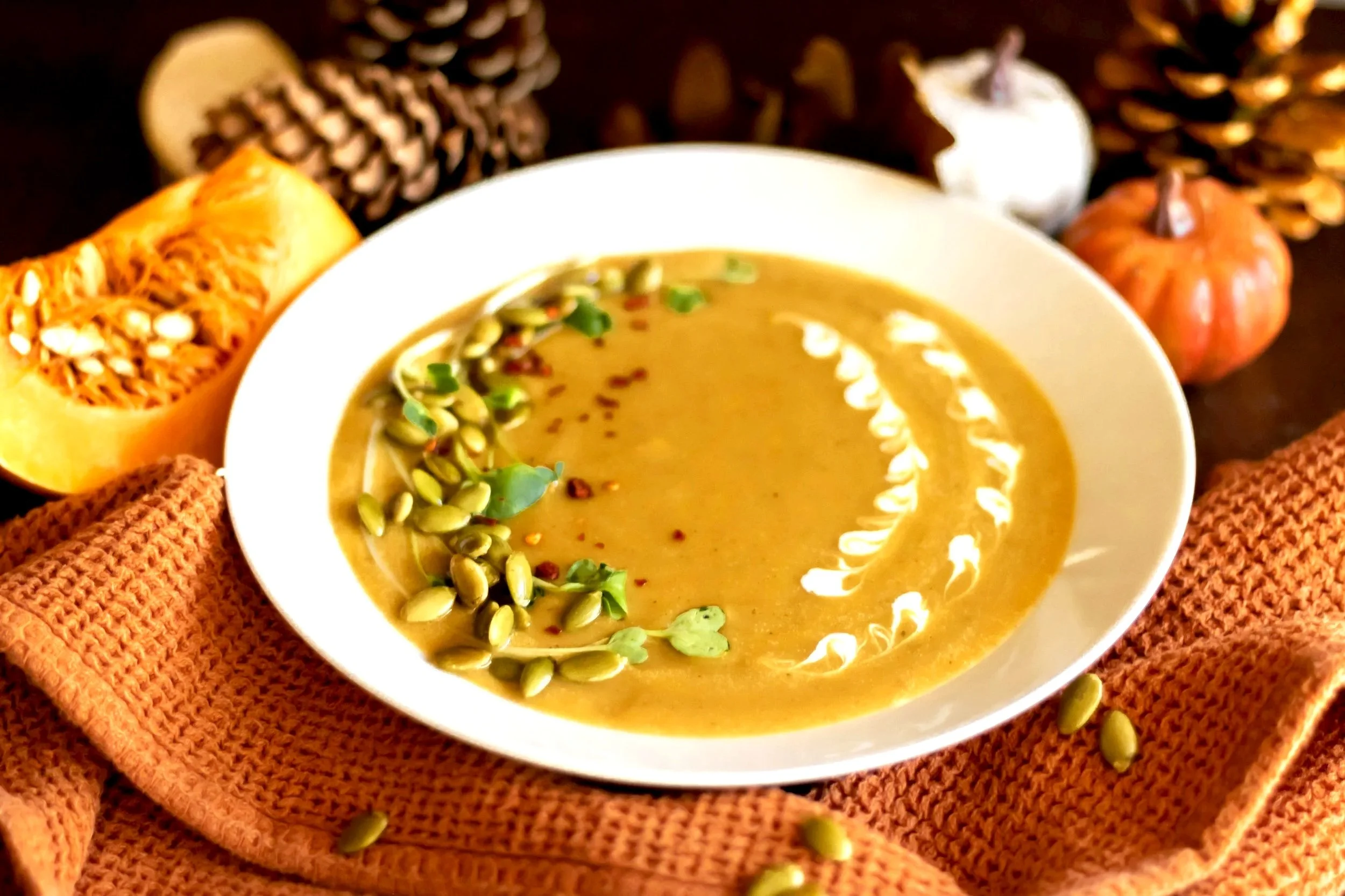
Photo by James Hardman on Unsplash
In short: Eating with the seasons means building your meals around what grows naturally at that time of year where you live. In autumn, that means squash and pumpkin, root vegetables, cabbage and leeks, mushrooms, apples, pears, grapes, chestnuts and walnuts. Seasonal food tastes better, often costs less and gives your body what it needs as the days get shorter and colder: warm, grounding meals, fibre, colour and support for your immune system.
When the mornings get cooler, I naturally want warm food: soups, stews, roasted vegetables, a baked apple with cinnamon. Maybe you notice it too. The salads that felt so good in July suddenly leave you cold, and you find yourself standing at the stove with a wooden spoon, stirring something that smells like home.
That’s not a coincidence. Nature changes with the seasons, and so do we. Our ancestors ate what the land gave them at each time of year, and many traditions, from Ayurveda to Chinese medicine, have always seen autumn as a time to eat warmer, slower and more grounding food. Here is how I eat in autumn, and how you can start too.
What does eating with the seasons mean?
It simply means choosing fruit and vegetables that are naturally ripe at this time of year where you live, rather than those grown in heated greenhouses or flown in from the other side of the world.
It isn’t a strict rule. I still buy lemons and the odd banana. It’s more a way of paying attention: what’s on the market stall this week, what smells good, what the farmers are proud of. Once you start, it becomes a lovely rhythm through the year.
Why is seasonal food good for you?
More taste. Fruit and vegetables picked when they’re ripe simply taste better. Compare a November apple from a local orchard with one that has spent months in storage.
More nutrients. Produce that hasn’t travelled far or waited weeks in storage keeps more of its vitamins.
Less money. When there’s a lot of something, it’s usually cheaper. Squash in October costs a fraction of courgettes flown in from abroad.
More variety. Changing what you eat through the year gives your gut bacteria many different plants to feed on, and variety is one of the best things you can do for your gut.
Better for the planet. Fewer kilometres, less packaging, and support for the farmers near you.
It just feels right. Warm food in the cold, fresh food in the heat. Your body often knows what it needs.
What does your body need in autumn?
As the days get shorter and colder, your body’s needs shift a little.
Warmth and comfort. Cooked, warm meals like soups, stews and roasted vegetables are easier to digest when it’s cold and give you that cosy feeling many of us crave.
Support for your immune system. Autumn is the start of the cold and flu season. Colourful vegetables and fruit give you vitamin C and beta-carotene, legumes and seeds bring zinc, and fermented foods support your gut, where a big part of your immune system lives.
Vitamin D. With less sunshine, your body makes less vitamin D. Oily fish, eggs and mushrooms give you a little, and many people benefit from a supplement from October to March. Ask your doctor if you’re not sure.
Steady energy. Darker evenings can bring cravings for sugar and comfort food. Meals with protein, fibre and healthy fats keep your energy and mood steadier. Here’s more on the different kinds of hunger and how to recognise them.
What’s in season in autumn?
Here in Southwest France, autumn is a feast. The markets are full of pumpkins and squash in every shape and colour, walnuts and chestnuts, apples and pears, the last figs and grapes, and wild mushrooms after the first rains. This is also plum country, and the famous prunes from Agen are dried at the end of summer.
Here is a simple guide. Depending on where you live, it will be a little different, and that’s the whole point.
Vegetables: pumpkin, butternut and other squash, sweet potatoes, carrots, beetroot, celeriac, parsnips, turnips, leeks, onions, cabbage, kale, Brussels sprouts, cauliflower, broccoli, spinach, fennel and wild mushrooms.
Fruit: apples, pears, quinces, grapes, plums, figs (early in the season), blackberries, persimmons and, later, the first clementines.
Nuts and seeds: walnuts, chestnuts, hazelnuts and pumpkin seeds.
Herbs and spices: thyme, rosemary, sage and bay, with warming spices like ginger, cinnamon, cumin and turmeric.
Month by month
September: the end of summer and the start of autumn at the same time. Tomatoes, courgettes and peppers still, but also figs, grapes, plums, the first apples and pears, and the first squash.
October: the heart of autumn. Squash and pumpkin, walnuts, chestnuts, mushrooms, apples, pears, quinces, beetroot and leeks.
November: winter is coming. Cabbages, kale, Brussels sprouts, root vegetables, celeriac, chestnuts, apples and pears, and the first citrus fruit.
How can you eat more seasonally?
Go to a market once a week. Ask the stallholders what’s fresh and how they like to cook it. You’ll learn so much, and you’ll often come home with a new recipe.
Build one meal a day around a seasonal vegetable. Start with the vegetable, then add protein and grains, rather than the other way around.
Roast a big tray of autumn vegetables on Sunday. Squash, carrots, beetroot, red onions and a little olive oil and thyme. Use them all week in salads, soups, grain bowls or with an egg.
Make soup your friend. It’s quick, cheap, warming and a wonderful way to use what you have. Make a big pot and freeze half.
Keep a bowl of nuts and seasonal fruit on the table. An apple with a handful of walnuts is one of my favourite autumn snacks.
Stock your cupboard for autumn. Lentils, chickpeas, oats, wholegrains, tinned tomatoes, stock, coconut milk and spices. With these, a warming meal is never more than 30 minutes away.
Cook once, eat twice. Double the soup or stew and have it for lunch the next day. Here’s how to meal prep to support your immune system.
A simple autumn week
Just an example, to show how easy it can be:
Breakfasts: warm porridge with grated apple, cinnamon and walnuts, or yoghurt with stewed pears and pumpkin seeds.
Lunches: a bowl of soup with wholegrain bread and cheese or hummus, or leftover roasted vegetables with lentils and a soft-boiled egg.
Dinners: a chickpea and sweet potato curry, baked fish with roasted squash and greens, a mushroom and leek omelette, or a slow-cooked stew.
Something sweet: a baked apple with cinnamon and a spoonful of yoghurt, or a few prunes and walnuts.
My favourite autumn recipe: warming lentil, squash and ginger soup
If there is one recipe I make again and again from October, it’s this one. It takes 15 minutes to prepare and 30 minutes to cook, it’s vegan and gluten-free, and it’s even better the next day.
Red lentils give you protein and fibre and make the soup creamy without any cream. The squash brings its lovely colour and beta-carotene, which your body turns into vitamin A. Fresh ginger and turmeric add warmth and flavour. A little coconut milk and a squeeze of lemon at the end bring it all together.
You’ll find the full recipe with ingredients and step-by-step method here, and plenty of other seasonal ideas in my recipes.
Frequently asked questions
Is it expensive to eat seasonally?
Usually the opposite. When fruit and vegetables are in season, there are more of them, so they’re often cheaper. Markets, farm shops and vegetable boxes can be very good value, especially at the end of the day.
What if I don’t live in Southwest France?
The idea is the same wherever you are: look at what’s grown near you right now. Visit a local market, look for a seasonal calendar for your region, or simply notice which vegetables suddenly appear in large, cheap piles at the shop.
Are frozen vegetables OK?
Yes. Frozen vegetables are picked and frozen quickly, so they keep their nutrients well. They’re a great standby for busy weeks, and far better than no vegetables at all.
Do I have to eat only local food?
Not at all. Think of it as a direction, not a rule. If most of your plate follows the seasons, you’re doing beautifully.
Let the seasons guide you
Eating with the seasons isn’t one more thing to get right. It’s an invitation to slow down, notice what’s around you and let nature do some of the planning for you.
If you’d like help finding a way of eating that fits your body, your life and your seasons, have a look at how we can work together, or book a free 20-minute call. I’d love to hear what’s in your market basket this week.
About Catherine
I’m Catherine Polet, a holistic nutrition health coach, yoga teacher of more than 30 years, autogenic training teacher, author and speaker. I help people find a way of eating and living that suits their own body, online in English, French, German and Spanish, and in person in Southwest France.