Comfort Eating in Autumn: Why You Reach for Food When It Gets Dark, and What Helps
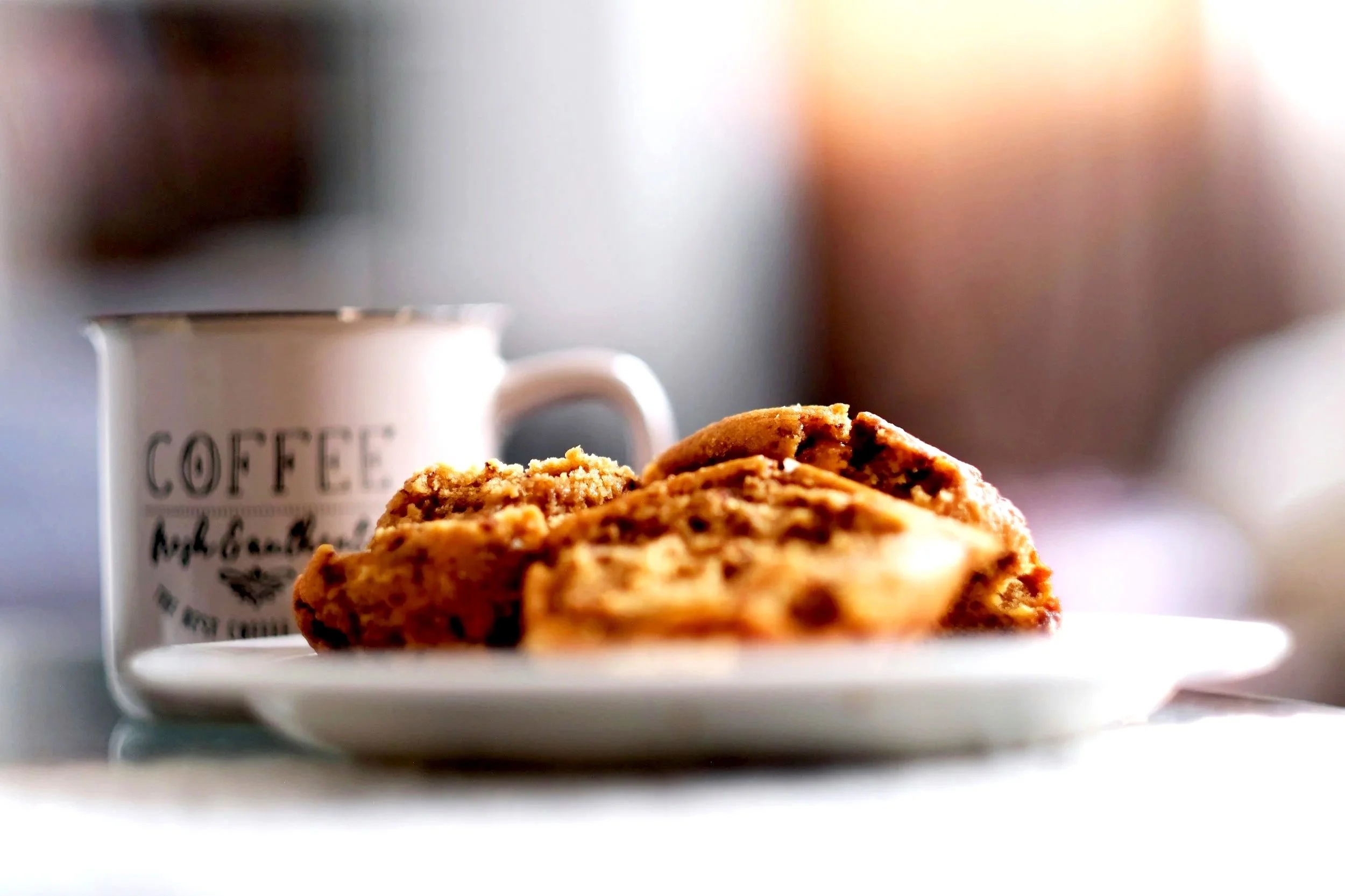
Photo by Sipho Ngondo on Unsplash
In short: Reaching for food when you’re tired, cold, stressed or a bit lonely is a very human way of looking after yourself, and it works for a few minutes, which is exactly why we keep doing it. Autumn makes it stronger: darker evenings, less light, less movement and more tiredness. What helps is feeding yourself properly earlier in the day, learning to hear what you’re really hungry for, and keeping a few other comforts within reach.
It’s a quarter to six and it’s already dark outside. You’ve had a long day. The house is quiet, dinner is still an hour away, and you find yourself in front of the cupboard without ever really deciding to go there. A piece of cheese. Then a bit of bread to go with it. Then a square of chocolate, and another one. A few minutes later you’re standing in the kitchen wondering what just happened, and feeling a little cross with yourself.
Does that sound familiar? If it does, I want you to know something before we go any further: there’s nothing wrong with you. You won’t find a single rule in this article, or a list of foods you shouldn’t eat. What I’d love to do instead is explain what’s going on in your body when the evenings draw in, and share the gentle, practical things I use in my coaching. Things you can try tonight.
What is comfort eating, really?
Comfort eating is eating to change how you feel, at a moment when your body isn’t actually asking for fuel. You may know it as emotional eating; they’re two names for the same thing. It tends to show up when we’re stressed, tired, bored, lonely, sad, or simply cold and fed up.
I like to see it as a solution. A very old, very clever solution your body found to a real problem. Food is warm. It’s quick. It’s always there, it never says no, and it soothes. When you were small, food often came with a hug and a warm kitchen. Your body remembers that.
The difficulty is that the relief is short. The feeling you were trying to soothe is still waiting for you when the plate is empty, and very often it has brought a friend along: guilt. And guilt is one more uncomfortable feeling, which can send you straight back to the cupboard. I described this little loop in more detail in How to overcome emotional eating, if you’d like to read more about it.
Why do I eat more when it gets dark early?
When I work with someone, I always look at the whole of their day, and the whole of their life, before I look at their plate. Because in autumn, what changes most is everything around the food.
The evenings get long. In summer you were outside until late: in the garden, on a walk, chatting with a neighbour. Now it’s dark before dinner, and the hours between coming home and going to bed are spent indoors, a few steps away from the kitchen. The kitchen is warm and bright. Of course you drift towards it.
There’s less light. It sets your inner clock, lifts your mood and tells you when to be awake and when to wind down. With shorter, greyer days, many of us feel flatter, slower and a bit low. And when the mood dips, we look for something to lift it. Sugar and soft, warm carbs give a quick little lift, and your body knows it.
We move less. The evening walk, the swim, the hour in the vegetable garden: they quietly disappear in October. And with them goes one of the best ways we have of shaking off the day. Movement is how the body uses up the tension it has gathered. Without it, the tension stays, and food becomes the easiest way to release it.
Why do I crave sweet, salty and creamy food when I’m stressed?
Have you noticed that nobody comfort eats steamed broccoli? There’s a reason for that.
When you’re under pressure, your body switches into a kind of alert mode. It’s the same response that once helped us run away from danger, and it asks for fuel, fast. If the pressure goes on day after day, that alert mode stays switched on in the background, and your appetite goes up with it. Your body is preparing for a battle that never comes.
And the foods it asks for are the ones that work quickest: sweet, fatty, salty, creamy. They calm that alert feeling for a little while. So when you want toast with butter and jam after a hard day, your body is doing exactly what bodies are designed to do. It has learned what works fast, and it’s trying to look after you with the tools it knows. I find that rather touching.
Can tiredness and poor sleep make comfort eating worse?
Very much so, and I wish everybody knew this.
When you’re tired, two things happen at the same time. The wanting gets louder: food looks more tempting, smells better, calls you more strongly. And the quiet, wise part of you that usually asks “do I really want this?” gets sleepier. Your brain is running on low batteries, and the part of you that pauses and chooses is always the first to go quiet. Your character hasn’t changed. Your batteries have.
That’s why I always ask about sleep when someone tells me about their evenings. Sleep, stress and appetite are so closely linked that you can’t really look after one without the others. I wrote about this in The direct impact of sleep and stress on your weight.
And there’s another kind of tiredness that hides behind comfort eating: simply not having eaten enough. A light breakfast, a rushed lunch, a coffee to keep going, and by late afternoon your blood sugar has dropped. Your body sends out a strong, urgent message, and it feels emotional. Part of it is. But part of it is plain hunger dressed up as a craving. I explained this in The afternoon energy dip in autumn.
Am I hungry, or is it something else?
Body hunger builds slowly. You notice it gently, then a bit more. Almost any food would do: if someone offered you an omelette or a bowl of soup, you’d say yes, please. And once you’ve eaten, it’s gone. You feel settled.
The other kind of hunger arrives all at once. It wants one particular thing, usually something sweet, salty or creamy, and an omelette won’t do at all. And you can finish the packet and still feel that something is missing, because the thing that was missing was never food.
A little test I love: would an apple do? If the answer is yes, you’re probably hungry, so eat. If the answer is “an apple? Certainly not!”, then it’s worth asking what you’re really hungry for. Rest? Warmth? Company? Some quiet? A good cry? I describe seven kinds of hunger here, and you might recognise yourself in more than one.
Why doesn’t willpower work in the evening?
Because willpower is a bit like a phone battery. It’s full in the morning, and by six in the evening, after a day of decisions, work, worries and other people’s needs, it’s nearly flat. Asking yourself to be strong at that exact hour is asking the most of yourself when you have the least to give.
So I never ask my clients for more willpower. What I love to do instead is help them plan for that hour while they’re still fresh, earlier in the day. And look at the whole picture. Because what brings one person to the cupboard (loneliness, perhaps) is completely different from what brings someone else (exhaustion, or an empty stomach). That’s what bio-individuality means in practice: your evenings, your body, your answer.
What helps?
Here’s what I suggest when I work with someone on comfort eating. None of it asks you to give anything up.
1. Feed yourself properly earlier in the day
This is always where I start, because a well-fed body copes with a hard evening far better than an empty one. Have some protein at breakfast: an egg or two, a bowl of yoghurt with walnuts and an apple, some goat’s cheese on your bread. Make lunch a real meal, with vegetables, some protein, healthy fats and carbs on the side. A bowl of lentil and squash soup with a piece of cheese is perfect at this time of year, and you’ll find a warming autumn soup in Eating with the seasons.
And if you’re properly hungry in the late afternoon, eat something that lasts: an apple with a handful of walnuts, a boiled egg, a few roasted chestnuts, carrot sticks with hummus. Think of it as looking after the six o’clock version of you.
2. Pause, breathe, and ask one question
When you find yourself at the cupboard, stop for a moment. Put your hand on your belly. Take three slow breaths, letting the out-breath be a little longer than the in-breath. That longer out-breath is a quiet signal to your body that it’s safe to step out of alert mode. In yoga we’ve known this for a very long time.
Then ask: what do I need right now? Sometimes the answer will be “I’m hungry”, and then you eat, happily. Sometimes it will be “I’m exhausted” or “I miss someone” or “I need to stop for a minute”. You don’t have to choose differently. The pause is only there so that you get to choose. If you’d like a few simple breathing practices to have up your sleeve, I shared some in Breathe your way to mindfulness.
3. Write your own comfort menu
On a calm day, sit down with a pen and write a list of things that comfort you, that take only a few minutes, and that aren’t food. A few ideas:
A hot shower, or a bath with the lights low.
A phone call to someone who always makes you laugh.
A few minutes outside with your coat on, looking at the sky.
A cup of verbena or lime-blossom tea under a blanket.
Stroking the cat, or taking the dog round the block.
Put your list on the fridge door. At six in the evening, tired, you won’t remember any of it. You’ll need to read it. That’s why it lives on the fridge.
4. Give your evening a shape
A long, shapeless evening is where comfort eating loves to live. So give it a little structure. A moment of transition when you come home: change your clothes, wash your hands and face, light a candle, put the kettle on. Then dinner at the table, at a regular time, and then something you enjoy.
If you’d like to go deeper, this is where autogenic training is wonderful. It’s a gentle relaxation method, done with your eyes closed, that teaches your body to switch off alert mode by itself. I explain it in Autogenic training: more than just a relaxation technique.
5. When you do choose the chocolate, enjoy it
Put it on a plate. Sit down. Look at it, smell it, let it melt. Two squares eaten slowly at the table will comfort you far more than half a bar eaten standing up by the cupboard, and you’ll actually remember having had them. Pleasure is part of eating. You’re allowed to have it.
What doesn’t help?
Banning foods. The day you forbid something is the day you can’t stop thinking about it.
“Being good” all day. Eating as little as possible until the evening is the surest way to end up in the cupboard at nine.
Being hard on yourself afterwards. Guilt is stress, and stress is what started it all. Speak to yourself the way you’d speak to a dear friend.
Waiting to feel stronger. Plan for the difficult hour in the morning, when you’re fresh.
Try this for one week
Choose the moment of the day when comfort eating usually happens for you. For most people it’s somewhere between coming home and dinner, or later in the evening in front of the television.
For seven days, at that moment: pause, take your three slow breaths, ask your question, and then do whatever you decide.
Each evening, write down three words in a little notebook: what you felt, what you needed, what you chose.
At the end of the week, sit down with a cup of tea and read your notes. You’ll very probably see the same feeling coming back, again and again. Tiredness, perhaps. Or loneliness. Or the need for a proper break. That feeling is the thing to look after, as kindly as you can.
Frequently asked questions
Is comfort eating the same as emotional eating?
Yes. They’re two names for the same thing: eating to soothe a feeling when your body isn’t asking for fuel.
Why do I crave carbs and sweet things when it gets cold and dark?
Mostly because of what autumn does to your days: less light, less movement, more tiredness and long evenings at home. Sweet foods and soft, warm carbs give a quick lift in mood and energy, and your body remembers that.
How do I stop comfort eating in the evening?
Start earlier in the day, with protein at breakfast and a proper lunch. In the evening, pause before you eat, breathe, and ask what you really need, and keep a list of other comforts where you can see it.
When should I talk to my doctor?
If eating often feels out of your control, if you regularly eat until you feel unwell, or if food and guilt take up a lot of your thoughts, please talk to your doctor. The same goes if you’ve felt low for weeks. You deserve proper support, and it’s there for you.
Would you like some help?
Reading about the pause is easy. Remembering it at six o’clock on a dark Wednesday is harder, and that’s where doing it together makes such a difference. Stress and comfort eating is one of the themes of Six Tuesdays in Montignac, my six-week group programme in nutrition and health at the salle des fêtes in Montignac-de-Lauzun, in the Lot-et-Garonne. We start on Tuesday 20 October, with an English group at 10:00 and a French group at 15:00. Sign-ups close this Friday, 16 October.
Not nearby, or would you rather work one to one? Book a free 20-minute call with me. I’d love to hear what your evenings are like, and to help you make them a little gentler.
About Catherine
I’m Catherine Polet, a holistic nutrition health coach, yoga and autogenic training teacher for more than 30 years, author and speaker. I help people find a way of eating and living that suits their own body, online in English, French, Spanish and German, and in person in Southwest France.