

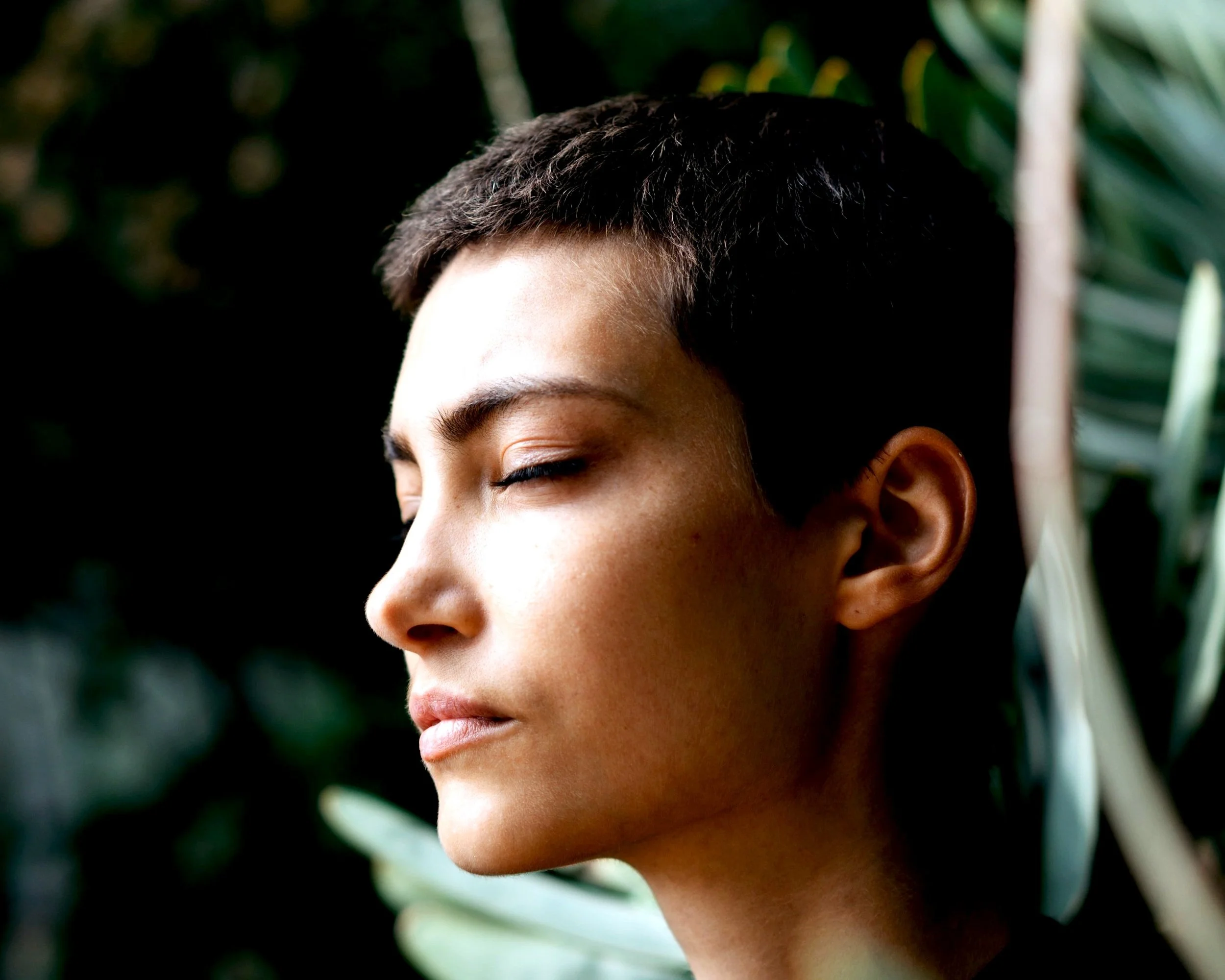
Photo by Motoki Tonn on Unsplash
In short: Autogenic training is a gentle relaxation method in which you quietly repeat a few short phrases to yourself, such as “my right arm is heavy” and “my right arm is warm”, until your body learns to let go by itself. It was developed by a German psychiatrist, J. H. Schultz, in the early twentieth century, and it’s still taught in much the same way today. It’s more than relaxation because, once you’ve learned it, you carry your own way back to calm with you everywhere: for sleep, for stress, for a hard evening. The best way to begin is with a qualified teacher.
It’s late. You’re in bed, the light is off, and your body is tired. Your head isn’t. It’s going over the day, the conversation you’d like to have had differently, the list for tomorrow. Someone once told you to “just relax”, and you’d love to. You lie there trying to relax, and the harder you try, the more awake you feel. Your jaw is tight. Your shoulders are somewhere near your ears. And nobody has ever actually shown you how to let go.
That’s exactly what autogenic training does. It shows you how, step by step, and then it leaves the skill with you for life. I teach it alongside my yoga and my nutrition coaching, and I think it’s one of the kindest things you can learn for yourself.
What is autogenic training?
Autogenic training is a way of relaxing deeply by using your own attention and a few simple sentences. You sit or lie comfortably, close your eyes, and silently repeat short phrases that describe what a relaxed body feels like: heavy, warm, calm, breathing easily. You don’t force anything. You simply say the phrase, and you notice.
“Autogenic” means “generated from within”. Nobody does it to you. There’s no machine, no music you depend on, no special place you need to be. Once you’ve learned it, it belongs to you.
Where does autogenic training come from?
It was developed by Johannes Heinrich Schultz, a German psychiatrist and neurologist, in the early twentieth century. Schultz worked with hypnosis, and he noticed that his patients described the same sensations again and again as they relaxed: their arms and legs felt heavy and warm, their breathing slowed and evened out, their heartbeat settled, their belly felt warm, their forehead felt pleasantly cool.
His idea was simple and rather brilliant. If deep relaxation produces these sensations, could you invite the sensations on purpose and let the relaxation follow? He found that you could, with no hypnotist in the room: a method anyone could learn and then use alone. Its basic structure is still the one most teachers use today, including me, with a few gentle adaptations.
What does an autogenic training session feel like?
You settle in, lying on your back or sitting in a supported chair, with your eyes closed. Then you move slowly through a series of short phrases, each repeated a few times in your head, always coming back to a resting phrase in between: “I am completely calm.”
The classic sequence goes like this:
Heaviness: “My right arm is heavy” (your left arm if you’re left-handed), then both arms, then the legs. This is where the muscles start to let go.
Warmth: “My right arm is warm”, and so on. The blood vessels relax and many people feel a gentle glow in their hands.
The heart: “My heart beats calmly and regularly.” You don’t change anything. You just notice.
The breath: “My breathing is calm”, and then one of my favourite phrases: “It breathes me.” You stop managing your breath and let it happen by itself.
The solar plexus: “My solar plexus is warm”, a warmth in the soft place just above the belly button.
The forehead: “My forehead is pleasantly cool”, like a light breeze passing over it.
And then you come back. This part is called “taking back”, and it’s important: you make firm fists and bend and stretch your arms a couple of times, take a deep breath, open your eyes and stretch like a cat waking up. At bedtime you can skip it and simply let sleep come.
When I teach, I never add all of this at once. We only move on when the phrase before feels familiar. The hardest part is often believing that something so simple could work. Then you feel it.
Why is autogenic training more than just a relaxation technique?
Relaxing is wonderful on its own. But autogenic training gives you three more things, and these are the reasons I love teaching it.
It becomes yours. The aim is to become truly “autogenic”: able to do it alone, without a recording, without a teacher, whenever you need it. After a while, a few phrases are enough to bring you back to that calm place. In a waiting room, before a difficult phone call, at three in the morning, sitting in the car once it’s parked with the engine off.
It teaches your body a new habit. When you’re stressed for a long time, your body gets stuck in alert mode: tight shoulders, shallow breath, a stomach in knots, a mind that won’t stop. Autogenic training is like showing your nervous system, again and again, the way back to rest. With practice, it finds that way more easily, even when you’re not practising. Many people notice they react a little more calmly, a little more slowly, to the things that used to set them off.
It can support the changes you want to make. Once the basic exercises are familiar, you can add a short, positive sentence of your own at the end of a session, while you’re deeply relaxed. Something like “I eat calmly and with pleasure”, or “I meet difficult people with serenity”. This is the next level of the method, and it’s lovely work to do with a teacher, because finding the right words for you takes care. Further still, there’s a deeper level that works with inner images, a bit like dreaming awake, which is best explored only with an experienced guide.
I wrote more about the mindset side of it in Autogenic training: a pathway to tranquillity and a calmer mindset.
What can autogenic training help with?
Many people come to it for stress, and stay for everything else. Here’s what many people find it helps with when they practise regularly:
Falling asleep more easily, and getting back to sleep after waking in the night.
Less tension in the neck, shoulders and jaw.
Fewer tension headaches.
A calmer stomach, for those whose digestion tightens when they’re anxious.
Better concentration, because the mind isn’t racing.
A pause between the feeling and the reaction, which helps enormously with comfort eating.
That last one is close to my heart as a nutrition coach. So much eating in the evening has nothing to do with hunger and everything to do with an exhausted, overloaded nervous system. I wrote about this loop in How to overcome emotional eating, and the stomach and mind connection in The hidden connection between your gut and your brain. I wrote about why the cupboard calls louder in autumn in Comfort eating in autumn.
One thing I always say clearly: autogenic training is a beautiful complement to medical care, never a replacement for it. If you have pain, sleep problems or anxiety that won’t settle, please see your doctor as well.
How is autogenic training different from meditation or yoga?
I’ve practised and taught yoga for more than 30 years, and I love it. Yoga works through the body and the breath, with movement. Meditation often asks you to watch your mind. Both are wonderful, and both can feel hard when your head is very busy.
Autogenic training gives your mind something very concrete to do: one short sentence, one part of the body. It needs no movement or flexibility, so it suits people who are tired, unwell, recovering, or simply not drawn to a mat. And it’s very structured: the same phrases, in the same order, every time. The repetition is what makes it work.
And they go well together. A few slow breaths, the kind I describe in Breathe your way to mindfulness, are a lovely way to settle before a session.
Is autogenic training safe for everyone?
For most people it’s very gentle. A few precautions matter, though, and a good teacher will always ask about them:
If you have a heart condition, a mental health condition, epilepsy, or you’re pregnant, please talk to your doctor before you start. Some exercises, like the heart phrase, are often adapted or left out.
If you have a history of trauma, or if strong feelings come up, go gently and learn with a teacher who can support you.
Never practise while driving, cycling, cooking, or doing anything else that needs your attention. You’re inviting a state close to sleep.
What helps when you start?
Here’s what I suggest to anyone who’d like to learn.
1. Learn with a qualified teacher
You can read about autogenic training, but learning it with someone makes a real difference. A teacher checks that you take back properly, adjusts the phrases for your health, and answers the little questions that come up (“my arm felt tingly, is that normal?”). After that, the practice is yours.
2. Find your position
Lying on your back is the easiest place to begin, with your arms by your sides and your feet falling outwards. You can also sit in an armchair with your head supported, or use the “coachman’s seat”: sitting on a chair, leaning forward slightly, forearms resting on your thighs, head gently dropped, like a carriage driver dozing on his bench. That one works almost anywhere.
3. Practise little and often
A few minutes, two or three times a day, will teach your body far more than one long session at the weekend. I like to link it to moments that already exist: after lunch, before getting up in the morning, in bed at night.
4. Don’t try
This is the part that surprises people. You say the phrase, and you let whatever happens happen. If your arm doesn’t feel heavy today, that’s fine. Trying hard to relax is a bit like trying hard to fall asleep: it keeps you awake. Curiosity works much better than effort.
5. Always take back
After a daytime session: firm fists, bend and stretch your arms, a deep breath, eyes open. It leaves you fresh and clear instead of dozy.
What doesn’t help?
Expecting fireworks. The changes are quiet and they grow with practice.
Rushing through all the exercises at once. One step at a time is the whole secret.
Using it instead of seeing your doctor. It supports your health; it doesn’t replace care.
Try this for one week
Each evening, once you’re in bed with the light off, lie on your back and close your eyes. Take one slow breath, with the out-breath a little longer than the in-breath.
Say to yourself, silently and slowly: “I am completely calm.” Then turn your attention to your right arm (your left if you’re left-handed) and say, a few times, with a pause in between: “My right arm is heavy.” Then once more: “I am completely calm.”
That’s all. No warmth, no heart, nothing else yet. Since it’s bedtime, there’s no need to take back: just let sleep come. If you practise during the day, take back before you get up.
At the end of the week, notice what has changed. Perhaps nothing. Perhaps a heaviness that now arrives more quickly, or a slightly easier slide into sleep. If you’d like to build a whole evening around this kind of calm, I shared some ideas in The power of an evening routine and in Let’s talk about sleep.
Frequently asked questions
How long does it take to learn autogenic training?
Most people learn the basic exercises over a few weeks of short, regular practice, adding one phrase at a time. After that, it keeps getting easier and quicker, and a few phrases are often enough to bring you back to calm.
Can I learn autogenic training from a book or a recording?
You can get a feel for it that way, but I recommend learning with a qualified teacher. They’ll make sure you take back properly, adapt the exercises to your health, and help you when questions come up.
Can autogenic training help me sleep?
Many people find it helps them fall asleep more easily and get back to sleep after waking in the night. In the evening you simply skip the taking back and let sleep come by itself.
When should I talk to my doctor?
Before you start if you have a heart condition, a mental health condition, epilepsy, or you’re pregnant. And at any time if you have pain, anxiety, low mood or sleep problems that don’t improve: autogenic training works beautifully alongside medical care, never instead of it.
Would you like some help?
Autogenic training is one of the tools I bring into my group programmes in nutrition and health, such as Six Tuesdays in Montignac, because calming the nervous system changes so much about how we eat and sleep. If you’d like to hear when the next group opens, write to me at hello@catherinepolet.coach.
If you’d rather learn one to one, online, book a free 20-minute call. Tell me what keeps you awake or wound up, and we’ll see together whether autogenic training is right for you.
About Catherine
I’m Catherine Polet, a holistic nutrition health coach, yoga and autogenic training teacher for more than 30 years, author and speaker. I help people find a way of eating and living that suits their own body, online in English, French, Spanish and German, and in person in Southwest France.

