

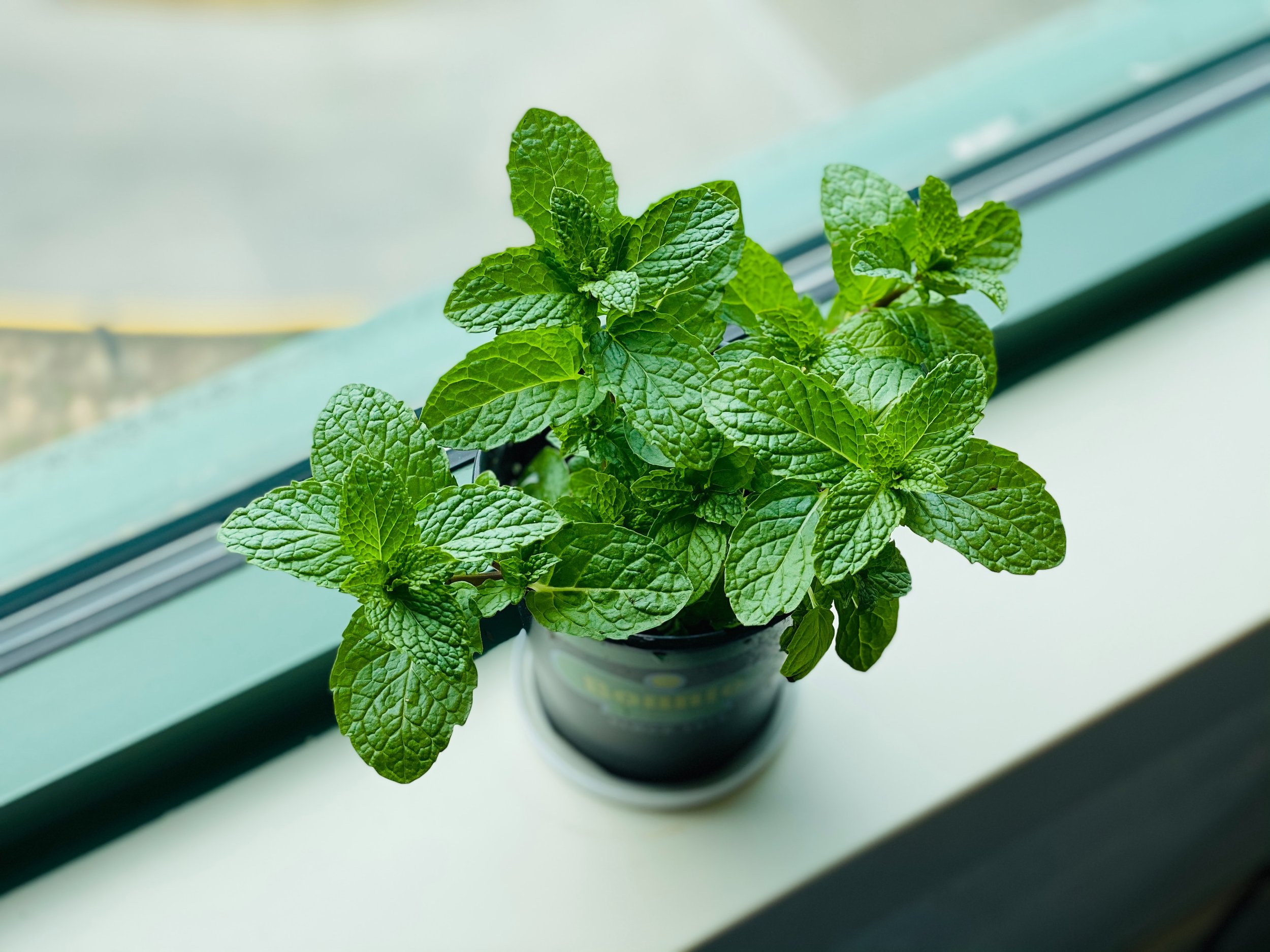
Photo by Eleanor Chen on Unsplash
In short: Essential peppermint oil is the concentrated scent of the peppermint leaf: fresh, cool and wonderfully clear. Think of it as a small everyday pleasure, a way to freshen a room, a pause in a long afternoon or a cool touch on tired shoulders. It isn’t a medicine. Always dilute it, keep it away from your eyes and from children, don’t swallow it, and ask your doctor or pharmacist first if you’re pregnant or take medication.
You rub a peppermint leaf between your fingers in the garden and bring your hand to your nose. Straight away there’s that cool, green, clean smell, and you find yourself breathing in a little deeper. That one small moment is what a bottle of essential peppermint oil holds, many times over.
Peppermint has been appreciated for centuries. Here is what the oil is, how to enjoy it in gentle, everyday ways, and how to use it with care.
What is essential peppermint oil?
The essential oil of peppermint (in Latin, Mentha piperita) is extracted from the leaves of the plant. People have valued peppermint for a very long time: already in ancient Rome, peppermint leaves were placed on the temples for their cooling freshness. Today the plant is grown in many parts of Europe and North America, and the oil is easy to find in pharmacies and health shops.
It takes a great many leaves to fill one small bottle, and that’s why the oil is so strong. A drop goes a long way. It also explains the first rule of using it: essential oil is always diluted before it touches your skin, because on its own it can irritate.
For detailed instructions, read the leaflet that comes with your bottle or ask at the pharmacy. They’ll tell you how much to dilute it and whether it suits you.
Why does peppermint feel so cool and fresh?
Peppermint gives a cooling sensation on the skin, the same feeling you know from mint toothpaste or a mint sweet. Nothing is really colder: the skin simply senses coolness. Many people find that feeling pleasant and relaxing, especially when they’re warm, tired or have been sitting in the same position for too long.
The scent does something similar for the mind. It’s bright and clear, the opposite of a heavy, sleepy smell, and that’s why so many of us reach for it when we’d like to feel a bit more awake.
How can you enjoy peppermint oil in everyday life?
A cool touch on a tense forehead, neck or shoulders
Mix a little peppermint oil into a carrier oil. Olive oil or sunflower oil from your kitchen will do very well. Follow the dilution given on your bottle. Then massage a small amount into your forehead and temples, the back of your neck or your shoulders, slowly, with your eyes closed. The cool feeling, the scent and the few quiet minutes together make a lovely pause at the end of a long day at the screen.
Be careful to keep well away from your eyes, and wash your hands thoroughly afterwards. Eyes and mucous membranes react with irritation to the oil.
Tip: prepare a small glass bottle of the mixture, well rinsed and clearly labelled, so that it’s ready when you’d like it.
A massage for tired muscles
The same diluted blend is pleasant after a walk, a session in the garden or a day on your feet. Rub it into your calves or your shoulders and take your time: the massage itself, the warmth of your hands and the fresh scent are what make it feel so good. Again, wash your hands well afterwards. If you’ve started moving more, you might like my gentle ways to move every day.
Fresh air in a stuffy room
In the colder months, when the windows stay shut, a little peppermint in a diffuser makes a room smell clean and airy. Use it sparingly, for a short while, and open the window afterwards. Fresh scent pairs nicely with slow breathing: try the 1:4:2 rhythm breathing or my gentle introduction to the breath.
A lift during a long afternoon
You may know concentrated peppermint as something people reach for when their head feels heavy, but its scent is also a perfect choice when you’d like to recharge your batteries during a long car ride or at the office. Put a little of your diluted blend, or a peppermint balm, on the inside of your wrist, breathe in the scent, and off you go.
A scent can wake you up for a moment. For energy that lasts, look at what’s underneath: how you eat, drink, sleep and move. I’ve written about that in ten simple ways to boost your energy naturally and in how to look after your mental energy.
I made a short video about this, you can watch it below.
And what about peppermint tea?
If you love the taste of mint, tea is the way to enjoy it. A cup of peppermint tea after a meal is a soothing little ritual, warm in the hands and fresh in the mouth. Fresh leaves from the garden or the windowsill are even nicer: pour hot water over a small handful and wait a few minutes. The oil is for smelling and for the skin, the leaves are for the cup. You’ll find more warm-drink ideas in my article on hot water.
How do you use peppermint oil safely?
Always dilute it. Never put pure essential oil on your skin. Follow the instructions on the bottle.
Test first. Try a little of your blend on the inside of your arm and wait a day. If your skin turns red or itchy, it’s not for you.
Keep it away from your eyes, nose, mouth and any broken or irritated skin. Wash your hands after every use.
Don’t swallow it. Essential oils aren’t for drinking or for adding to food.
Keep it away from children. Store the bottle out of reach, and don’t use peppermint oil on or near babies and young children.
Ask first if you’re pregnant or breastfeeding, or if you take medication. Your doctor or pharmacist can tell you whether it’s suitable for you. The same goes if you have asthma, allergies or sensitive skin.
Less is more. If the scent gives you a headache or makes you feel unwell, stop and air the room.
Frequently asked questions
Can I put peppermint oil straight onto my skin?
No. Pure essential oil is very concentrated and can irritate. Always dilute it in a carrier oil such as olive or sunflower oil, following the instructions on the bottle, and try a little on the inside of your arm first.
Can I swallow peppermint oil or add it to a drink?
I do not suggest it. Essential oils are for scent and for diluted use on the skin. If you love the taste of mint, make a cup of peppermint tea or put fresh leaves in your water.
Is peppermint oil safe around children and pets?
Keep the bottle well out of reach of children, and do not use peppermint oil on or near babies and young children. Essential oils can also bother pets, cats in particular, so scent a room only if they can leave it, and ask your vet if you are unsure.
What is the difference between peppermint oil and peppermint tea?
The tea is a mild infusion of the leaves that you can drink every day. The essential oil is the concentrated scent of a great many leaves in a few drops, which is why it is used sparingly, diluted, and never as a drink.
When should I talk to my doctor?
Ask your doctor or pharmacist before using peppermint oil if you are pregnant or breastfeeding, take medication, or have asthma, allergies or sensitive skin. And if you have headaches, pain or a cold that keeps coming back or does not ease, see your doctor: a scented oil is a pleasure, not a treatment.
Would you like some help?
Small rituals that help you pause, and the everyday habits that give you steady energy, are part of what we work on in my group programmes in nutrition and health, such as Six Tuesdays in Montignac. If you’d like to hear when the next group opens, write to me at hello@catherinepolet.coach.
Would you rather work one to one? I also coach online. Book a free 20-minute call, and we can talk about what would help you feel fresher and clearer through your days, with or without a little bottle of peppermint on your desk.
About Catherine
I’m Catherine Polet, a holistic nutrition health coach, yoga and autogenic training teacher for more than 30 years, author and speaker. I help people find a way of eating and living that suits their own body, online in English, French, Spanish and German, and in person in Southwest France.

