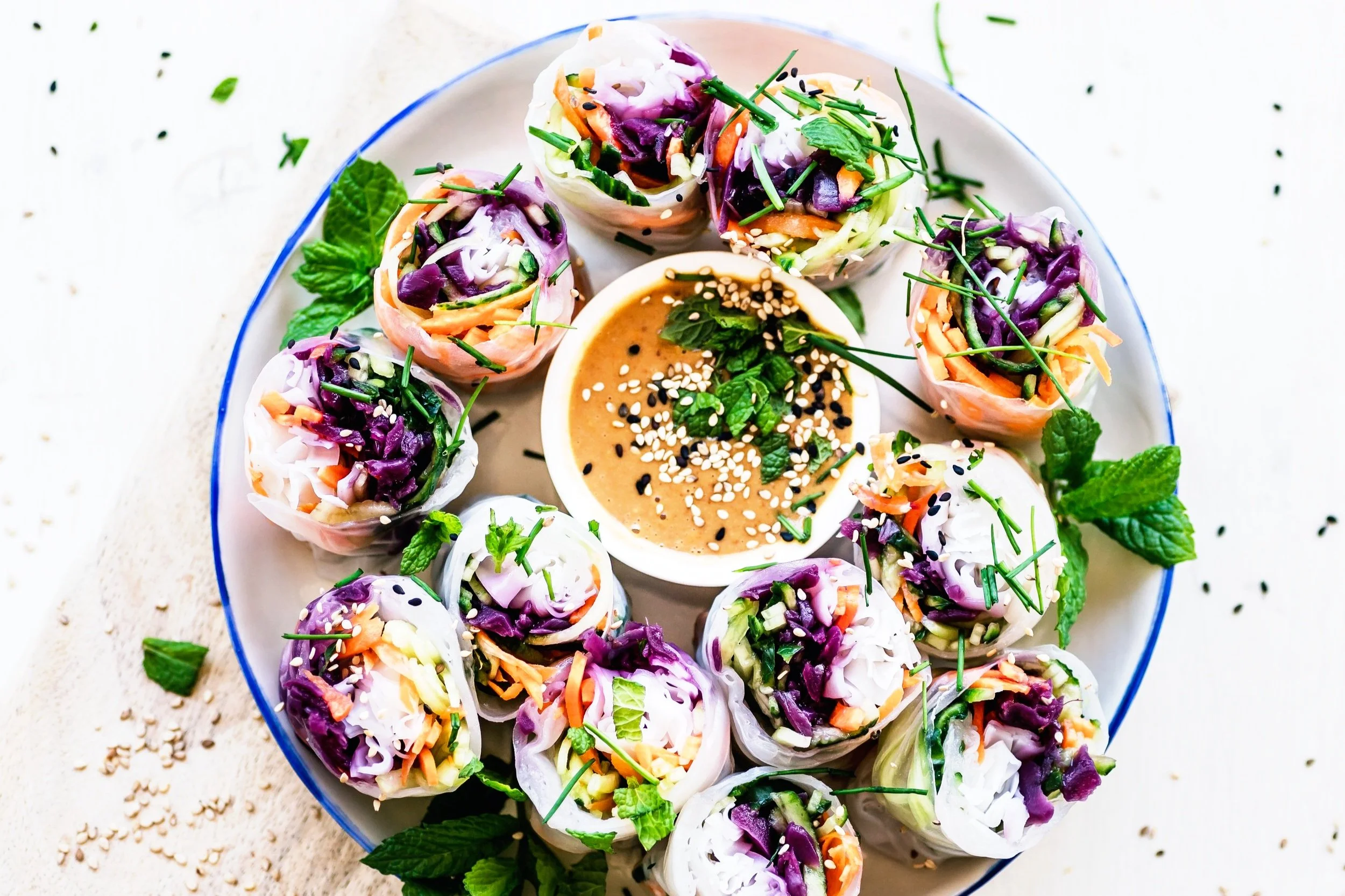
Photo by Ella Olsson on Unsplash
In short: “Eating the rainbow” simply means bringing many different colours of vegetables, fruit, herbs, beans and grains onto your plate. Each colour comes from different natural plant compounds, and each plant brings a different kind of fibre for your gut bacteria, so colour is the easiest way I know to eat more variety without counting anything. Start by adding one new colour to a meal you already make, follow the seasons, and let the market and the garden guide you.
Think about the last three dinners you made. If you’re like most of us, they were probably quite similar: the same few vegetables, the same trusty recipes, cooked on autopilot at the end of a long day. Pasta with tomato sauce. Chicken with green beans. A bit of salad. There’s nothing wrong with any of that. But if you lined up a week of your plates, would they be mostly beige and brown, with a little green here and there?
Colour is one of my favourite ways to talk about food, because it’s so simple and so cheerful. You don’t need to learn a single nutrient name, weigh anything or follow a plan. You just look at your plate and ask: how many colours can I see? Let me explain why it matters, and how to bring more colour into your meals, all year round.
What does “eat the rainbow” actually mean?
It means choosing plant foods in as many different colours as you can over the course of a day and a week: reds, oranges and yellows, greens, purples and blues, whites and browns. Vegetables and fruit, of course, but also beans and lentils, nuts and seeds, herbs and spices, and whole grains like buckwheat and oats.
It isn’t a rule, and it isn’t a diet. It’s a playful way of making sure you eat a wide variety of plants, because variety is where so much of the goodness lies. And the lovely thing is that colourful food is usually seasonal, fresh and beautiful too. A plate full of colour makes you want to sit down and enjoy it.
Why does colour on my plate matter?
The colours in plants aren’t there to look pretty for us. They come from natural compounds that the plants make to protect themselves: from the sun, from insects, from disease. The deep red of a tomato, the orange of a squash, the purple of a red cabbage, the bitter green of rocket: each one comes from a different family of these compounds.
When we eat those plants, many of those compounds seem to help look after us too. They’re part of why vegetables and fruit are so good for us, and they work best together, as a team, in whole foods. I like to think of each colour as a different instrument in an orchestra. One violin is lovely. The whole orchestra is something else.
So rather than chasing one “super” vegetable, I’d always rather you enjoyed a little of many.
How does eating a rainbow help my gut?
This is the part that excites me most. Living in your gut is an enormous community of bacteria, which I like to call your gut garden. They feed on the fibre in plants, the part you can’t digest yourself. And here’s the key: different bacteria like different plants. Lentils feed some, leeks feed others, oats, apples, beans and walnuts others again.
So the more different plants you eat, the more varied your gut garden becomes, and a varied garden is a healthier, more resilient one. Colour is simply the easiest way I know to make sure you’re eating that variety without thinking about it. I wrote more about how your gut talks to the rest of you in how your gut and brain communicate.
You may have seen the idea of counting the different plants you eat each week. I love the spirit of it, but I’d keep the idea and let go of the counting. Counting can turn a lovely meal into homework. Notice instead whether you buy the same five vegetables every week, and if you do, add a sixth.
What does each colour bring?
Here’s a simple way to think about it, without the chemistry lesson. Use it as inspiration, not a checklist.
Red: tomatoes, red peppers, radishes, beetroot, red apples, strawberries, raspberries, cherries, red onions, red kidney beans. Cooked tomatoes, in a sauce or a soup, with a drizzle of olive oil, are a lovely way to enjoy them in winter.
Orange and yellow: carrots, squash and pumpkin, sweet potatoes, apricots, yellow peppers, oranges, lemons, sweetcorn, and spices like turmeric and saffron. These colours love a little fat, so roast your squash with olive oil, or add some cheese or nuts to your carrot salad.
Green: leeks, spinach, chard, kale, cabbage, broccoli, green beans, peas, courgettes, rocket, lamb’s lettuce, and every herb in the garden: parsley, chives, basil, mint, coriander. Greens are the backbone of a colourful plate, and herbs are the easiest way to add more without any effort.
Purple and blue: red cabbage, aubergine, beetroot, purple carrots, black grapes, plums, figs, blueberries, blackberries, red onions. The deeper the colour, the more of those protective compounds the plant tends to carry.
White and brown: cauliflower, onions, garlic, leeks, mushrooms, parsnips, celeriac, white beans, chickpeas, lentils, walnuts, chestnuts, buckwheat, oats. Don’t overlook these quieter colours. Onions, garlic, leeks and beans are some of your gut bacteria’s favourite foods.
Is it hard to eat a rainbow in autumn and winter?
Not at all, although it looks different from summer. Summer is all tomatoes, peppers and berries. Autumn and winter bring their own colours, and they’re just as generous: orange squash and pumpkins, deep red beetroot, purple cabbage, dark green kale and chard, golden apples and pears, brown lentils and chestnuts, white leeks and cauliflower.
The market and the garden are the best guides I know. Whatever is plentiful, in season and cheap is usually at its best, and buying it naturally changes your colours through the year. Frozen vegetables and fruit count too, and they’re a wonderful standby in winter: frozen spinach, peas, green beans and berries are picked and frozen at their best. Tins of tomatoes, beans and lentils are colourful friends as well. You’ll find warming seasonal ideas in Eating with the seasons, autumn guide.
What does a colourful day look like?
Here’s an ordinary autumn day, nothing fancy in it.
Breakfast: overnight oats with yoghurt, a grated pear and a few walnuts, or two eggs with sautéed leeks and a handful of spinach. If you’ve never made them, I share my recipe in Why I love overnight oats.
Lunch: a bowl of orange lentil and carrot soup with a swirl of yoghurt and chopped parsley, a slice of rye bread and a piece of goat’s cheese.
Snack: an apple and a handful of hazelnuts, or a few radishes and some hummus.
Dinner: sardines or a chicken leg with roasted squash, red onion and beetroot, a green salad with lamb’s lettuce, and a spoonful of red sauerkraut on the side. If you’d like to make your own, my easy recipe is in Fermented foods for beginners.
Count the colours: orange, green, red, purple, white, brown. And none of it was complicated. The eggs, lentils, goat’s cheese and sardines bring the protein, and if you’re over fifty, here’s how much protein you need.
What helps?
Here’s how I help people bring more colour onto their plates, gently, without turning it into a project.
1. Add one colour to a meal you already make
Don’t change your recipes. Add to them. A grated carrot in your bolognese, a handful of spinach in your soup, chopped parsley over your eggs, a few pomegranate seeds or some red cabbage in your salad, a sliced apple next to your cheese. One extra colour at one meal a day is a wonderful start.
2. Shop with colour in mind
At the market or in the shop, look into your basket before you pay. Is there something red, something orange, something green, something purple? If one colour is missing, pick one thing in that colour. And every week or two, buy one vegetable you don’t usually choose: celeriac, kohlrabi, purple carrots, a new kind of bean. I share more ideas for easy shopping in Simplify your grocery shopping.
3. Keep colourful standbys in the cupboard and freezer
Frozen spinach, peas and berries; tins of tomatoes, lentils, chickpeas and beans; dried herbs and spices; a bag of walnuts. On the evenings when you’re tired and the fridge is bare, you can still add colour in seconds.
4. Make herbs and spices a habit
Herbs are the easiest colours of all. Keep a pot of parsley or chives on the windowsill and snip some over almost everything. Use spices generously: paprika, cumin, turmeric, cinnamon. They bring colour, flavour and plant variety, and they make simple food taste wonderful.
5. Make one rainbow dish a week
A big tray of roasted vegetables in many colours, a vegetable soup with everything in it, a colourful salad bowl. Make plenty and eat it over a few days. It’s one of my favourite tricks for busy weeks, and you’ll find more simple dishes on my recipes page.
What doesn’t help?
Turning it into a rule or a score. If you only manage two colours today, that’s fine. It’s the week that counts.
Chasing one “superfood”. The magic is in the mix, not in any single expensive berry or powder.
Thinking it has to be fresh and exotic. Frozen, tinned and local are all perfect.
Swapping your meals for juices and smoothies. Chewing whole plants keeps the fibre your gut bacteria love, and it’s more satisfying.
Try this for one week
For seven days, take a moment before you eat lunch and dinner to look at your plate and count the colours. Don’t change anything the first day. Just look.
From the second day, add one colour to one meal a day. A handful of herbs counts. So does a spoonful of red cabbage or a grated carrot.
At the end of the week, look back. Which colours came easily? Which were missing? Next week, buy something in your missing colour. That’s all. Small, colourful steps, one after another.
Frequently asked questions
What does eating a rainbow mean?
It means eating plant foods in many different colours over the day and the week: reds, oranges, yellows, greens, purples and whites. It’s a simple way to eat a wide variety of plants without counting anything.
Do frozen and tinned vegetables count?
Yes. Frozen vegetables and fruit are picked and frozen at their best, and tinned tomatoes, beans and lentils are colourful, practical friends, especially in winter.
How do I get my family to eat more colours?
Make it a game rather than a rule: let each person choose a new colour at the market, or count the colours on the table together. And add colour to the dishes they already love rather than changing everything at once.
When should I talk to my doctor?
If you take a blood thinner such as warfarin, talk to your doctor before you eat a lot more leafy greens like kale and spinach; it’s usually about keeping the amount steady, not avoiding them. And if more vegetables and beans leave you very bloated or uncomfortable, or you have a digestive condition, ask your doctor too.
Would you like some help?
A colourful plate is easy to picture and harder to make every day when life is busy. That’s where planning a few meals together, and sharing ideas with others, really helps. I run group programmes in nutrition and health, such as Six Tuesdays in Montignac, full of practical, seasonal food ideas. If you’d like to hear when the next group opens, write to me at hello@catherinepolet.coach.
And if you’d like ideas that fit your own body and your own kitchen, because what suits your neighbour may not suit you (that’s bio-individuality in practice), I coach one to one online as well. Book a free 20-minute call and we’ll talk about what’s on your plate.
About Catherine
I’m Catherine Polet, a holistic nutrition health coach, yoga and autogenic training teacher for more than 30 years, author and speaker. I help people find a way of eating and living that suits their own body, online in English, French, Spanish and German, and in person in Southwest France.