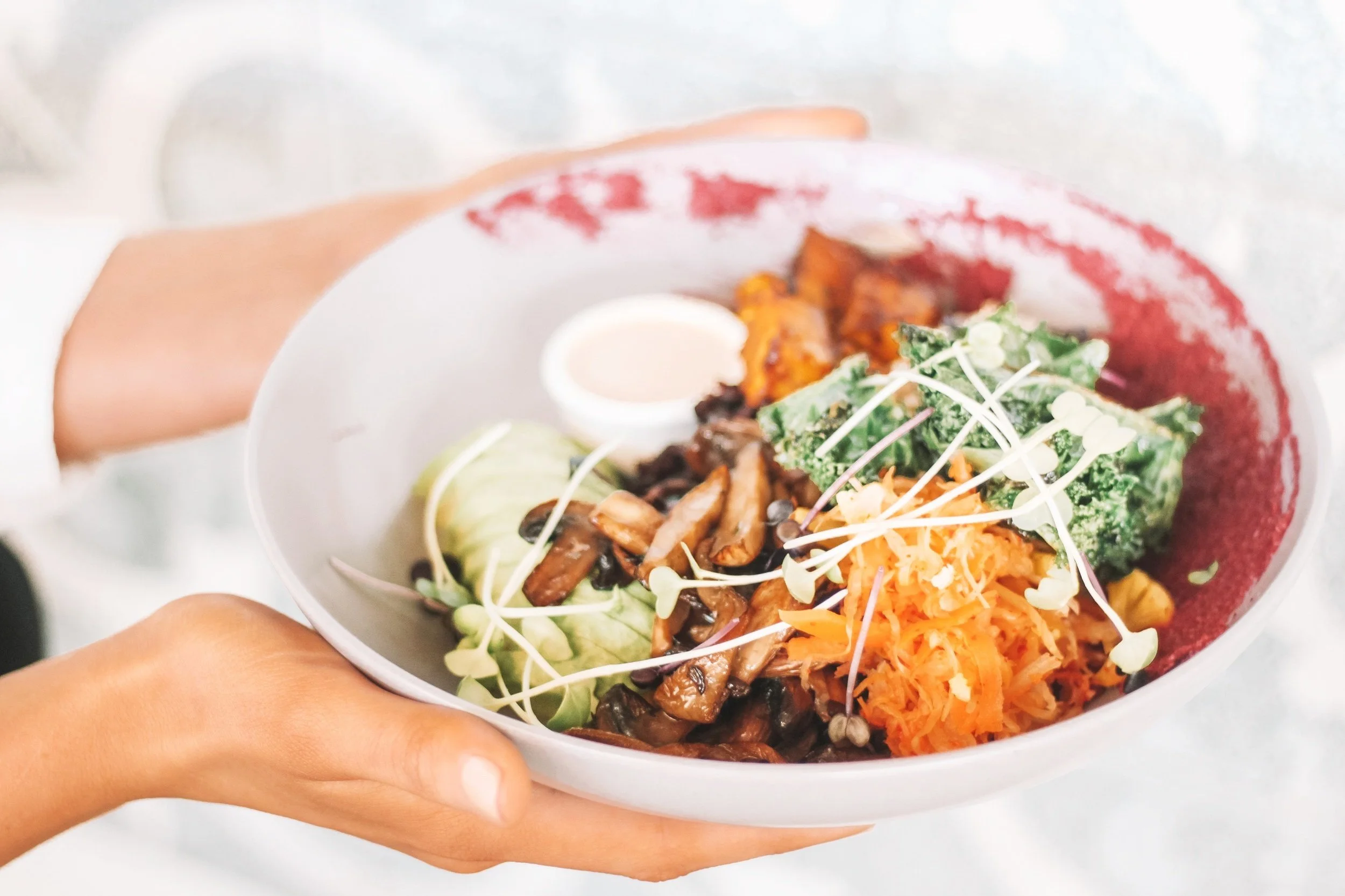
Photo by Maddi Bazzocco on Unsplash
In short: Eating plant-based can mean anything from fully vegan to simply putting plants at the centre of your plate. It can nourish you beautifully when it’s built on whole foods, with a generous protein at every meal and a little care for a few nutrients, especially vitamin B12. Start gently, one meal at a time, and let your own body tell you what suits it.
Perhaps a friend has gone vegan and looks wonderful. Perhaps your doctor mentioned eating more plants for your heart, or you simply feel lighter on days when lunch is a bowl of lentils and roasted squash. You’d like to eat more plants, but the questions pile up. Where will my protein come from? What will the family say? And what on earth do I cook on a Tuesday night?
These are the questions I hear most often, with short, practical answers. If you’d like to go deeper into the nutrients, I’ve written a full guide on how to meet your nutritional needs on a plant-based diet.
What does “plant-based” actually mean?
It means plants are at the heart of your plate: vegetables, fruit, beans, lentils, whole grains, nuts and seeds. For some people that’s fully vegan, with no animal foods at all. For others it’s vegetarian, with eggs and dairy. For many, it simply means mostly plants, with a little fish or meat now and then.
Do I have to go fully vegan?
Not at all. There’s no exam to pass and no label to earn. Some people feel wonderful fully vegan; others feel better with a few eggs, some yoghurt or a piece of fish. Both are fine. That’s what bio-individuality means: your body, your answer.
Why do people choose to eat more plants?
For their health, for the animals, for the planet, for their budget, or simply because they love the food. A plate full of different plants brings fibre, colour, vitamins and minerals, and it’s a feast for your gut bacteria too. Many people also find they feel lighter and more energetic.
Is plant-based eating automatically healthy?
No. Crisps, white bread and fizzy drinks are all plant-based. So are many ultra-processed vegan burgers and desserts. They’re fine now and then, but they don’t make a nourishing way of eating. What makes the difference is whole foods: the lentils, the vegetables, the oats, the walnuts.
Where will my protein come from?
From beans, lentils, chickpeas, tofu, tempeh, peas, nuts, seeds and whole grains, and from eggs and dairy if you eat them. Plant foods are a little less concentrated in protein, so make the portion generous: a real bowl of lentils as the main event, not a spoonful scattered on a salad. Mixing different plants over the day gives your body everything it needs; you don’t need to combine them at every meal.
Which nutrients need a little extra care?
Mainly vitamin B12, iron, calcium, vitamin D, iodine and omega-3 fats. Plants give some of these less easily, and vitamin B12 isn’t found in plants at all. The fewer animal foods you eat, the more care you need. I explain each one, and where to find it, in my plant-based nutrients guide.
Do I need supplements?
If you eat no animal foods at all, you need a reliable source of vitamin B12, from fortified foods or a supplement. For anything else, it depends on you. I don’t advise on supplements myself, so please talk to your doctor or pharmacist; they can suggest a blood test and check for interactions with any medicines you take.
Will all those beans upset my stomach?
They might at first, if your gut isn’t used to them. Start with small portions, choose lentils and split peas (often gentler), rinse tinned beans, cook dried ones well, and add a little cumin or fennel. Your gut bacteria adapt over a few weeks. I explain why in The gut health trio.
How do I start without feeling overwhelmed?
One meal at a time. Choose the meal that’s easiest for you, often lunch, and make it plant-based a few times a week. When that feels normal, add another. Changes that grow slowly tend to stay.
What does a plant-based day look like?
Breakfast: porridge with a grated apple, walnuts and a spoonful of seeds. Lunch: a big bowl of lentil and vegetable soup with good bread. A snack: a pear and a handful of almonds. Dinner: chickpeas roasted with squash and red onion, a green salad and some hummus. Nothing complicated, just plenty of plants in many colours.
What are some easy plant-based meals?
Lentil dhal, a big pot of vegetable and bean soup, buckwheat with roasted vegetables and tahini, chickpea curry, a tofu and vegetable stir-fry, or jacket potatoes with beans and a crunchy salad. You’ll find a warming autumn soup in Eating with the seasons, and more ideas in my recipes.
Is eating plant-based expensive?
It can be one of the cheapest ways to eat. Dried lentils, beans, oats, seasonal vegetables and frozen peas cost very little. What gets expensive are the ready-made vegan products. Shopping with a short list helps; I share how I do it in Simplify your grocery shopping.
How do I eat out or at friends’ houses?
Look at the menu ahead, choose the vegetable dishes and sides, and don’t be shy about asking for a change. At friends’ houses, tell them kindly in advance, offer to bring a dish to share, and remember that one meal is just one meal. Being flexible keeps eating a pleasure.
How do I cook for a family that isn’t plant-based?
Cook a plant-based base everyone enjoys, like a chilli with beans, a vegetable curry or a big tray of roasted vegetables with grains, and let those who want it add some meat, fish or cheese on the side. Most families find they enjoy far more plant meals than they expected.
Is plant-based eating a good idea after fifty?
It can be, with a little extra attention to protein, because muscle needs a clearer message to stay with you as you get older, and to calcium and vitamin D for your bones. Many women in menopause enjoy more plants on their plate. I talk about this in my FAQs on nutrition in perimenopause and menopause.
What about pregnancy, children and teenagers?
A well-planned plant-based diet can work at these stages, but needs are higher and the margin for error is smaller. Please plan it with your doctor, midwife or a registered dietitian, especially for vitamin B12, iron, calcium, iodine and omega-3 fats.
How do I know if it suits me?
Listen to your body. Do you have steady energy? Do you feel satisfied after meals? Is your digestion comfortable? Are you sleeping well? If you feel tired, cold or hungry all the time, or your hair and nails change, something may be missing. Adjust, ask for help, and remember there’s no shame in changing your mind.
When should I talk to my doctor?
Talk to your doctor before making big changes if you have a health condition or take regular medicines, and ask about a blood test if you’ve been fully plant-based for a while, feel unusually tired, short of breath or low, or notice tingling in your hands or feet. Your doctor or pharmacist is also the person to ask before starting any supplement.
Would you like some help?
Eating more plants is easier when someone helps you make it fit your tastes, your family and your body. That’s the kind of practical support I give in my group programmes in nutrition and health, such as Six Tuesdays in Montignac. If you’d like to know when the next group opens, write to me at hello@catherinepolet.coach.
I also coach one to one online, in English, French, Spanish and German. Book a free 20-minute call and tell me what you’d love your plate to look like.
About Catherine
I’m Catherine Polet, a holistic nutrition health coach, yoga and autogenic training teacher for more than 30 years, author and speaker. I help people find a way of eating and living that suits their own body, online in English, French, Spanish and German, and in person in Southwest France.