

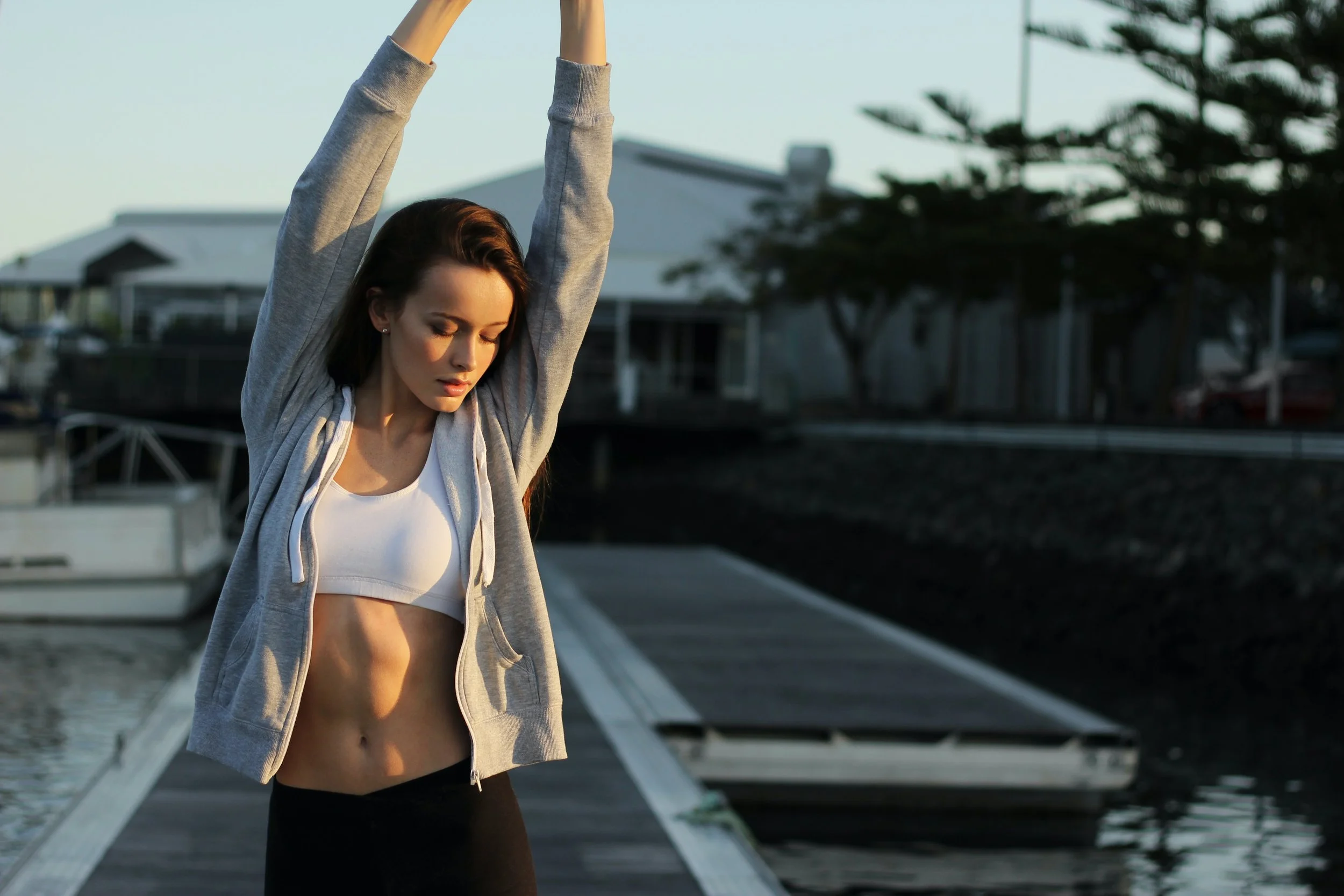
Photo by Christopher Campbell on Unsplash
In short: You don’t need a gym to strengthen your abdominal muscles. Five exercises on a mat at home cover all of them: the plank, the side plank, the Russian twist, the leg lift and the crunch. Do them about three times a week and make them a little harder as you get stronger. Whether your abs become visible is decided mostly in the kitchen, but a strong core is worth having anyway: it steadies your spine, helps to prevent back pain and gives you better balance in everything you do.
You bend down to lift a full shopping bag out of the car and feel it in your lower back. You get up from the sofa with a little push of the hands. You stand in the queue and notice you’re leaning on one hip. None of this is dramatic, but it’s often your core asking for some attention.
When you dream of toned abs, you don’t necessarily have to rush to the gym. It’s easy to do at home, too, without any equipment. Here is how it works.
Before you start: if you have back pain, or if you’re new to exercise, please check with your doctor or a physiotherapist first. They can tell you which of these movements suit you and which to leave out for now.
Why are strong abs about more than looks?
Strong abdominal muscles have a lot of advantages besides the way they look. They stabilise and relieve your spine, help to prevent back pain and protect your internal organs. Together with a strong back, a trained core gives you more balance and stability, and you benefit from that in every sport and in daily life: carrying, gardening, climbing stairs, getting up from the floor.
To train them well, you need to use three groups of muscles: the straight, the lateral and the deep, posterior abdominal muscles. Together they enclose your abdomen and pelvis and connect your chest to your pelvis, a little like a wide, firm belt. The five exercises below reach all three.
Everyone has a six-pack
It’s true: the muscles are there in all of us. Unfortunately, workouts alone aren’t enough to make them visible. Your six-pack is created in the kitchen!
If you want to see a result, you need to eat a healthy, balanced diet, bring down your body fat and, of course, keep at it. That doesn’t mean eating as little as possible. Muscles are built from what you eat, and a body that gets too little holds on to what it has, as I explain in why you need more food, not less. If you’d like to understand what happens inside, have a look at how your body burns fat.
How often should you train your abs?
Exercising about three times a week is ideal, with a day of rest in between. Increase the intensity steadily as you go. For example, start with three sets of fifteen repetitions, then add sets over the weeks, and shorten the rest between them.
Two things matter more than the numbers. Move slowly, so that your muscles do the work and not the swing. And keep breathing: breathe out on the effort, breathe in as you come back. If you find yourself holding your breath, the exercise is still a bit too hard, so do fewer.
What are the five best exercises for your abs?
1. The plank: for all the abdominal muscle groups
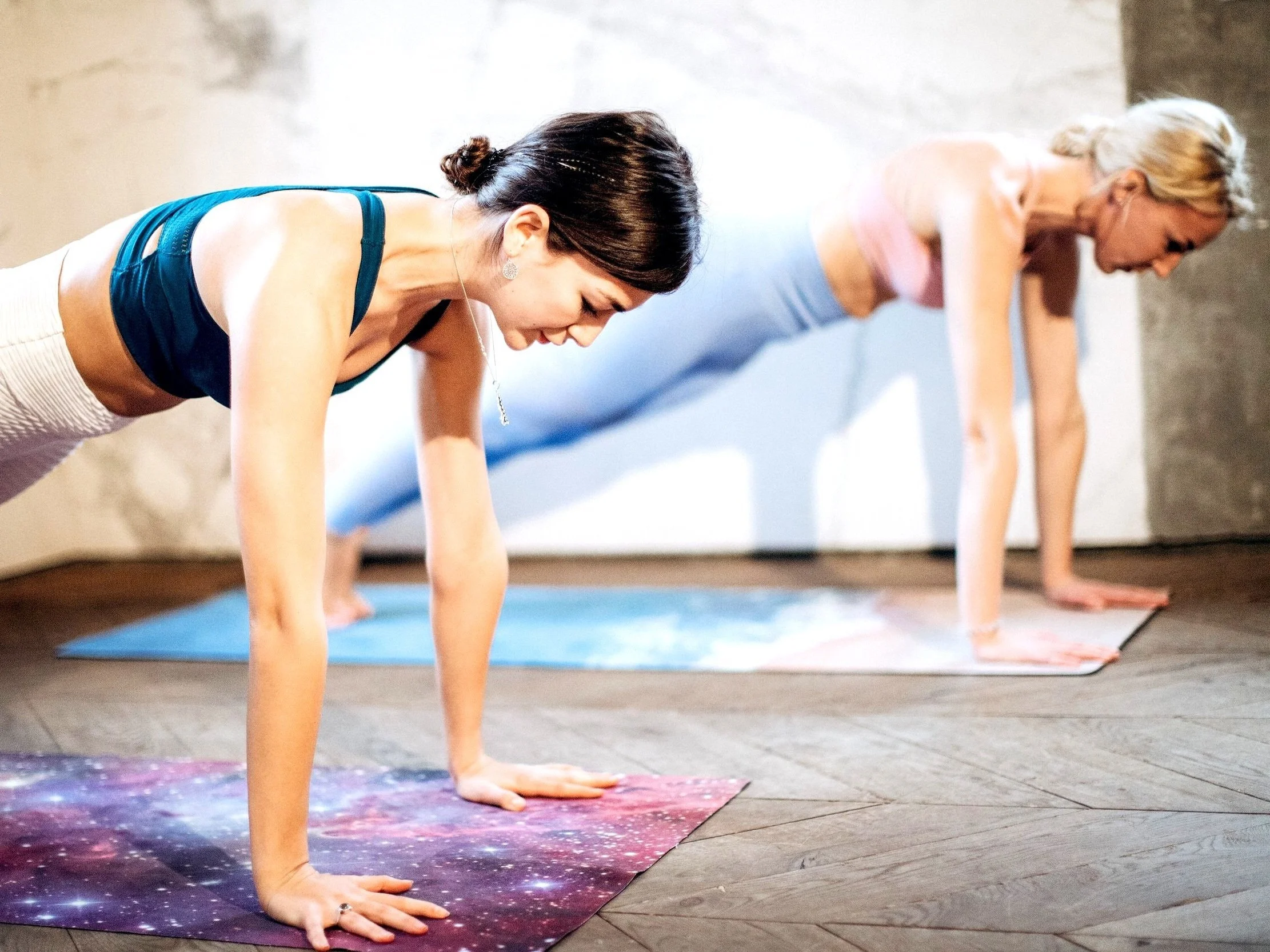
The Plank: for all the abdominal muscle groups
This ideal full-body exercise works for all abdominal muscle groups simultaneously. Lie on your stomach and position your palms below your shoulders, place your feet shoulder-width apart and get into the high push-up position. With your body forming a straight line, pull in your belly button and tighten your abdominals. Hold in this position.
Beginner 30 seconds, advanced 60 seconds minimum.
Lie face down, then lift yourself onto your forearms and toes, elbows under your shoulders. Your body makes one straight line from head to heels: no sagging in the lower back, no bottom in the air. Draw your navel gently towards your spine and look at the floor just in front of your hands.
Hold for twenty to thirty seconds, rest, and repeat three times. Too much for now? Keep your knees on the floor. It’s the same exercise, just kinder.
2. The side plank: lateral and posterior abdominal muscles

The Side Plank: lateral and posterior abdominal muscles
The variation of the plank is done in the side position with your elbow under your shoulder and your forearm resting on the ground. Place your feet one on top of the other, extend your legs and lift your hips to form a straight line.
Beginners hold each side for 30 seconds, advanced for 60 seconds.
Lie on your side, propped on your forearm, elbow under your shoulder, legs stretched out with one foot on top of the other. Lift your hips until your body is in one line, and don’t let them sink back or roll forward.
Hold for fifteen to twenty seconds on each side, three times. To make it easier, bend the lower knee and leave it on the mat.
3. The Russian twist: lateral abdominal muscles
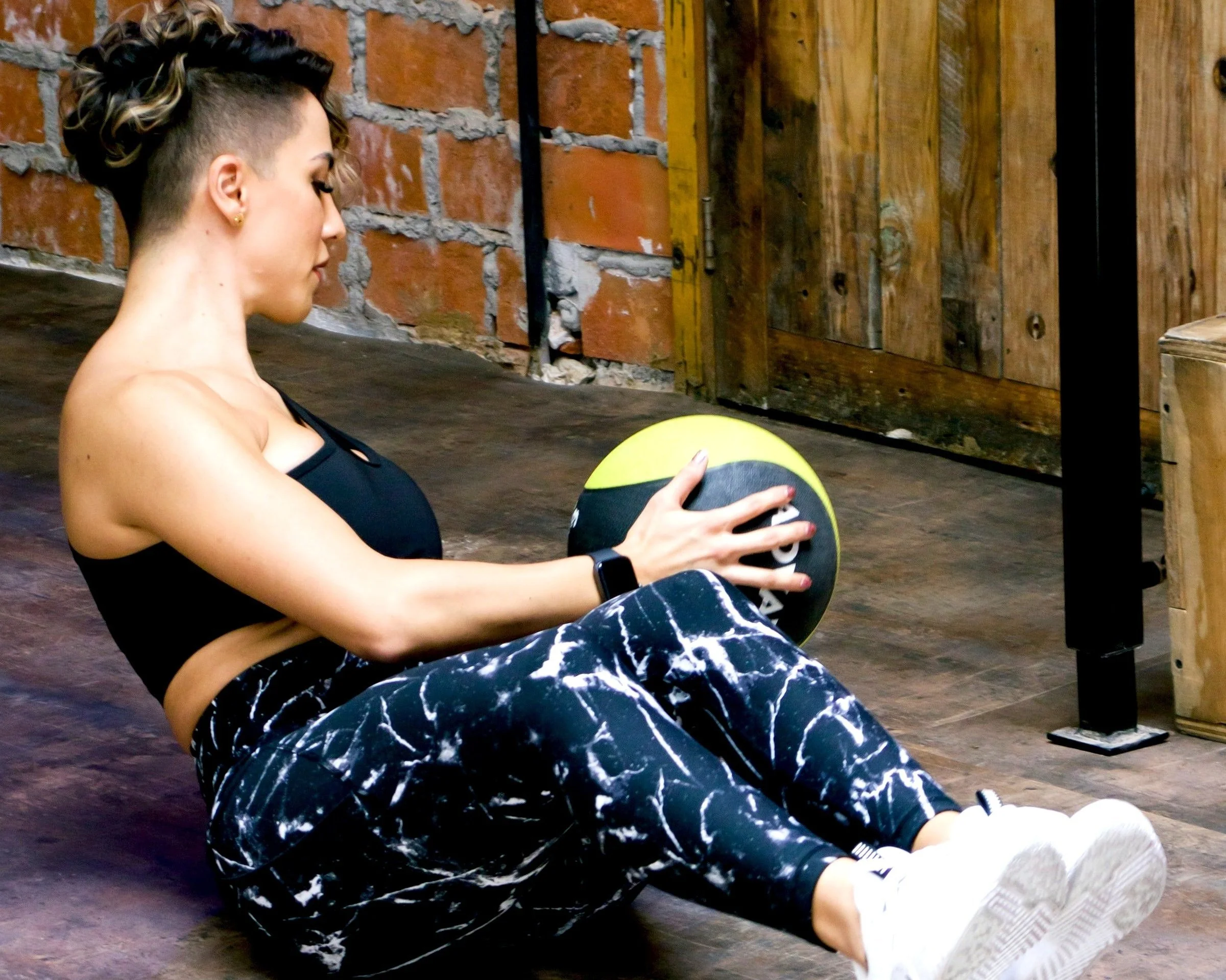
The Russian Twist: Lateral abdominal muscles
Here you sit and lift your legs slightly bent off the floor. Now slowly twist the upper body alternately to the right and to the left. Hands clasp each other in front of the body. You can also hold a ball instead. Perform slowly and with control.
Beginners start with 3x 15 repetitions (short rest in between).
Sit on the mat with your knees bent and your heels on the floor. Lean back a little with a long, straight back, until you feel your stomach working. Bring your hands together in front of your chest and turn your upper body slowly to the right, then to the left. Your shoulders turn, your arms just follow.
Count ten to fifteen turns to each side, three sets. Once that feels comfortable, lift your feet a little off the floor.
4. The leg lift: lower, straight abdominals
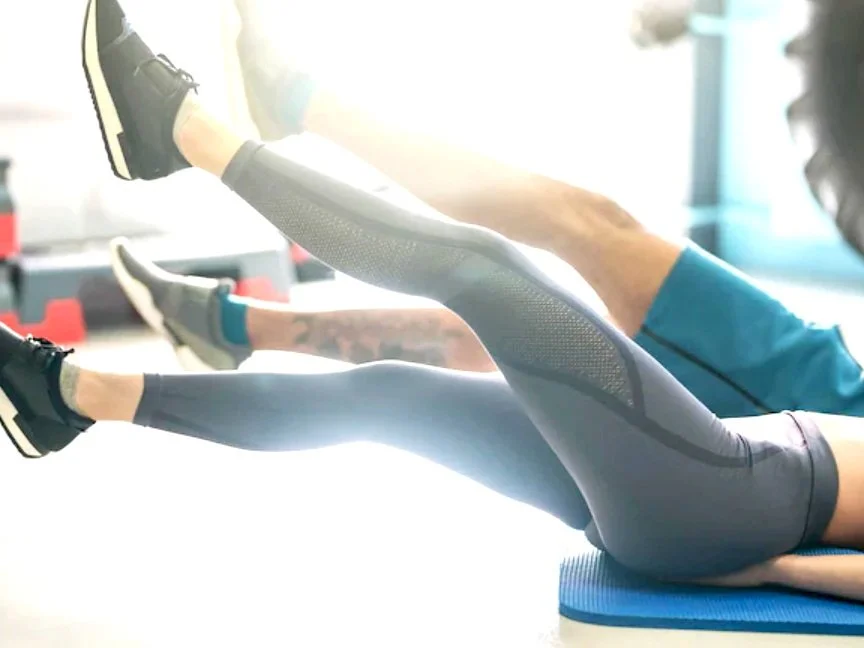
The Leg Lift: lower, straight abdominals
While lying on your back, slide your hands under your butt. Now lift the legs stretched so that the heels point towards the ceiling, lower them again without resting them on the floor, and repeat. During the exercise, your lower back is kept firmly pressed into the floor.
Beginners start with 3x 15 repetitions (short rest in between).
Lie on your back with your arms along your body and your lower back resting on the mat. Lift both legs towards the ceiling, then lower them slowly, only as far as you can go without your lower back arching away from the floor. Lift them again.
Do ten to twelve repetitions, three sets. If your back lifts, bend your knees or lower one leg at a time. This one deserves special care if your back is sensitive.
5. The crunch: for the straight abdominal muscles
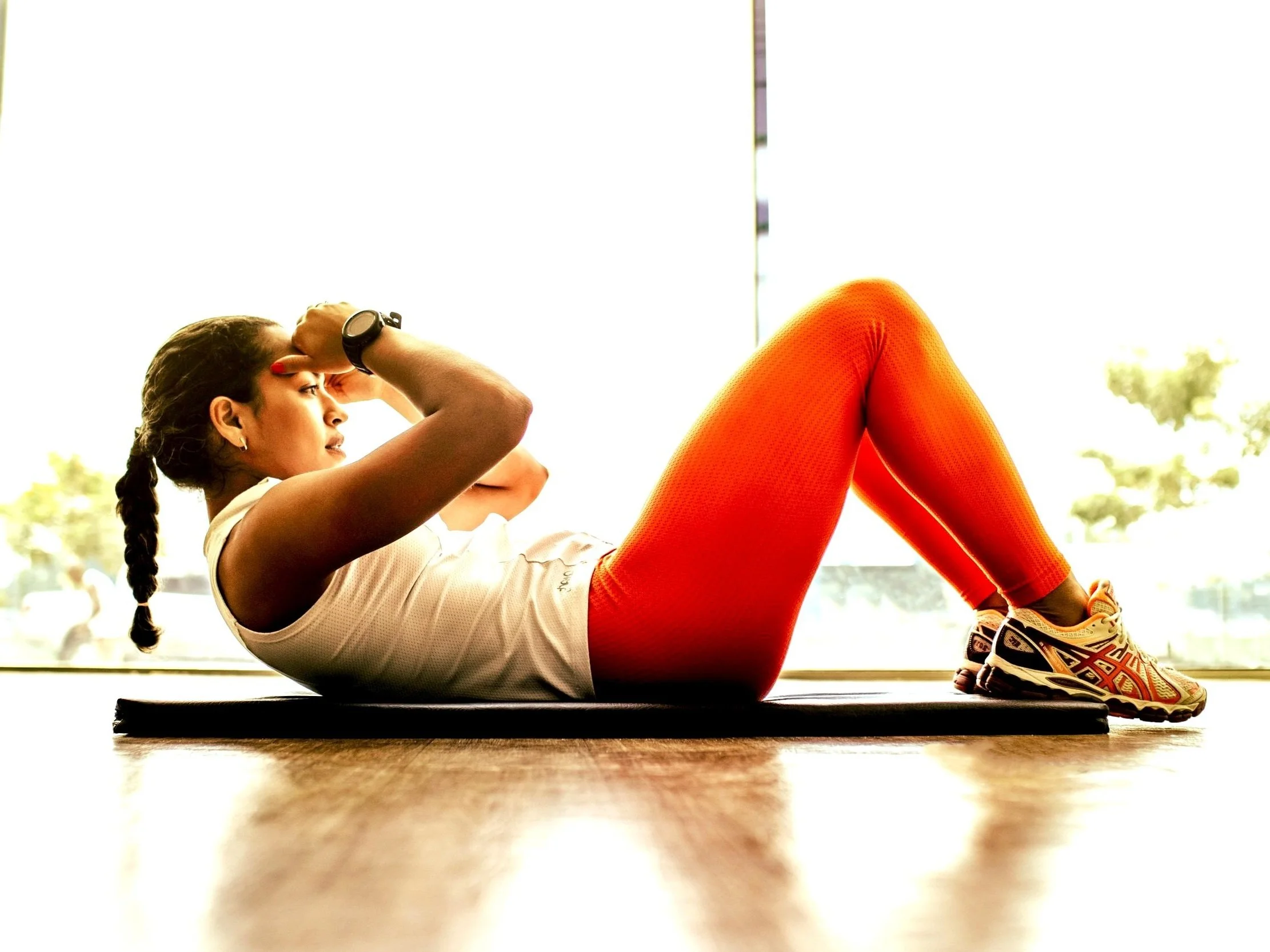
The Crunch: for the straight abdominal muscles
While lying on your back, place your feet hip-width apart. With your fingers, grab your temples and lift your shoulder blades off the floor. Proceed in a controlled manner, keeping the neck relaxed. Hold briefly at the top and slowly return.
Beginners start with 3x 15 repetitions (short rest in between).
Lie on your back with your knees bent and your feet flat on the floor. Place your fingertips lightly behind your ears, elbows wide. Breathe out and lift your head and shoulder blades a few centimetres off the mat, using your stomach and not your hands. Lower slowly.
Do fifteen repetitions, three sets. Keep a space the size of an orange between your chin and your chest, and never pull on your neck.
What helps you keep going?
The best routine is the one you really do. A few ideas to make it stick:
Tie it to something you already do. Roll out the mat before your morning shower, or while the dinner is in the oven.
Start small. One set of each exercise is a perfectly good beginning. Add the second set when the first feels easy.
Move on the other days too. A walk, the stairs, the garden. You’ll find more ideas in gentle ways to move every day.
Mix in something you enjoy. Balance and coordination work, as I describe in keeping your brain fit through coordination, or a dance or ballet workout, trains your core without you noticing.
Eat and rest well. Muscles grow stronger between sessions, not during them. A proper meal and a good night’s sleep are part of the training.
Frequently asked questions
How often should I train my abs?
About three times a week is ideal, with a day of rest in between so the muscles can recover. Ten to fifteen minutes is plenty when you do the movements slowly and with care.
Can I get a flat stomach with exercises alone?
No. The exercises make the muscles stronger, but whether you can see them depends on the layer of body fat on top, and that is mostly a matter of how you eat, sleep and live. Strong abs are worth having either way, because they support your back and your balance.
Do I need any equipment?
No. A mat or a folded blanket on the floor is all you need. Your own body weight gives the muscles enough to work against.
My neck hurts when I do crunches. What am I doing wrong?
You are probably pulling your head forward with your hands. Keep your elbows wide, your chin away from your chest, and let the lift come from your stomach. If it still hurts, leave the crunch out and stay with the plank.
When should I talk to my doctor?
Before you start, if you have back pain, a hernia, high blood pressure, have recently had surgery or a baby, or are new to exercise: check with your doctor or a physiotherapist first. And stop and ask for advice if any exercise causes sharp pain, pain that travels down a leg, or dizziness.
Would you like some help?
What you put on your plate so that your body can build strength, and how to fit movement into a full week, are things we work on in my group programmes in nutrition and health, such as Six Tuesdays in Montignac. If you’d like to know when the next group starts, write to me at hello@catherinepolet.coach.
Would you rather work one to one? I also coach online. Book a free 20-minute call, and we’ll look at the kitchen side of your six-pack together: meals that give you energy and help you feel strong in your body.
About Catherine
I’m Catherine Polet, a holistic nutrition health coach, yoga and autogenic training teacher for more than 30 years, author and speaker. I help people find a way of eating and living that suits their own body, online in English, French, Spanish and German, and in person in Southwest France.

