

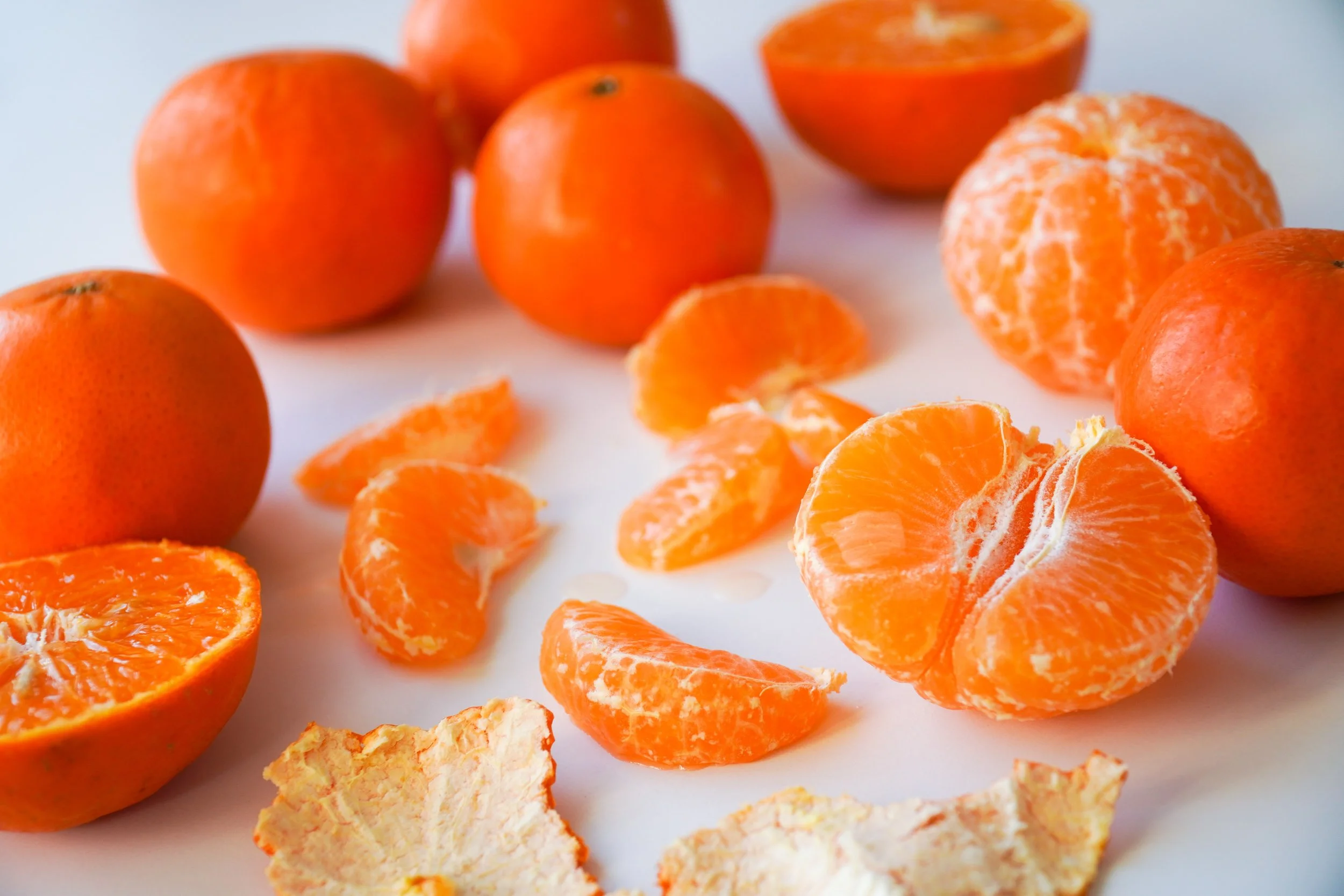
Photo by Karolina Kołodziejczak on Unsplash
In short: Mandarins are the sweetest citrus fruit of all, and they’re rich in the things your body is glad of in winter: vitamin C, colourful plant pigments, fibre and plenty of juice. That makes them a lovely answer when you fancy something sweet. Eat them whole, keep them cool, and enjoy two or three a day while they’re in season.
It’s late afternoon, it’s already getting dark, and you’d like something sweet. The biscuit tin is in the cupboard. On the table there’s a bowl of mandarins. You pick one up, press your thumb into the peel, and the whole kitchen smells of winter. A minute later you’ve had something sweet, juicy and fresh, and the biscuit tin has stayed where it was.
That’s why mandarins deserve to be one of your favourite fruits. They satisfy a sweet tooth and they do you good at the same time.
Why are mandarins so good for you?
They support your immune system
Mandarins are a good source of vitamin C, right at the time of year when coughs and colds are going round. Vitamin C helps your body’s defences do their work, and it’s also one of the antioxidants that protect your cells. Eating mandarins regularly through the cold months is a simple, pleasant way to look after yourself, alongside the other habits I describe in taking care of yourself this winter.
They’re good for your eyes and your skin
The orange colour is more than decoration. It comes from plant pigments that your body turns into vitamin A, which you need for your eyesight, especially in dim light, and for healthy skin and healthy linings in your nose, mouth and gut. Mandarins also contain other protective plant compounds. It’s one more reason to put plenty of colour on your plate, in winter as much as in summer.
They help when you have a sweet tooth
Mandarins taste wonderfully sweet, and yes, they contain natural fruit sugar. But a whole mandarin also brings water, fibre and nutrients, and it takes a moment to peel and eat. Precisely because they’re so sweet, they can stand in for sweets, biscuits or chocolate when the craving comes. If sugar is something you struggle with, you’ll find more ideas in my article on why sugar cravings happen and how to calm them.
They fit well if you’re watching your weight
A mandarin is light, juicy and filling for its size. It’s an easy snack to carry in your bag or keep on your desk, and a much better companion in the afternoon than whatever is in the vending machine. For other ideas, have a look at my tips for healthier snacking while you work.
Is there anyone who should be careful with mandarins?
Mandarins contain quite a lot of potassium. For most of us that’s a good thing. But some medicines for the heart and for blood pressure can raise the level of potassium in your blood, and with certain kidney problems the body has more trouble keeping it in balance. If that’s your situation, enjoy mandarins in moderation and ask your doctor or pharmacist how much potassium-rich fruit is right for you.
And if citrus fruit gives you heartburn, try having your mandarin with a meal instead of on an empty stomach, and see how you feel.
When are mandarins in season?
Harvest time varies from country to country, which is why you can find mandarins in the shops almost all year round. But they’re at their best, most plentiful and cheapest in late autumn and winter, when the main harvest has begun. That’s the moment to enjoy them. Eating fruit when it’s truly in season means more flavour and more goodness, as I explain in my simple guide to eating with the seasons.
How do you choose and store them?
Choose mandarins that feel heavy for their size, a sign that they’re full of juice, with a bright, fragrant peel. A slightly loose peel is normal for some varieties. Leave the ones that feel light, dry or soft in patches.
At room temperature mandarins quickly lose their juiciness and their aroma. So don’t keep them too long, and store them somewhere as cool as possible but free from frost: a cool larder, an unheated room, or the vegetable drawer of the fridge. Keep a few in the fruit bowl for the next day or two, where you’ll see them, and the rest in the cool.
How can you eat more mandarins?
Straight from hand to mouth, a mandarin is the perfect snack. But there’s much more you can do with them:
Add the segments to a winter salad with fennel, chicory or lamb’s lettuce and a handful of walnuts.
Stir them into plain yoghurt or your morning porridge.
Have one with a few almonds in the afternoon, so the energy lasts until dinner.
Squeeze the juice into a salad dressing in place of some of the vinegar.
Finish a meal with a mandarin and a square of dark chocolate.
Cook with them: mandarin juice and pieces of fruit go beautifully with fish. Try this hearty cod with a mandarin and mushroom topping.
I made a short video about this, you can watch it below.
Frequently asked questions
How many mandarins can I eat in a day?
For most people, two or three a day sit very comfortably in a varied diet. They are sweet, so enjoy them as fruit and not as something to nibble on all afternoon. If your stomach is sensitive to citrus, have them with or after a meal.
Is the sugar in mandarins a problem?
A whole mandarin gives you its natural sugar together with water and fibre, so your body takes it in more gently than the sugar in sweets, biscuits or juice. Eat the fruit whole, and pair it with a few nuts if you would like the energy to last longer.
What is the difference between mandarins and clementines?
Mandarin is the name of the whole family. Clementines and satsumas are members of it: usually easy to peel, sweet, and with few or no pips. Other mandarins can have more pips and a stronger flavour. Choose the one you like best.
Can I use the peel?
Yes, if the fruit is organic and unwaxed, and you wash it well. Grate a little zest into yoghurt, porridge, a salad dressing or a cake, or dry strips of peel for your tea. If the fruit is not organic, I would leave the peel out.
When should I talk to my doctor?
If you take medication for your heart or blood pressure, or have kidney problems, ask your doctor or pharmacist whether you need to watch how much potassium-rich fruit you eat. Do the same if citrus gives you heartburn or other symptoms that do not settle.
Would you like some help?
Finding sweet things that do you good, and making peace with a sweet tooth, is one of the things we work on in my group programmes in nutrition and health, such as Six Tuesdays in Montignac. If you’d like to know when the next group begins, write to me at hello@catherinepolet.coach.
Would you rather work one to one? I also coach online. Book a free 20-minute call, and tell me what you reach for when the afternoon gets long. We’ll start from there.
About Catherine
I’m Catherine Polet, a holistic nutrition health coach, yoga and autogenic training teacher for more than 30 years, author and speaker. I help people find a way of eating and living that suits their own body, online in English, French, Spanish and German, and in person in Southwest France.

