

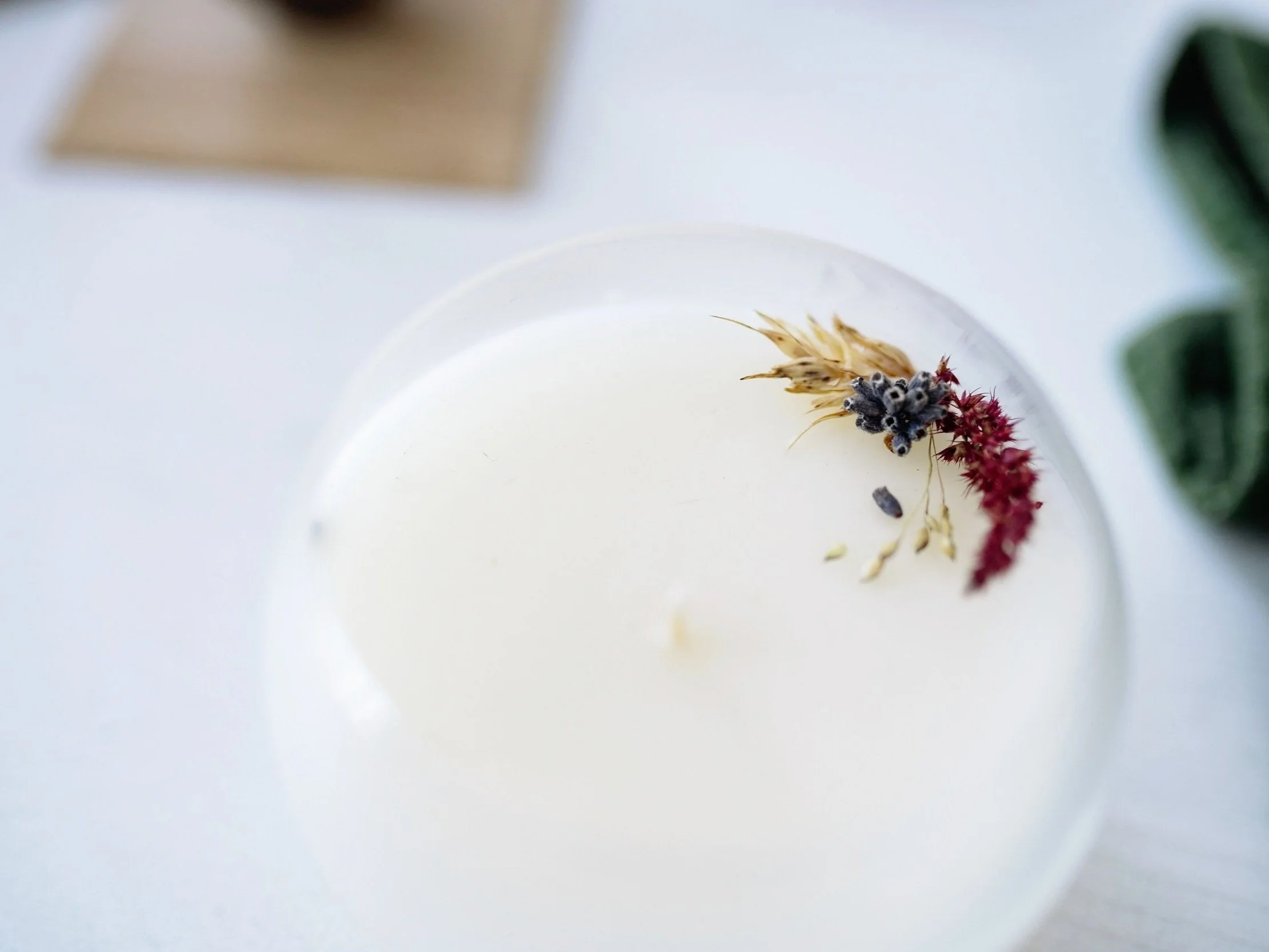
Photo by Yan Krukov on Pexels
In short: Homemade candles do you good in three ways. Their light and scent help you relax, making them gives your mind a rest because your hands and your attention are fully occupied, and you put leftover wax to use instead of throwing it away. All you need is a pan, a bowl, cotton thread, a few jars and the candle ends you already have. Below you’ll find the full how-to, with the safety points to keep in mind.
You know the drawer. Somewhere in your house there’s a collection of candle stubs: the red ones from last Christmas, half a dinner candle, the bottom of a scented jar that won’t light any more. They’re too small to use and somehow too good to throw away.
Keep them. On a grey afternoon, with a pan of water on the hob and a few clean jam jars, they can become new candles. And the making is at least as good for you as the candles themselves.
Why do candles calm us?
The soothing effect of a scented candle has a lot to do with the way your brain handles smell. Scent goes straight to the part of your brain where your memories and emotions live. That’s why one breath of orange and cinnamon can take you back to a kitchen from your childhood, and why a smell you like can change your mood within seconds. Scents, memories and emotions are closely tied together.
The light plays its part too. A small, warm flame in a dim room slows everything down. It’s a lovely signal that the day is ending, and it fits beautifully into an evening routine that helps you wind down or into your Sunday self-care.
Why is making something with your hands good for you?
When you make your own candles, you get a second benefit: creating something lifts your mood and eases tension. Making things asks for your focus and concentration, and multitasking simply doesn’t work when you’re pouring hot wax. Your attention is on one thing only.
In that state, often called flow, your mind goes quiet. The critical voice in your head steps back, you judge your ideas less and you dare a little more. You come out of it feeling pleased and content, with something to show for your time.
What happens in you during a creative activity is close to what happens in meditation, mindfulness or yoga. All of them bring you peace and calm by shutting out the noise around you for a while. If sitting still isn’t for you, creating with your hands can be your way in. You’ll find other gentle ways in my article on meditation and the stress of daily life.
Why is it good for the planet too?
Finally, you’re doing something kind for our planet. Wax leftovers usually end up in the bin. But you can easily make new candles from them, each one an original, and a wonderful gift for Christmas. This way you reuse, recycle and transform. And if you have children, they’ll love to get involved.
“Refuse what you do not need; reduce what you do need; reuse what you consume; recycle what you cannot refuse, reduce and reuse; or transform the rest.”
Bea Johnson
If this way of thinking appeals to you, you might also like my ideas for a waste-free kitchen.
What do you need?
Candle remnants
Cotton thread, plain and untreated, for the wicks
A cooking pot
A heatproof bowl that sits on top of the pot (an old one, as wax is hard to remove completely)
A small sieve
Containers to fill: clean, sturdy jars, glasses or cups without cracks
A pencil for each container
Optional: essential oils
Useful extras: oven gloves, and newspaper to protect your worktop
How do you make candles from leftover wax?
1. Sort and cut
Sort your candle scraps by colour and cut them into small pieces. Small pieces melt faster and more evenly.
2. Melt the wax in a water bath
Put wax of one colour in the bowl. Heat a few centimetres of water in the pot, set the bowl on top and let the wax melt slowly over a low heat. Fish out the old wicks and any impurities with the small sieve.
3. Prepare the wick
Cut the cotton thread to twice the height of your container. Tie a knot at one end, and roll the other end around a pencil.
4. Dip and place the wick
Dip the thread briefly in the melted wax, so that it stiffens. Then lower it into the centre of the glass, knot at the bottom, so that the wick hangs straight down. Rest the pencil across the opening and adjust the thread until it sits in the middle.
5. Pour and let it set
Take the bowl off the heat. If you like, stir in a few drops of essential oil. Pour the hot wax carefully into the jar and let it harden, without moving it. Give it several hours, or leave it overnight. Then unroll the wick from the pencil and trim it to about a centimetre above the wax.
Tip: play with colours
If you have several colours, why not pour a layer of one colour, let it set, and then add a layer of another? There are no limits to your creativity.
I made a short video about this, you can watch it below.
How do you make candles safely?
Melting wax is simple, but hot wax deserves respect. A few sensible habits keep it a pleasure:
Always use a water bath. Never melt wax in a pan directly on the heat. Wax that gets too hot can catch fire.
Stay with it. Don’t leave melting wax unattended, keep the heat low, and make sure the water doesn’t boil dry.
If wax ever catches fire, never use water. Turn off the heat and smother the flames with a lid or a damp cloth.
Protect your hands. The bowl gets hot. Use oven gloves and pour slowly.
Choose sturdy containers. Thin or cracked glass can break when hot wax goes in. Warming cold jars a little first helps.
Give children the safe jobs. Sorting, choosing jars, preparing wicks and decorating are for them. Melting and pouring are for an adult. Keep pets out of the kitchen while you work.
Go easy on essential oils. A few drops are enough. If you’re pregnant, have asthma or allergies, or share your home with pets, ask your doctor, pharmacist or vet which oils are suitable, or leave the candle unscented.
Never pour leftover wax down the sink. It sets in the pipes. Let it harden in the bowl and keep it for next time, and wipe your tools with kitchen paper while they’re still warm.
Burn your candles with care. Put them on a heatproof surface, away from curtains and draughts, out of reach of children and animals. Never leave a burning candle alone, and air the room afterwards.
Which scents could you choose?
Choose a scent you love, because that’s the one that will do you good. Lavender is a classic for the evening. Orange or mandarin smells warm and cheerful in winter. A fresher note such as peppermint suits a desk or a kitchen, and I’ve written more about it in my article on peppermint essential oil. An unscented candle is lovely too: the light alone does a great deal.
Tie a ribbon and a handwritten label around the jar, and you have a gift that cost you almost nothing and means a lot. It’s the kind of quiet, homemade pleasure that helps you stay calm in the weeks before Christmas.
Frequently asked questions
What can I use as a wick?
Plain, untreated cotton thread or cotton kitchen string works well. For a wider candle, plait three strands together so the wick is a little thicker. Avoid synthetic thread, which melts and smokes. You can also buy ready-made candle wicks in craft shops.
Which containers are safe for homemade candles?
Use sturdy, heatproof containers: clean jam jars, small preserving jars, thick glass yoghurt pots or ceramic cups. Check that there are no cracks or chips. Avoid thin drinking glasses and plastic, and warm cold jars slightly before you pour.
How much essential oil should I add?
A few drops per small jar are enough. Stir them in just before you pour, when the wax has come off the heat. Essential oils are concentrated, so more is not better. If you are pregnant, have asthma or allergies, or have pets, ask your doctor, pharmacist or vet which oils are suitable, or leave the candle unscented.
Can children help?
Yes, and they usually love it. Give them the safe jobs: sorting the colours, choosing the jars, preparing the wicks, decorating the finished candles. The melting and pouring of hot wax is a job for an adult.
Why does my candle have a hollow in the middle?
Wax shrinks as it cools, so a small dip around the wick is normal. Keep a little wax back, melt it again once the candle has set, and top up the hollow. Letting the candle cool slowly, away from draughts, also helps.
Would you like some help?
Finding simple things that calm you, and making room for them in a full week, is one of the things we work on in my group programmes in nutrition and health, such as Six Tuesdays in Montignac. If you’d like to hear when the next group opens, write to me at hello@catherinepolet.coach.
Would you rather work one to one? I also coach online. Book a free 20-minute call, and we’ll talk about what helps you slow down, by candlelight or otherwise.
About Catherine
I’m Catherine Polet, a holistic nutrition health coach, yoga and autogenic training teacher for more than 30 years, author and speaker. I help people find a way of eating and living that suits their own body, online in English, French, Spanish and German, and in person in Southwest France.

