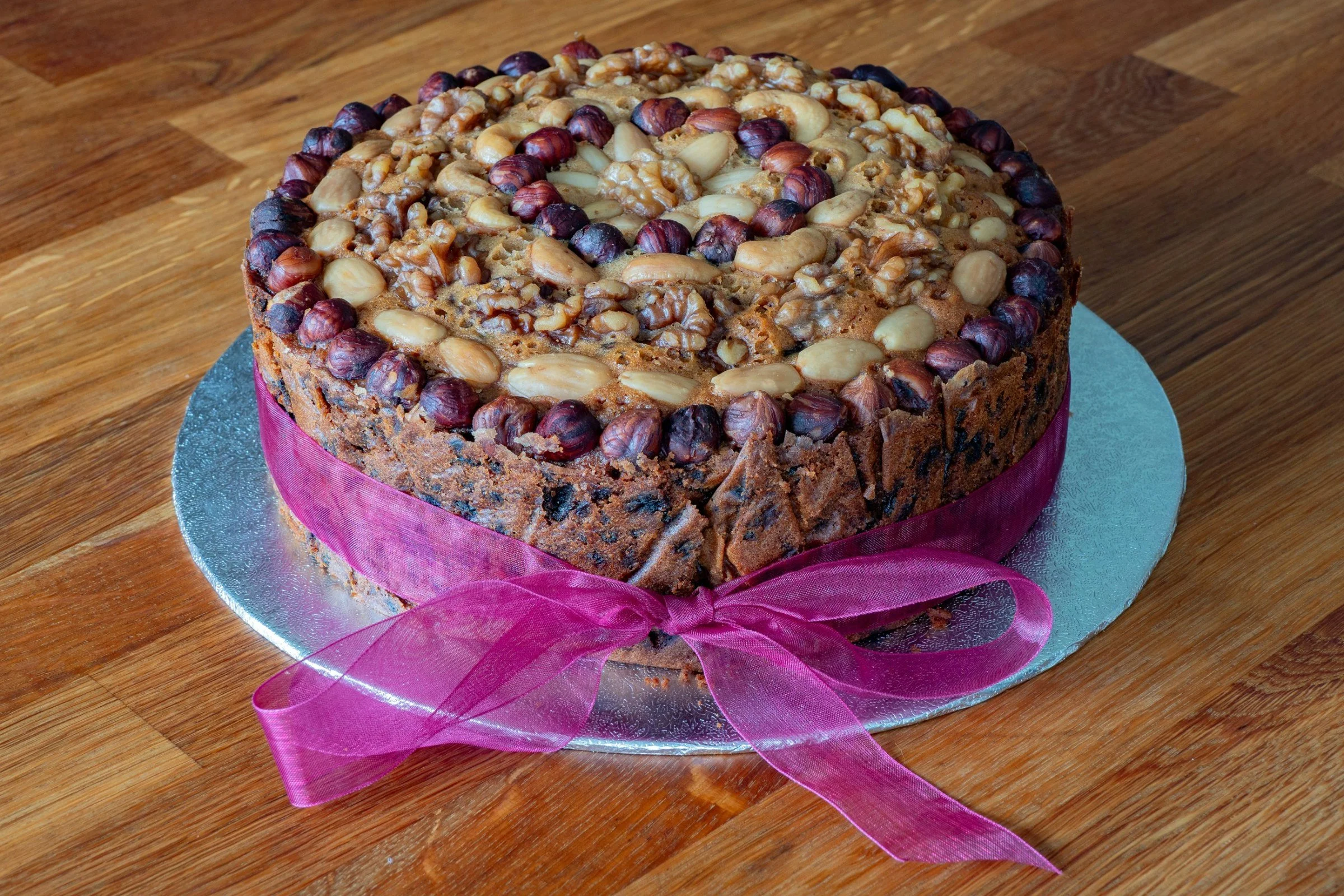
In Britain, the last Sunday before Advent is called Stir-up Sunday. Families gather in the kitchen, everyone gives the Christmas cake or pudding mixture a stir, and each person makes a wish. This year it falls on 22 November, so there’s still time to soak your fruit and join in.
A traditional Christmas cake is rich: lots of butter and sugar, then a thick layer of marzipan and royal icing on top. Mine keeps the part I love most, the fruit. Raisins, apricots and our Agen prunes from here in the Southwest are soaked overnight in tea and orange juice, so they plump up and do most of the sweetening. Spelt flour and ground almonds give it body and some fibre, and instead of icing I crown it with nuts in rings, the way they do with a Dundee cake. It looks festive with a ribbon around it, and a thin slice with a cup of tea really satisfies.
Like every fruit cake, it gets better as it waits. Wrap it well, and by Christmas the flavours will have settled and deepened. If you’d like to understand why some foods keep you full and others don’t, I wrote about how much fibre you need in midlife.
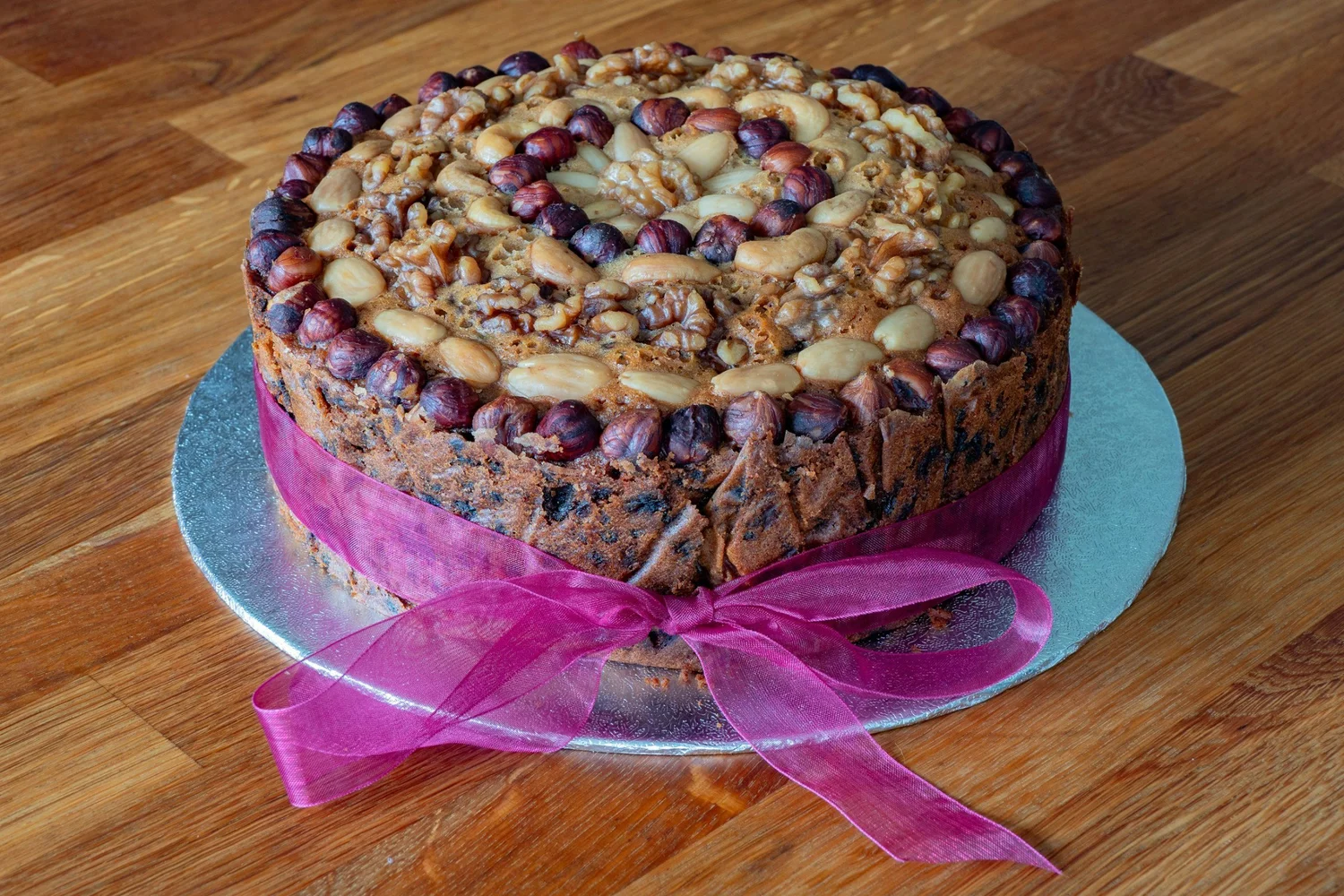
Lighter Christmas Cake with Walnuts, Almonds and Hazelnuts
Ingredients
For the soaked fruit (the night before)
For the cake
For the topping
Instructions
Feeding the cake
If you like, unwrap it once a week, prick the top with a skewer and spoon over 1 tablespoon of Armagnac or cold tea. It keeps for at least 4 weeks.
Alcohol-free
Use only tea and orange juice for soaking and feeding. It’s just as moist.
Make it gluten-free
Replace the spelt flour with buckwheat flour or a gluten-free flour mix.
To finish
Tie a wide ribbon around the cake before serving. It hides the sides and makes it look like a present.
Per serving (1 slice, about)
5 g protein, 4 g fibre.