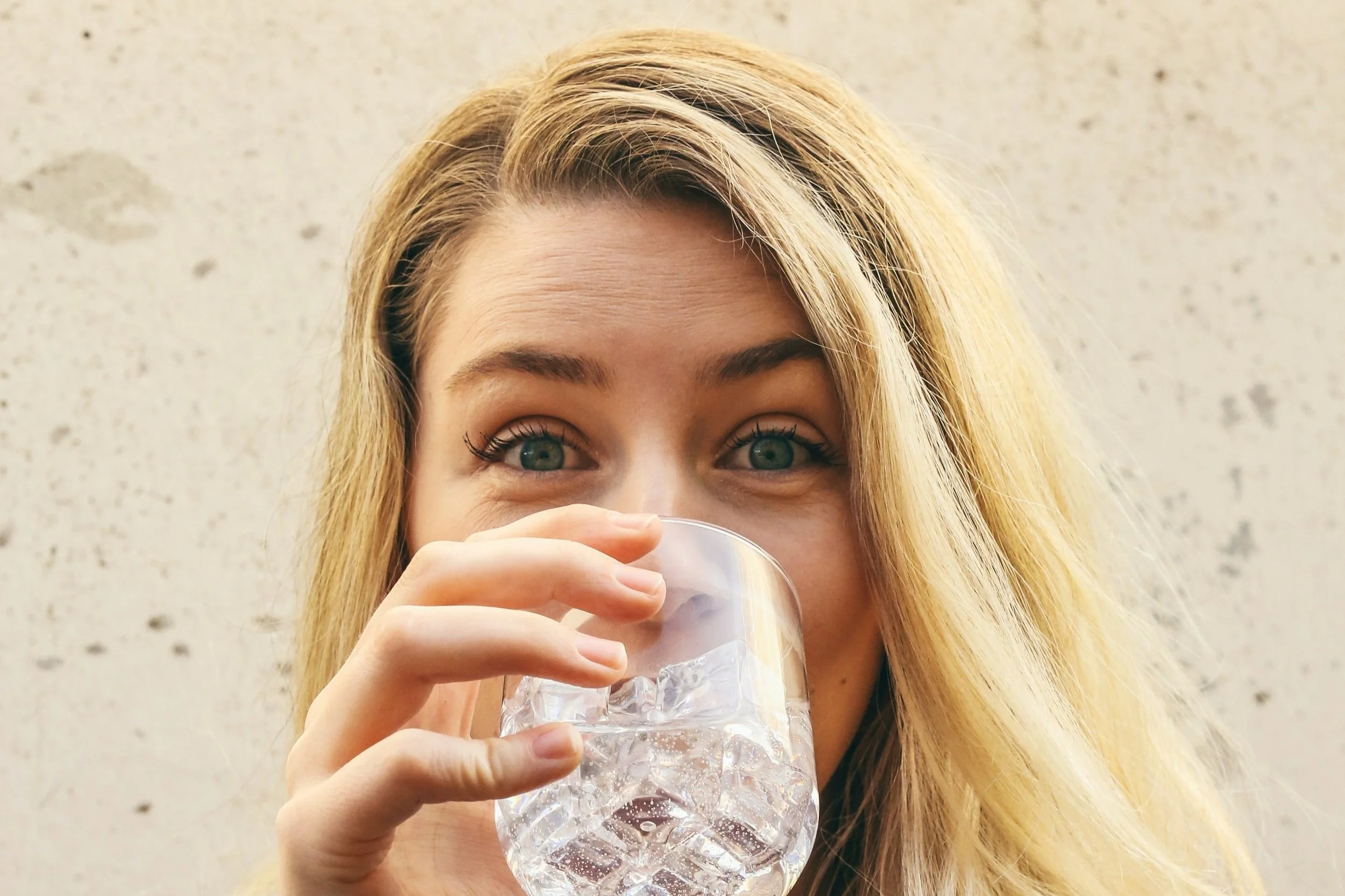
Photo by Giorgio Trovato on Unsplash
In short: You don’t need to count glasses. Drink through the day, more when it’s hot or when you’re active, and let your thirst and the colour of your urine guide you. Water is best, but herbal teas, soups, fruit and vegetables all count. Below you’ll find my answers to the 18 questions people ask most often about drinking enough.
It’s four in the afternoon. Your head feels heavy, you’ve read the same line three times and you’re thinking about a coffee and something sweet. Then you notice the glass of water you poured this morning, still full, next to your keyboard.
Most of us know that drinking enough matters. What’s less clear is what “enough” means, whether coffee counts, and what to do when you simply forget. There’s a lot of confusing advice around, so here are plain answers. If you’d like to read more about how water affects how you feel, start with how staying hydrated helps your mood and energy.
Frequently asked questions
I’ve grouped the 18 questions under four headings, so you can go straight to what interests you: how much you need, what counts, what water does for your body and mood, and what to do around exercise and family life.
How much do you need, and how do you know?
How much water should I drink each day?
There is no single number that suits everyone. How much you need depends on your size, your age, how much you move, what you eat and the weather. So forget about counting glasses. Drink through the day, and more when it is hot or when you are active. Thirst is a good guide, and so is the colour of your urine: pale yellow means you are doing well. If your doctor has given you a limit on fluids, for your heart or kidneys for instance, follow that advice.
How can I tell if I am dehydrated?
The first sign is thirst, and by the time you feel it your body is already asking. Other early signs are a dry mouth, dark yellow urine, a headache, tiredness, feeling dizzy when you stand up and dry skin. If it gets worse, you may feel very thirsty, confused or faint, with a racing heart and fast breathing. At the first signs, drink some water, slowly, and rest somewhere cool. If the signs are strong or do not ease within a day, get medical help.
What are some signs that I may be drinking too little water?
The quiet ones are easy to miss. You feel sluggish in the afternoon, you find it hard to concentrate, your mouth is a little sticky, you are constipated, your skin is dry, and you realise you have hardly been to the toilet all day. None of these proves you are short of water, because each can have other causes, but together they are worth a simple test: drink regularly for a few days and see how you feel.
Can I drink too much water?
It is rare, but yes. If you drink a very large amount in a short time, the salt in your blood becomes too diluted. That can cause a headache and nausea, and in serious cases it is dangerous. In everyday life you are very unlikely to get there. Simply do not force water down when you are not thirsty, and sip through the day instead of drinking a great deal at once.
How can I make sure I drink enough water throughout the day?
Make it easy, and tie it to things you already do. A glass when you get up. A jug on the table at every meal. A bottle or a glass in sight where you work, because what you see, you drink. A cup of herbal tea in the afternoon. If plain water bores you, add slices of lemon, cucumber or a few mint leaves. A reminder on your phone can help for the first weeks, until the habit is there. And when you feel tired or flat, try a glass of water before you reach for anything else.
What counts as hydration?
Can I get hydrated from other beverages besides water?
Yes. Water is the simplest and the best, but other drinks count too. Infused water, with fruit, vegetables or herbs left in a jug overnight, is a lovely way to drink more: try cucumber and mint, lemon and ginger, or strawberry and basil. Herbal teas such as chamomile, peppermint and ginger are good, warm or cold. Coconut water naturally contains minerals and is pleasant after sport. Fruit juices and smoothies hydrate as well, but they are sweet, so keep them for now and then and choose pure juice with no added sugar. Even coffee and tea count, in moderation.
Can certain foods help with hydration?
Very much so. Fruit and vegetables are mostly water: watermelon, cucumber, celery, strawberries, oranges, tomatoes, lettuce, courgettes. Soups and broths are wonderful too, especially in the colder months, because they bring water and minerals such as sodium and potassium in the same bowl. A day with plenty of vegetables, fruit and a bowl of soup already gives you a good part of the water you need.
How does caffeine affect hydration?
Coffee and tea make you go to the toilet a little more often, but in moderate amounts they do not dry you out. A cup of coffee or tea still counts as fluid. It is different with a lot of caffeine, and especially with energy drinks, which combine caffeine with a great deal of sugar. We all react differently, so notice how you feel. If coffee leaves you jittery, thirsty or sleepless, have less of it, and drink a glass of water alongside.
Is it possible to stay hydrated without drinking water?
To a point. Food gives you water, especially fruit, vegetables and soups. Milk, tea and other drinks add to it. Your body even makes a little water of its own when it breaks down what you eat. But all of that is rarely enough, and plain water remains the easiest way to give your body what it needs. If you really dislike it, start with infused water or herbal teas and work from there.
Does the temperature of the water I drink matter?
For hydration itself, hardly at all. Cold, room temperature or warm, water is water, so choose what makes you drink more. Cool water is pleasant when it is hot or when you are exercising. Warm or hot water is comforting when you have a cold or a sore throat, and many people find it kinder on the stomach first thing in the morning.
Water, your body and your mood
How does dehydration affect my skin?
When water is short, your body looks after your vital organs first, and your skin comes last. It can become dry, dull and flaky, and fine lines show more. Drinking regularly and eating fruit and vegetables helps your skin from the inside. A gentle moisturiser helps it to hold water on the outside.
Can dehydration affect my mood?
Yes. Even when you are only a little short of water, you can feel irritable, flat or tired, and find it harder to concentrate, remember things and make decisions. A headache often joins in, which does not help your mood either. So if you feel out of sorts in the middle of the afternoon for no clear reason, ask yourself when you last had something to drink.
Can drinking water help prevent headaches?
For some headaches, yes. Not drinking enough is a common trigger, so drinking regularly through the day can mean fewer of them, and a glass of water is a sensible first thing to try when one begins. Headaches have many other causes, though: stress, short nights, skipped meals, alcohol, too much or too little coffee. If your headaches are frequent, severe or different from usual, see your doctor.
Can drinking water help with weight loss?
Water does not make anyone lose weight on its own, but it supports you in several ways. We often mistake thirst for hunger, so a glass of water can settle what felt like a craving. Drinking water in place of sweet drinks makes a real difference over time. A glass before a meal can help you to feel comfortably full a little sooner. And you simply have more energy to move and to cook when you are well hydrated.
Can drinking water before meals help with digestion?
A glass of water a little while before you eat is a pleasant habit: it helps you to arrive at the table calm, and it helps against constipation over the day, together with fibre and movement. During the meal, small sips are fine. If you tend to feel bloated or have reflux, avoid drinking large glasses with your food and see whether that feels better. Chewing well and eating slowly do more for your digestion than anything in your glass.
Exercise and family life
Do I need to drink more water when I exercise?
Yes. When you move, you warm up and you sweat, and that water needs replacing. Have a glass in the hour or two before you start, take sips during your session and drink again afterwards. How much depends on how long and how hard you exercise, and on the heat. For a walk, a yoga class or an ordinary session at the gym, water is all you need. For long efforts or very hot days, a drink with minerals, or a salty snack with your water, helps to replace what you lose in sweat. If you feel dizzy, light-headed or get cramps, stop, drink and rest.
Is it possible to overhydrate during exercise?
It is uncommon, and it mostly concerns people doing long endurance events who drink far more than they sweat out. The salt in the blood becomes too diluted, with nausea, headache and confusion as warning signs. For most of us the rule is simple: drink when you are thirsty, in sips, and do not force yourself to finish bottle after bottle because you think you should.
How can I encourage my kids to drink enough water?
Start with yourself, because children copy what they see. Put a jug of water on the table at every meal. Make it attractive with a few strawberries, slices of cucumber or orange. Let them choose their own bottle and decorate it, and encourage them to carry it with them and refill it. And keep sweet drinks and juices for special occasions: when water is what there is, water is what they drink.
Where to go from here
Choose one thing from this page and do it today: the glass when you get up, the jug on the table, the bottle on your desk. Keep it up for a week before you add anything else. Drinking enough is one of the simplest healthy habits there is, and it supports many others.
If you’d like to read on, these articles go well with this one: what hydration does for your skin, the benefits of drinking hot water, ten simple ways to boost your energy naturally, where cravings come from and, if you find new habits hard to keep, why change is hard and how to make healthy habits stick.
Would you like some help?
Small daily habits like this one, and how to fit them into a real week, are part of what we work on in my group programmes in nutrition and health, such as Six Tuesdays in Montignac. If you’d like to hear when the next group opens, write to me at hello@catherinepolet.coach.
Do you prefer to work one to one? I also coach online. Book a free 20-minute call, bring your glass of water, and tell me what you’d like to change.
About Catherine
I’m Catherine Polet, a holistic nutrition health coach, yoga and autogenic training teacher for more than 30 years, author and speaker. I help people find a way of eating and living that suits their own body, online in English, French, Spanish and German, and in person in Southwest France.