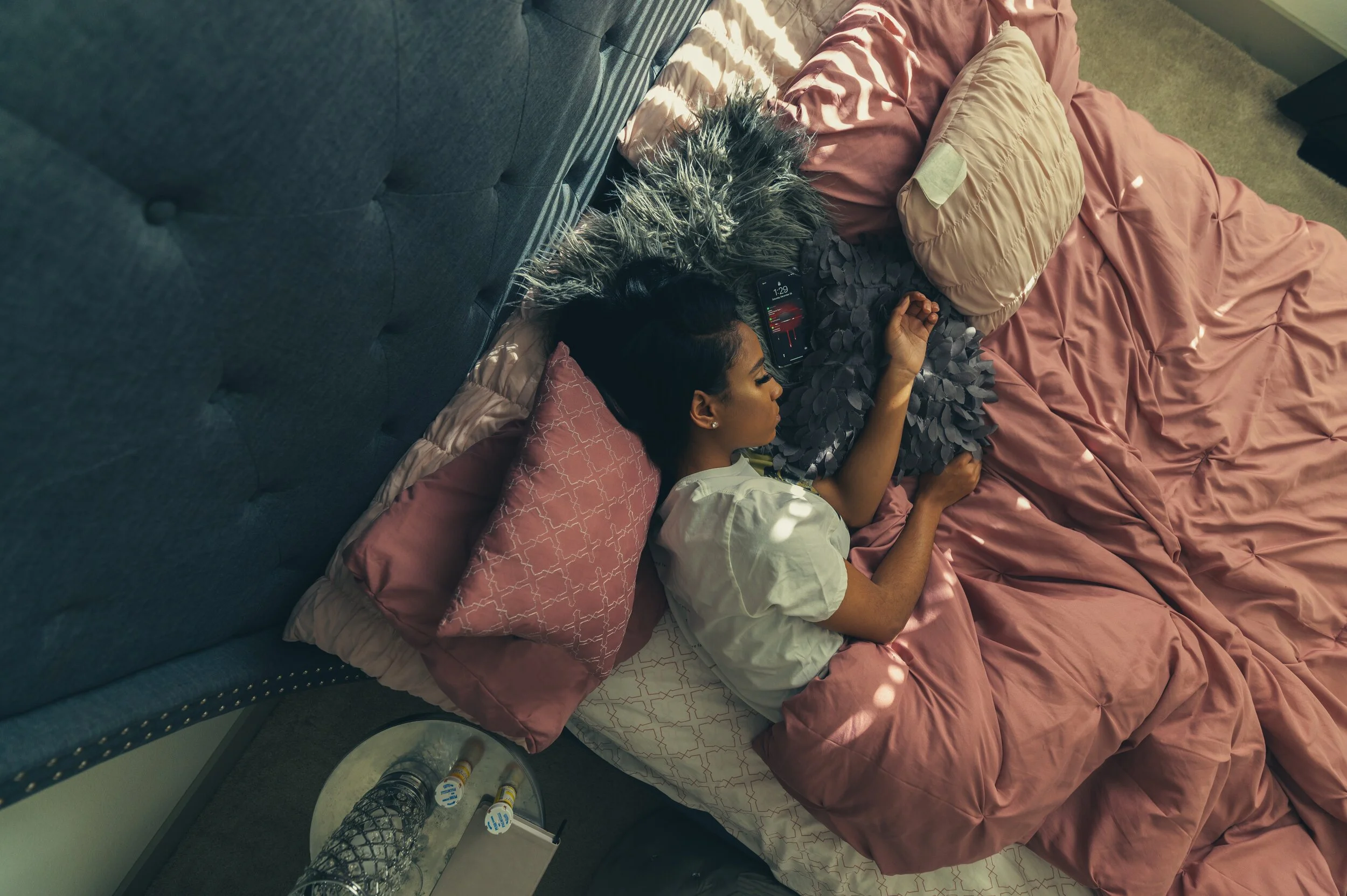
Photo by Ashley Byrd on Unsplash
In short: Good sleep starts long before you go to bed. Your light in the morning, the way you move during the day, what and when you eat, how much stress you carry and how you spend your evening all shape your night. What helps most is a few gentle daily habits, a calmer evening and a simple breathing or relaxation practice, rather than one magic food or remedy.
It’s late. The house is quiet, you’re tired, you’ve been yawning since dinner, and yet the moment your head touches the pillow your mind switches on. The shopping list. That email you didn’t answer. Something someone said on Tuesday. You turn over, you look at the clock, you turn over again. And in the morning you wake up feeling as if you haven’t really slept at all.
Or maybe you fall asleep easily, but you wake up in the small hours and lie there, wide awake, waiting for the alarm.
If you recognise yourself here, I’d love to talk with you about sleep. Because sleep is one of the first things I ask about when I start working with someone, whatever brought them to me. Energy, cravings, mood, hormones: almost everything is easier when you sleep well. So let’s look at what shapes your nights, and at the simple things you can try from tomorrow.
Why am I tired even after a full night in bed?
Time in bed and good sleep are two different things. You can spend a long night under the duvet and still wake up feeling heavy, foggy and short-tempered, because the sleep itself was light, broken or restless.
Think of sleep as your body’s night shift: repairing, tidying, settling your hormones, sorting the day’s memories. If that work keeps getting interrupted, by a busy mind, a full stomach, a glass of wine, a hot flush or a phone lighting up, it only gets half done. And you feel it the next day.
So when someone tells me they’re tired, I ask how they feel on waking, whether they wake in the night, and what their day looked like. The answers are nearly always in the day.
How does my day shape my night?
Your body has an inner clock, and it needs clear signals to know when it’s day and when it’s night. The two strongest signals are light and movement.
Morning light tells your clock that the day has started. A little later, the same clock starts counting down towards sleep. When your mornings are dim, spent indoors with the curtains half closed, the clock gets vague, and so does your sleepiness in the evening. Autumn and winter make this harder. I wrote about looking after your inner clock in winter in more detail.
Movement helps in two ways. It uses up some of the tension you gather during the day, and it creates a healthy kind of tiredness that makes it easier to let go at night. A walk, the garden, a yoga class: it all counts. The only thing I’d suggest is to keep vigorous exercise for earlier in the day, because a hard workout just before bed can leave you wide awake.
Regular times matter too. Going to bed and getting up at roughly the same time every day, weekends included, is one of the simplest and kindest things you can do for your clock. It loves a rhythm.
Can what I eat affect my sleep?
Yes, quite a lot. The first thing I look at is whether you’re eating enough during the day. A light breakfast, a rushed lunch and a big dinner late in the evening is a very common pattern, and it doesn’t help sleep at all. Your digestion is still busy when you’re trying to rest. I explained how a good lunch protects your whole afternoon and evening in The afternoon energy dip in autumn.
What I suggest instead is a proper breakfast and lunch, with some protein each time (eggs, yoghurt, lentils, fish, cheese, chicken), and a lighter, earlier dinner. Protein foods give your body the building blocks it uses to make its own calming, sleepy messengers. Leafy greens, nuts, seeds, beans and a little dark chocolate bring magnesium, a mineral your muscles and nerves need to relax.
And carbs in the evening are fine. A bowl of soup with some bread, a plate of buckwheat with roasted squash, a little rice with your fish: a moderate amount of carbs at dinner helps many people feel settled and sleepy. Going to bed hungry, on the other hand, can wake you up in the night.
And two things most of us underestimate:
Caffeine stays in your body for many hours, much longer than you’d think. If you’re struggling with sleep, keep coffee, black tea, green tea and cola for the morning.
Alcohol can make you feel drowsy, but it makes the second half of the night lighter and more broken.
Why does stress keep me awake at night?
When you’re under pressure, your body switches into alert mode. It’s the response that once helped us run from danger: heart a little faster, muscles ready, mind scanning for problems. That’s very useful in the daytime, in short bursts. The difficulty starts when it never quite switches off.
Your body can’t fall into deep sleep while it believes it needs to stay on guard. So you lie there, tired but wired. Or you drop off from sheer exhaustion and then wake suddenly in the night, with your mind racing.
Very often people don’t even realise how much stress they carry, because it doesn’t always feel like stress. It can look like snapping at people, forgetting things, craving sugar or tossing and turning. I described these quiet signs in ten hidden signs of stress. And because sleep, stress and appetite are so closely tied together, poor sleep often comes with more cravings the next day. I wrote about that link in The direct impact of sleep and stress on your weight, and about why cravings get stronger as the evenings darken in Comfort eating in autumn.
Do herbal teas, supplements or sleeping tablets help?
A warm cup of herbal tea in the evening is a lovely ritual. Chamomile, lime blossom (tilleul), lemon balm, verbena or a little lavender are gentle, caffeine-free and comforting. Part of their magic is the ritual itself.
Some people use stronger herbal remedies such as valerian, or supplements such as magnesium or melatonin. I don’t advise on these, because what’s right depends on your health and on anything else you take. Valerian, for example, can add to the effect of sleeping tablets, other calming medicines and alcohol. So please talk to your doctor or pharmacist before you try anything of this kind.
And if you already take something for sleep that your doctor prescribed, please don’t stop or change it on your own. Talk to your doctor first. The habits in this article can sit happily alongside any treatment.
Is it normal to sleep differently in midlife?
Many women notice their sleep changing in midlife. Night sweats, waking in the small hours, a busier mind at night: all of this is very common around perimenopause and menopause, and it isn’t your fault. I answered a lot of questions about this time of life in my FAQs on nutrition in perimenopause and menopause.
The foundations in this article still help: light, movement, regular meals, a calmer evening and a cool bedroom. If night sweats or broken sleep are wearing you down, please talk to your doctor too, because there are options worth discussing.
What helps?
Here are the things I suggest first when I work with someone on their sleep. You don’t need to do them all at once. Pick the one that feels easiest and start there.
1. Get outside in the morning
Within the first hour or two of your day, step outside, even on a grey day. Drink your coffee by the open door or take the dog round the block. Daylight outdoors is far brighter than any room, and it gives your inner clock a clear “good morning”. In the evening, do the opposite: softer lamps, less bright overhead light.
2. Feed your day, lighten your evening
A breakfast with some protein, a real lunch, and if you need it, a small snack in the afternoon: an apple with a few walnuts, a boiled egg, some yoghurt. Then a lighter dinner, ideally a few hours before bed. A bowl of lentil soup with bread and goat’s cheese, or an omelette with leeks and a salad.
3. Give your evening a wind-down
Your body needs a slope from full speed to sleep. In the last hour before bed, put the phone and laptop away (in another room if you can), dim the lights, and choose something calm: a bath, a book, gentle stretching, a cup of herbal tea, some quiet music. Keep your bedroom dark, quiet and on the cool side. I shared more ideas in The power of an evening routine.
4. Breathe yourself into rest
Once you’re in bed, lie on your back, put one hand on your belly and one on your chest. Breathe in gently through your nose, and breathe out a little more slowly than you breathed in, as if you were sighing very softly. Stay with this for a few minutes. If your mind wanders to tomorrow, that’s fine; just come back to the next out-breath. I shared a few more simple practices in Breathe your way to mindfulness.
5. Learn a relaxation method you can always take with you
Autogenic training is the method I love to teach for sleep. It was developed in the early twentieth century by J. H. Schultz, a German psychiatrist, and it uses short, quiet phrases to guide your body into heaviness, warmth and calm. With practice, your body learns to switch off alert mode by itself. It’s best learned with a qualified teacher. If you have a heart condition, a mental health condition or epilepsy, or if you’re pregnant, talk to your doctor before you start, and never practise while driving or doing anything that needs your attention. You can read more in Autogenic training: more than just a relaxation technique.
What doesn’t help?
Trying hard to sleep. Sleep comes when you stop chasing it. If you’ve been awake for a long while, get up, go somewhere dim and calm, and come back when you feel sleepy.
Watching the clock. Every glance starts a little calculation, and the calculation wakes you up. Turn the clock to the wall.
Catching up with long lie-ins. It feels kind, but it confuses your inner clock. A short rest in the early afternoon is gentler.
Being hard on yourself after a bad night. One poor night is just one night. Eat well, get outside, and let it go.
Try this for one week
For the next seven days, choose just two things: step outside within an hour of getting up, and put your phone away an hour before bed.
Each morning, write down three words in a little notebook: how you slept, how you feel, and one thing you noticed about yesterday (a late coffee, a long walk, a busy evening, a calm one).
At the end of the week, read your notes with a cup of tea. You’ll probably start to see your own pattern: the days that lead to good nights and the ones that don’t. That pattern is yours, and it’s worth more than any general advice.
Frequently asked questions
What should I eat in the evening to sleep better?
A lighter, earlier dinner with some protein, vegetables and a moderate amount of carbs works well for most people, such as soup with bread and cheese or an omelette with salad. Try not to go to bed either very full or hungry.
Does coffee really affect my sleep if I drink it after lunch?
For many people it does, because caffeine stays in the body for many hours. If your sleep is difficult, try keeping coffee and tea with caffeine for the morning for a couple of weeks and see how you feel.
Which herbal teas help with sleep?
Chamomile, lime blossom, lemon balm, verbena and a little lavender are gentle, caffeine-free choices, and the evening ritual itself is calming. For stronger herbal remedies such as valerian, or any supplement, please talk to your doctor or pharmacist first.
When should I talk to my doctor about my sleep?
If poor sleep has gone on for weeks, if you snore loudly or someone notices you stop breathing in your sleep, if you feel very sleepy during the day, or if low mood or night sweats are keeping you awake, please see your doctor. And if you take medication for sleep, talk to your doctor before changing anything.
Would you like some help?
Sleep is one of the threads I always pick up when I work with someone, because so much of how we eat and feel depends on it. I run group programmes in nutrition and health, such as Six Tuesdays in Montignac, where we look at food, stress, sleep and energy together. If you’d like to hear when the next group opens, write to me at hello@catherinepolet.coach.
If you’d rather start one to one, wherever you are, book a free 20-minute call. Tell me what your nights look like, and we’ll find the first gentle step that suits you.
About Catherine
I’m Catherine Polet, a holistic nutrition health coach, yoga and autogenic training teacher for more than 30 years, author and speaker. I help people find a way of eating and living that suits their own body, online in English, French, Spanish and German, and in person in Southwest France.