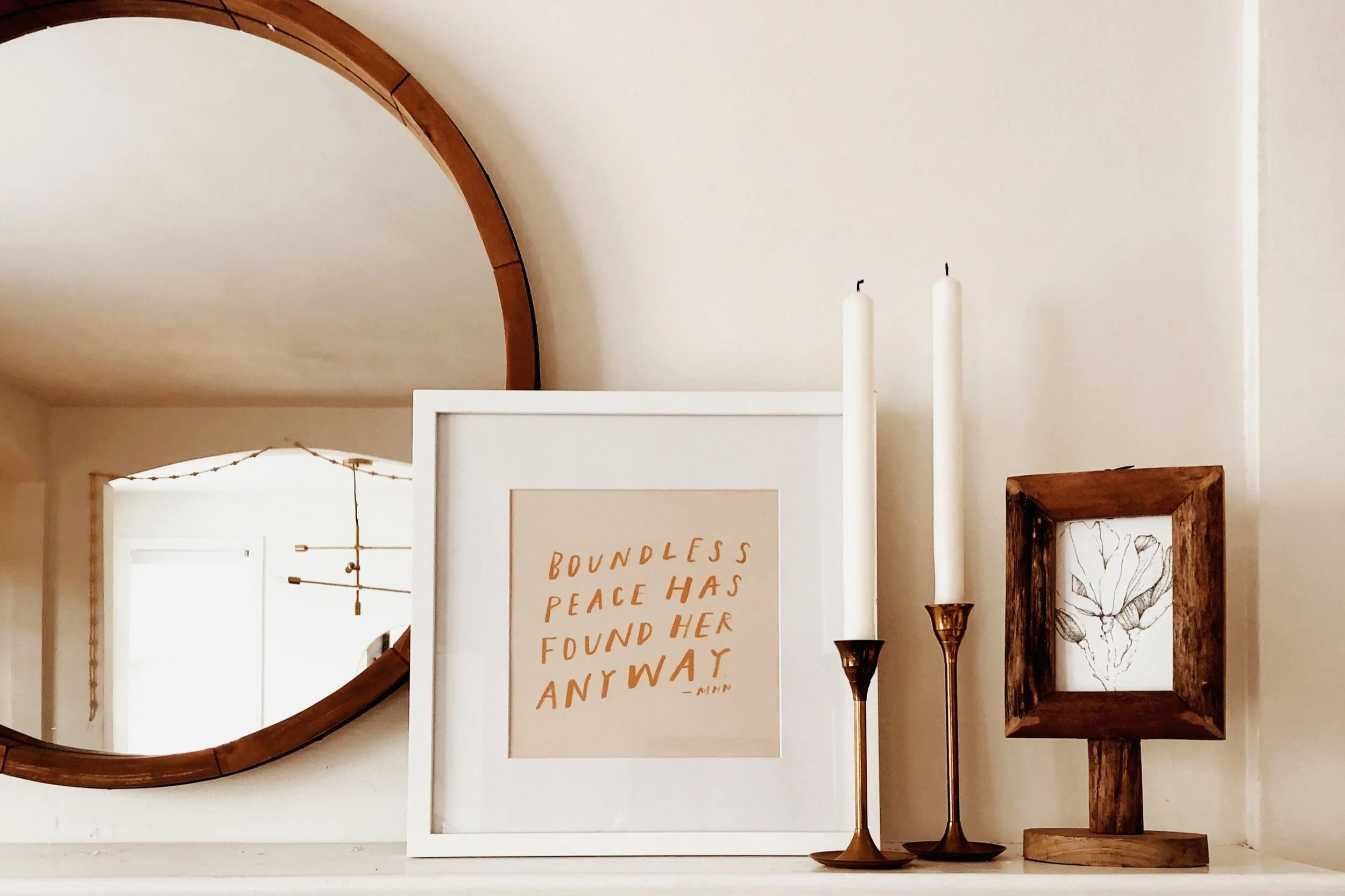
Photo by Hannah Busing on Unsplash
In short: A minimalist spring clean is about more than a tidy house. You look honestly at what you own, keep what you use and love, let the rest go, and give everything that stays a home. Take it one room at a time. A clear kitchen makes cooking easier, a calm bedroom helps you sleep, and a home with less in it leaves your mind quieter too.
The first warm morning of the year arrives. You open the windows wide, the light pours in, and suddenly you see it all. The pile of papers on the sideboard. The kitchen worktop where you can no longer find a free corner to chop an onion. The chair in the bedroom that has become a wardrobe. You feel the urge to freshen everything up, and almost at the same moment you feel tired at the thought of it. Where do you even begin?
This is where minimalism can help. At its heart, minimalism means removing the excess so you can give your attention to what truly matters. It’s a way of living that values intention, mindfulness and simplicity. Applied to your home, it brings calm, clarity and a sense of purpose. Here is a step-by-step guide to help you clear your home and your mind this spring.
Why does clutter weigh on you?
Everything you own asks something of you. It needs to be cleaned, stored, moved, found, repaired or simply stepped around. When there is too much of it, your eyes never get to rest, and your mind doesn’t either. Every pile is a small unfinished task whispering to you as you walk past.
You feel it in your health as well. When the kitchen is crowded, cooking feels like an effort before you’ve even started, and a ready meal becomes very tempting. When the bedroom is full of things to sort, it’s harder to switch off at night. When the living room is busy, you don’t really sit down. That’s why decluttering is a form of self-care, just like the other ways you look after yourself.
Step 1: Take stock of what you have
Before you move anything, walk through every room and look at what you own with fresh eyes. For each thing, ask yourself:
Do I use this regularly?
Does it bring me joy?
Does it serve a practical purpose?
Would I buy it again if I didn’t already own it?
Be honest with yourself. If you haven’t used something in over a year, it’s probably time to let it go. The same goes for anything that no longer serves a purpose, or that you don’t truly love.
Step 2: Declutter, one room at a time
Clearing a whole house can feel daunting, so break it into manageable pieces. Choose one room, and don’t move on until you’ve finished it. If a room feels too big, choose one cupboard.
As you go, sort everything into three groups:
Keep: what you use regularly or what brings you joy.
Donate or sell: what is still in good condition but that you no longer need or want. A local charity will be glad of it, or you can sell it online and make a little extra money.
Discard: what is broken, out of date or no longer useful.
Pay attention to your emotional attachment to certain things. Sentimental objects are the hardest to part with. Remember that the memories connected to them will always be with you, whether or not you keep the object itself.
Step 3: Give everything a home
With the excess out of the way, find a place for everything you’ve decided to keep. Baskets, boxes and shelves help to keep things tidy and easy to find.
Group things by category: all your kitchen utensils in one drawer, all your toiletries in one cupboard. You’ll find what you need without searching, and you’ll stop buying things you already own because you couldn’t see them.
Step 4: Simplify your digital life
Your phone and computer collect clutter too. Clear your inbox, delete the apps you don’t use, and put your files in order.
Notice how much time you spend on social media and other digital distractions. You might take a break from them for a while, or set yourself a limit for scrolling each day. I’ve written about this in The digital detox.
Step 5: How do you cultivate a minimalist mindset?
Minimalism is more than clearing your shelves. It’s a mindset that puts intention and simplicity into every part of your life.
Try to be more deliberate with your time, your energy and your money. This may mean saying no to commitments that don’t fit your values, or cutting back on spending you don’t need. At work, the same idea applies, and I explain how in Simplify your work life with minimalism. With information, it means choosing what you let in, which I describe in my article on strategic ignorance.
Two practices make all of this easier:
Gratitude. When you focus on what you have instead of what you lack, the urge to buy more and to accumulate fades. You can read more in how gratitude can change your outlook.
Mindfulness. Being fully present, aware of your thoughts, your feelings and your surroundings, helps you appreciate what truly matters and let go of what doesn’t. If you don’t know where to start, sit quietly for a few minutes each day. A few slow breaths are enough to begin with, and my step-by-step breathing guide will show you how.
Minimalism is a path you walk, not a place you arrive at. It’s fine if you don’t get everything right the first time. What matters is that you keep moving towards a simpler, more intentional life.
Your checklist, room by room
Living room
Clear the shelves, the coffee table and the television unit.
Donate or sell furniture and decoration you don’t use.
Remove ornaments that have no purpose and bring you no joy.
Choose a few pieces you love and display them with care.
Remove cables, leads and devices you don’t need.
Kitchen
Throw away food that is out of date or that you’ll never use.
Donate or sell duplicate or unused tools and appliances.
Organise cupboards and drawers by category: baking, cooking utensils, plates and bowls.
Keep what you use often within easy reach, and store the rest higher up.
Reduce your plates, glasses and cutlery to what you need.
The kitchen is the room I’d start with. When the worktop is clear and you can see what’s in the cupboards, cooking a simple meal on a Tuesday evening stops being a chore. Fewer forgotten packets also means less waste, and simpler grocery shopping.
Bedroom
Remove clothes that don’t fit, are damaged or haven’t been worn in a year.
Donate or sell clothes and accessories that no longer suit your style or your life.
Simplify your bedding with calm colours and plain patterns.
Store out-of-season clothes and bedding somewhere else to free up space.
Remove decoration that has no purpose and brings you no joy.
A bedroom with clear surfaces and nothing waiting to be sorted is a room that invites you to rest.
Bathroom
Discard products that are out of date or that you no longer use.
Organise cupboards and drawers by category: skincare, hair care, teeth.
Simplify your routine and keep to the essentials.
Give towels and flannels their own place, and let go of any that are stained or worn out.
Keep few products on display and store the spares elsewhere.
Home office
Discard outdated paperwork, documents and receipts.
Sort papers by category and keep them in labelled folders.
Scan the documents you must keep and save them securely online.
Store office supplies in labelled boxes or drawers.
Create a workspace free of distractions and clutter.
Outdoor space
Remove broken or unused garden furniture and equipment.
Donate or sell outdoor things you haven’t used in a year.
Keep gardening tools together in labelled boxes or on racks.
Choose a few pieces of outdoor decoration and let go of the rest.
Create a corner for relaxing outside.
Work through the list one room at a time, at your own pace, and enjoy the process. Whether you want to clear your home, simplify your diary or bring more mindfulness into your days, small steps each day will give you a life that feels lighter, more purposeful and more joyful. If you still have questions, you’ll probably find the answer in my 18 FAQs on minimalism.
Frequently asked questions
Where should I start when the whole house feels overwhelming?
Start with one small, contained place: a single drawer, one shelf, the kitchen worktop. Finish it completely before you move on. A finished drawer gives you more energy to continue than a half-emptied room.
How do I let go of sentimental things?
Leave them until last, when you have had some practice. Keep the few pieces that mean the most to you and give them a proper place. For the rest, remember that the memory lives in you and not in the object. Taking a photo before you let something go can help.
How long does a minimalist spring clean take?
As long as you need. Some people enjoy a full weekend, others prefer twenty minutes a day over several weeks. Small, regular sessions are easier to keep up and far less tiring.
How do I stop the clutter from coming back?
Give everything you keep a home, and put it back there. Before you buy something new, ask whether you need it and where it will live. A quick tidy of one area each week keeps things from piling up again.
Can a tidier home really help me eat and sleep better?
It helps more than you might think. A clear kitchen makes cooking quicker and more inviting, so a home-cooked meal becomes the easy choice. A calm, uncluttered bedroom tells your body it is time to rest.
Would you like some help?
A kitchen you enjoy cooking in, and a home that lets you rest, are part of what we talk about in my group programmes in nutrition and health, such as Six Tuesdays in Montignac. If you’d like to know when the next group begins, write to me at hello@catherinepolet.coach.
Would you rather work one to one? I also coach online. Book a free 20-minute call, and tell me which corner of your home, or your week, you’d most like to feel lighter.
About Catherine
I’m Catherine Polet, a holistic nutrition health coach, yoga and autogenic training teacher for more than 30 years, author and speaker. I help people find a way of eating and living that suits their own body, online in English, French, Spanish and German, and in person in Southwest France.