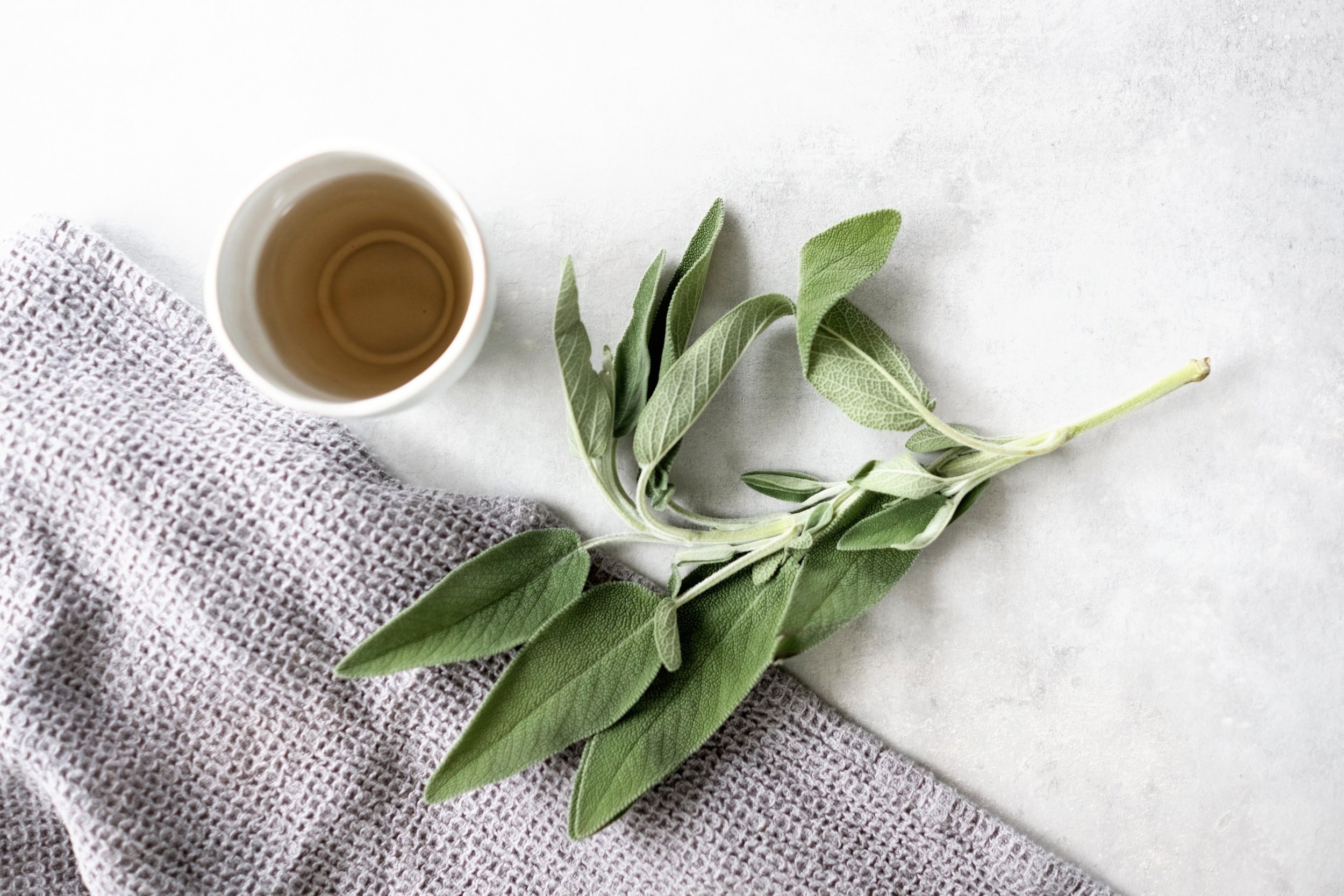
Photo by Paulina H. on Unsplash
In short: At the first scratchy feeling in your throat, a warm sage tea, sipped or used as a gargle, is a simple and inexpensive comfort that people have turned to for centuries. Add rest, warm drinks, honey if you’re an adult, and a quiet voice. Sage is not for everyone, and a sore throat that lasts more than a few days, comes with a high fever, or makes breathing or swallowing difficult needs your doctor.
You wake up, you swallow, and something’s not right. A little scratch at the back of your throat that wasn’t there yesterday. You swallow again to check. Yes, it’s there. And you think of the week ahead and everything you can’t possibly do with a cold.
That first moment is a good one to slow down a little and look after yourself. And you may already have what you need in the kitchen, or in a pot by the door: sage.
Why sage for a sore throat?
Saltimbocca, pasta with sage butter: some recipes are hard to imagine without sage. But this tart herb with its intense fragrance has more to offer than flavour. Because it can be used in so many ways, sage has been part of Europe’s herbal treasure trove for centuries. Its very name comes from the Latin word for being well.
The soft, furry leaves contain fragrant essential oils and plenty of tannins. Tannins are what make your mouth feel slightly dry when you drink strong tea. That gently astringent quality is the reason a warm sage infusion has traditionally been used for sore, irritated throats, and as a mouth rinse for tender gums and mouth ulcers.
I won’t promise that sage stops a cold in its tracks. No herb can do that. What it can do is soothe, and when your throat is sore, soothing is exactly what you want.
How do you make sage tea?
It’s as quick as any other herbal tea:
Put a few fresh sage leaves, or a teaspoon of dried leaves, in a cup.
Pour boiling water over them.
Cover the cup and leave it for about ten minutes.
Strain, and let it cool until it’s comfortably warm.
The taste is strong and slightly bitter. If you’re going to drink it, a spoonful of honey makes it much friendlier.
How do you gargle with it?
For a sore throat, gargling is the traditional way. Take a mouthful of the warm tea, tip your head back, gargle for a few seconds and spit it out. Repeat until the cup is empty, and do this two or three times in the day. The warmth and the tannins reach the place that hurts.
You’ll also find sage tinctures and ready-made preparations in pharmacies. If you’d like to use one of those, ask your pharmacist which one suits you and how to use it.
I made a short video about this, you can watch it below.
What should you keep in mind with sage?
Sage is a herb with character, and that calls for a little care. Its essential oil contains a substance called thujone. In the small amounts of a cup of tea or a gargle over a few days, that isn’t a concern for most healthy adults. In large amounts, or over a long time, it can cause a feeling of heat, palpitations and dizziness.
So keep it simple:
Use kitchen amounts, as a tea or gargle, for a few days and not for weeks on end.
Don’t take sage essential oil by mouth.
Sage tea is not recommended if you’re pregnant or breastfeeding, for young children, or if you have epilepsy.
If you take medication or have a health condition, ask your doctor or pharmacist first.
Sage as a seasoning in your cooking is a different matter: a few leaves in a dish are simply food.
What else helps when your throat is sore?
Sage is one comfort among several. These cost almost nothing:
Warm drinks all day. Herbal teas, broth, or simply hot water. A moist throat hurts less.
Honey. A spoonful on its own or in a warm drink coats the throat. It’s for adults and older children, never for babies under one year old.
Rest. Cancel what can be cancelled. An early night is worth more than anything in your cupboard.
A quiet voice. Talk less, and don’t whisper, which strains the throat even more.
Moist air. Heated rooms dry out your throat. A bowl of water near the radiator or a warm, steamy shower helps. Be careful with bowls of very hot water, and keep them well away from children.
Soft, warm food. Soup, porridge, stewed fruit. If you’d like to have a pot ready, see my article on meal prep to support your immune system.
A scarf. Old-fashioned, and so comforting.
Breathing through your nose warms and moistens the air before it reaches your throat. In my article on rhythm breathing for the cold season, I share a simple practice. And for the winter months as a whole, here are my tips for taking care of yourself.
What else is sage traditionally used for?
Sage has two other old uses that are worth knowing.
The first is digestion. The bitter substances in the leaves wake up the digestive juices, which is why sage so often goes with rich dishes, and why a cup of sage tea before a meal is an old remedy for a heavy, bloated feeling.
The second is sweating. Sage tea, drunk cold in the evening, has a long tradition for night sweats, and that’s why it’s so often mentioned to women going through menopause. If that’s where you are, ask your doctor or pharmacist whether sage is suitable for you, especially for longer use, and have a look at how to eat when menopause arrives.
Which sage, and can you grow it?
Two kinds of sage are used in herbal traditions. True sage, also called Dalmatian sage (Salvia officinalis), comes from the Croatian coast. Three-lobed or Greek sage (Salvia fruticosa) comes from Greece and Cyprus, and has small extra lobes at the base of its leaves, which give it its name.
Today these fragrant little shrubs are grown almost all over the world, for the kitchen and for the herb cupboard. In our part of Europe, only true sage is at home in the garden, because Greek sage doesn’t survive the winter. True sage is easy: a sunny spot, soil that drains well, and it will give you leaves all year.
For this reason, especially in winter, always have sage at home or in your garden. A pot by the kitchen door or a jar of dried leaves in the cupboard is enough.
Frequently asked questions
Can I use fresh sage from the garden?
Yes. A few fresh leaves, rinsed and lightly torn, work well in a cup of boiling water. Dried leaves are more concentrated, so a teaspoon is enough. Use common sage, the culinary kind, and not an ornamental variety.
Should I drink the sage tea or gargle with it?
Both are traditional. For a sore throat, gargling lets the warm infusion touch the place that hurts, and you can spit it out afterwards. A cup to sip is fine for most adults for a few days.
Is sage safe for everyone?
No. Sage tea is not recommended in pregnancy or while breastfeeding, for young children, or for people with epilepsy. If you take medication or have a health condition, ask your doctor or pharmacist first. Keep it to a few days and to kitchen amounts, and leave sage essential oil alone.
What else soothes a sore throat at home?
Warm drinks, a spoonful of honey for adults and older children, plenty of fluids, rest, a quiet voice, and moist air or gentle steam. Honey must never be given to babies under one year old.
When should I talk to my doctor?
See your doctor if your sore throat lasts more than a few days or keeps getting worse, if you have a high fever, white patches at the back of your throat, very swollen glands, a rash, or pain that is much stronger on one side. Trouble breathing, trouble swallowing even your saliva, drooling or a muffled voice need urgent medical help. For babies, young children, and anyone with a weakened immune system, ask for advice sooner.
Would you like some help?
Looking after yourself through the seasons, with real food, rest and a few simple kitchen comforts, is one of the things we work on in my group programmes in nutrition and health, such as Six Tuesdays in Montignac. If you’d like to hear when the next group opens, write to me at hello@catherinepolet.coach.
Would you rather work one to one? I also coach online. Book a free 20-minute call, once your voice is back, and we’ll talk about what would help you feel well and steady this winter.
About Catherine
I’m Catherine Polet, a holistic nutrition health coach, yoga and autogenic training teacher for more than 30 years, author and speaker. I help people find a way of eating and living that suits their own body, online in English, French, Spanish and German, and in person in Southwest France.