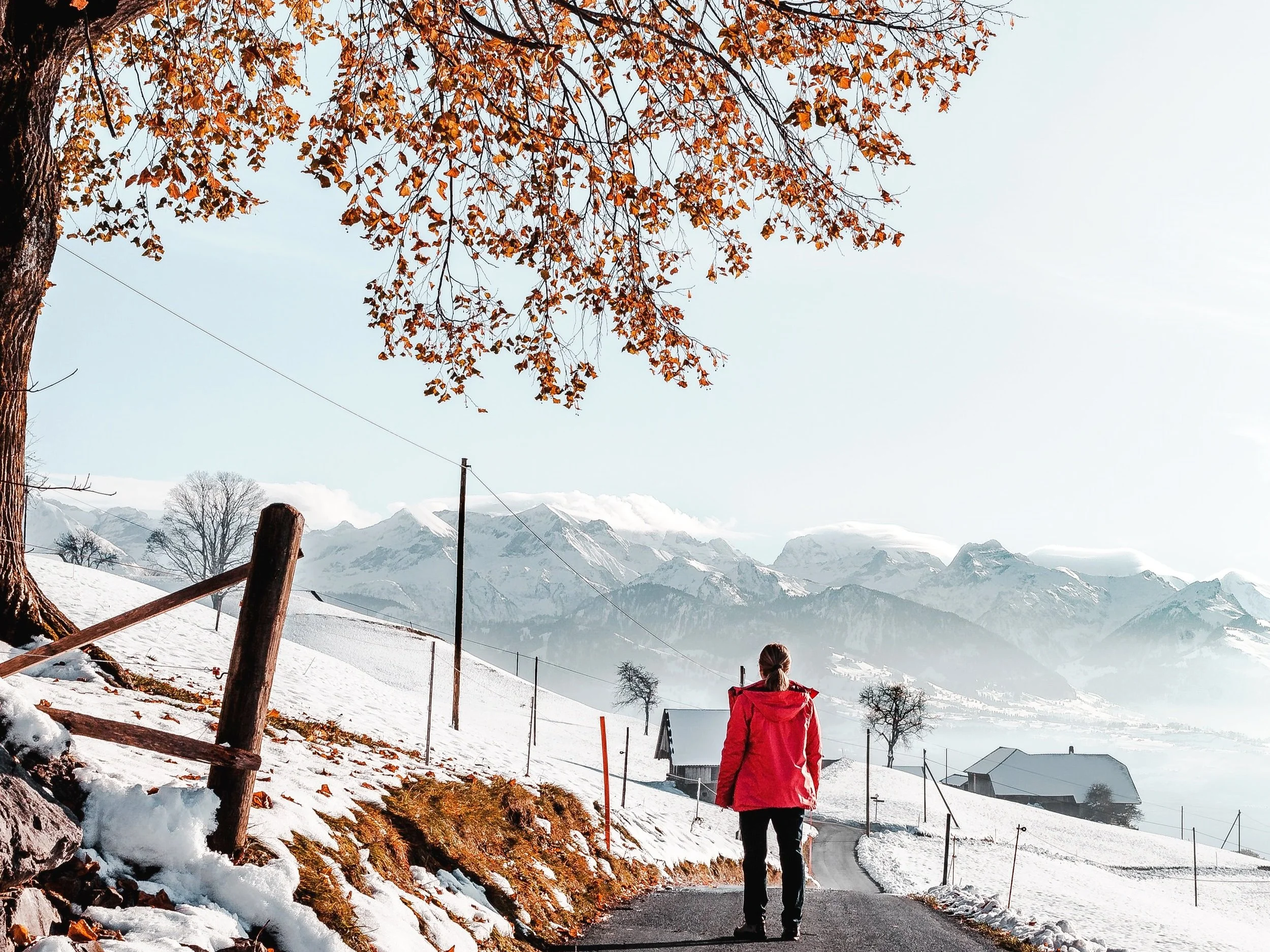
Photo by Florian van Duyn on Unsplash
In short: You don’t need to stop moving outdoors when winter arrives. Dress in layers, cover your head, hands and feet, warm up for longer, drink even when you aren’t thirsty, eat well before and after, and know the signs that tell you to go back inside. Fresh air and daylight will lift your mood on dark days and help you stay well through the cold season.
It’s dark when the alarm goes off. The windows are misted over, the garden is white with frost, and your bed has never been so comfortable. You had planned a walk, or a run, or simply some fresh air before work. And now all you want to do is curl up under your blankets and skip any physical activity.
I understand. But there are many benefits to not being a groundhog, putting on your workout gear, and getting outside. Your body works a little harder to keep you warm, so you come home glowing. Getting out when you’re usually cooped up lifts your mood during the dark months. And people who keep moving in the fresh air often find they get through the season of colds and other winter ailments more easily.
Are you ready? Put on some warm clothes and step outside. Here are my eleven tips to help you step up your game.
Why is it worth going outside when it’s cold?
In winter we spend most of our days indoors, in heated rooms, under electric light. Our bodies miss two things: movement and daylight. Even a grey winter sky gives you far more light than your living-room lamp, and that light helps you feel awake during the day and sleepy at night. I explain why in Wake up happy: how to look after your body clock in winter.
Then there is the simple pleasure of it: cold air on your cheeks, the crunch of frozen grass, the warm kitchen waiting for you afterwards. Half an hour outside can change the whole colour of a winter day.
What can you do outdoors in winter, and how do you prepare?
1. Try winter sports
Ice skating, cross-country skiing, downhill skiing, snowshoeing: if you live near snow or an ice rink, winter sports make your whole body work, and they are so much fun that you forget you are exercising. No snow where you live? A brisk walk in the countryside, a bike ride or a run in the park does you just as much good.
2. Keep an eye on the weather
Your body warms up when you exercise, so you can be active in cold weather more comfortably than you’d think. If you have a health problem such as asthma, ask your doctor first. And be sensible: when it is bitterly cold and windy, or when there is ice underfoot, move your session indoors. There’s always tomorrow.
3. Dress like an onion
Add layers of clothing to keep you warm. As your body warms up, you peel off layer after layer. Start with a breathable garment next to your skin, so that perspiration can evaporate and you don’t end up damp and cold. Add a warm layer, and something on top that keeps out wind and rain.
4. Apply sunscreen to your skin
Sunscreen isn’t just for summer. You can get sunburned at any time of the year, especially when there is snow, because the light is reflected back onto your face. Don’t forget your lips, and wear sunglasses on bright days.
5. Cover up when you go out
When your body gets cold, it keeps the blood around your vital organs to protect them, which leaves your hands, feet and ears chilly. Wear a hat, gloves and warm socks. A headband over your ears is also a good option if a hat feels too warm once you get going.
6. Warm up for longer
Cold weather makes your muscles stiff. Take the time to warm up, and make it about twice as long as usual: if you normally spend five minutes, give it ten. You can begin indoors, with a few gentle movements for your joints, before you open the door.
7. Go with the wind
On a windy day, start your activity with the wind behind you and turn around for the way back. By then your body will have had time to warm up, and you’ll feel the cold much less.
8. Increase the intensity
Take advantage of the cold to push yourself a little. Moving more briskly raises your body temperature and makes you feel warmer. Walk faster, jog between two lamp posts, add a few squats or jumps along the way. Listen to your body and build up gradually. You’ll find more ideas for everyday movement in Let’s talk about exercise.
9. Hydrate
When you sweat, you lose water, and in winter you can be dehydrated without feeling thirsty. So drink regularly, even if you don’t feel the need to: a glass of water a little while before you start, a few sips along the way if you are out for a long time, and a glass or two when you finish. A flask of warm herbal tea is lovely on a cold day, and you may be surprised by the benefits of plain hot water.
10. Prevent frostbite and hypothermia
If the skin on your face turns pale, or your fingers or toes feel numb or hot, get warm as soon as possible. These changes are warning signs of frostbite. Warm up slowly and avoid rubbing your hands or feet. If the symptoms persist, seek medical attention promptly. In the same way, if you are shivering hard, have difficulty speaking, feel exhausted or lose your coordination, you may be suffering from hypothermia. Again, seek prompt medical attention.
11. Fuel up before and refuel after your activity
Eat a light meal or snack about an hour before you exercise, or leave two to three hours if it’s a larger meal. You need healthy carbs such as wholegrain bread, oats, pasta, brown rice and fruit, healthy fats for energy, and protein for your muscles. A bowl of porridge with nuts and a sliced pear is perfect on a winter morning.
Afterwards, eat some carbs and protein within the hour. It helps your muscles to repair and gives you your energy back. In winter it’s lovely to come home to something warm: a bowl of soup with lentils or beans and a slice of good bread. There are more ideas in my guide to eating with the seasons.
You can watch my video on this below.
What if you really don’t feel like going out?
Then make it very easy. Put your clothes out the evening before. Tell yourself you’ll go for ten minutes only, and that you may come home after that. Most of the time, once you are outside and warm, you’ll want to carry on. Arrange to meet a friend: it’s much harder to stay in bed when someone is waiting for you at the gate.
And on the days when the weather truly says no, be kind to yourself and move indoors. Some stretching, some yoga, dancing in the kitchen while the soup is cooking: it all counts. The rest of your winter care matters too, from sleep to warm meals, as I describe in Take care of yourself this winter. If you feel a cold coming on, rest, and try the calming 1:4:2 rhythm breathing instead.
Frequently asked questions
Is it safe to exercise outside when it’s cold?
For most healthy people, yes, as long as you dress in layers, warm up for longer, cover your head, hands and feet, and come inside when it is bitterly cold and windy or icy underfoot. If you have a health condition, check with your doctor first.
What should I wear to exercise in the cold?
Dress like an onion. A breathable layer next to your skin, a warm layer over it, and something that keeps out wind and rain on top. Add a hat or headband, gloves and warm socks, and take layers off as you warm up.
Do I need to drink water when I exercise in winter?
Yes. You lose water when you sweat and breathe in cold air, even though you feel less thirsty than in summer. Have a glass before you go, a few sips along the way if you are out for long, and a glass or two when you come home. Warm drinks count too.
What should I eat before and after exercising in the cold?
Before, a light meal or snack with healthy carbs, a little protein and healthy fats, for example porridge with nuts or wholegrain bread with an egg. Afterwards, within the hour, a meal or snack with carbs and protein, such as a bowl of soup with lentils and bread.
When should I talk to my doctor?
Before you start if you have asthma, a heart condition, circulation problems or any other health concern, or if you have not exercised for a long time. And seek medical attention promptly if numbness, pale skin, strong shivering, confusion or unusual exhaustion don’t ease once you are back in the warm.
Would you like some help?
Keeping your energy up through the dark months, with food that warms you and movement you enjoy, is one of the things we look at in my group programmes in nutrition and health, such as Six Tuesdays in Montignac. If you’d like me to let you know when the next group opens, write to me at hello@catherinepolet.coach.
Would you rather have my full attention, one to one? I also coach online. Book a free 20-minute call, make yourself a hot drink, and tell me what your winters are usually like. We’ll find what would help you feel well in this one.
About Catherine
I’m Catherine Polet, a holistic nutrition health coach, yoga and autogenic training teacher for more than 30 years, author and speaker. I help people find a way of eating and living that suits their own body, online in English, French, Spanish and German, and in person in Southwest France.