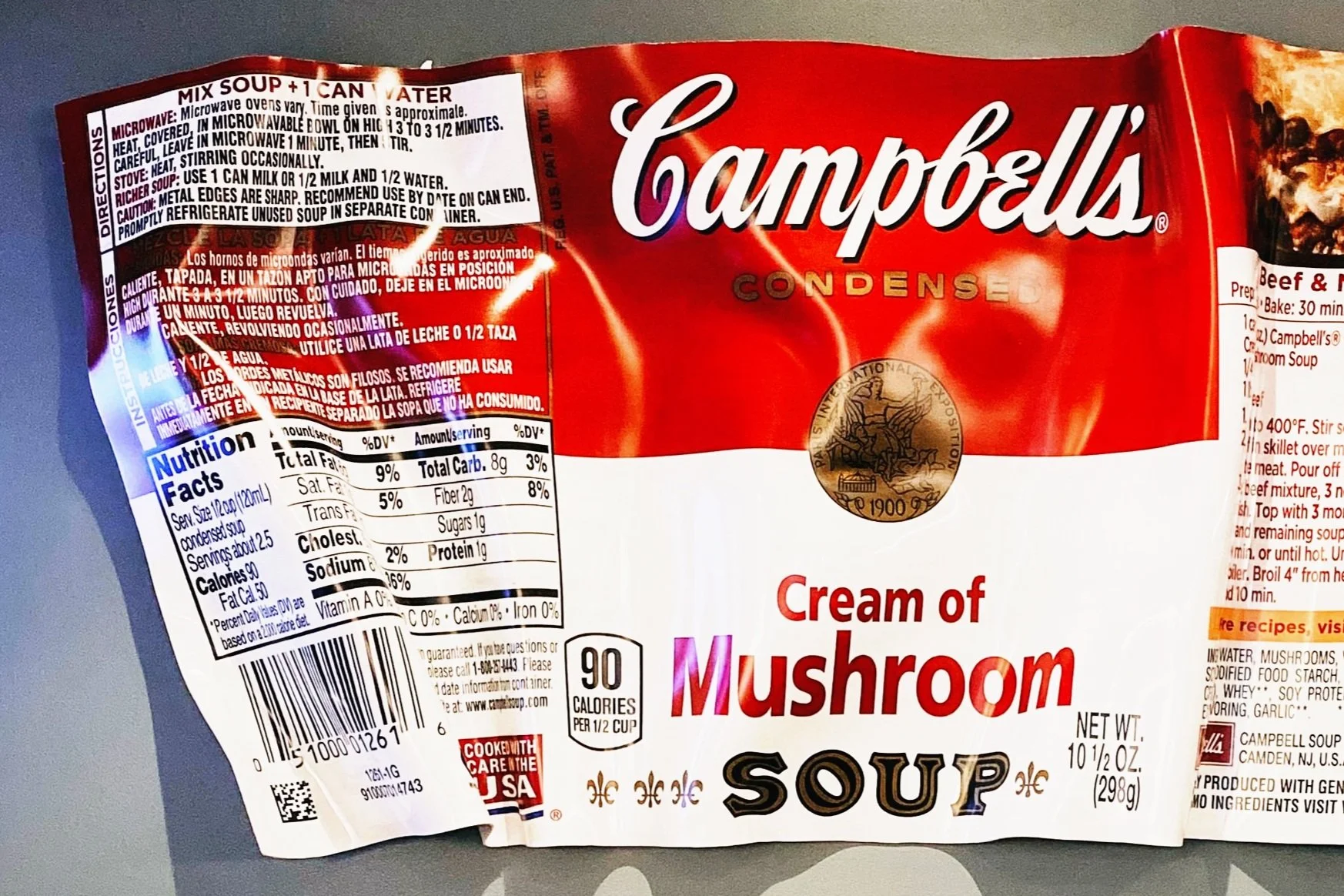
In short: You don’t need to understand every line of a label. Turn the packet over and read the ingredients list first: it is written in order of quantity, so the first three ingredients tell you most of what you need to know. Take the claims on the front with a pinch of salt, check what the maker calls a serving, and prefer short lists of things you would recognise in a kitchen.
You’re in the supermarket, late in the afternoon, with a jar of tomato sauce in one hand and a different one in the other. One says “natural”, the other says “no added sugar”, both have a picture of a sunny Italian garden. You turn them over, look at the small print, see a wall of words and figures, and put one in your trolley more or less at random. Sound familiar?
Labels can feel as if they were written to confuse us. Once you know where to look, though, reading one takes a few seconds, and you can get on with your shopping feeling sure of what you’re bringing home.
Where do you start when you read a label?
Start with the back, never with the front. The front of the packet is advertising. The back is information.
1. Read the ingredients list
The ingredients list is where you find out what the product really is. Ingredients are listed in order of quantity, from the most to the least. So if you’re buying a hazelnut spread and the first two words are sugar and palm oil, you know that hazelnuts are only a small part of the story. If you’re buying something for a particular ingredient, such as wholegrain flour, fruit or nuts, check that it appears near the top.
A simple test: could you make this at home with these ingredients? Tomatoes, onion, olive oil, basil, salt: yes. A list as long as your arm, full of words you’d never find in a kitchen cupboard: probably not.
2. Be wary of the claims on the front
“All natural”, “light”, “source of fibre”, “made with real fruit”. These phrases sound lovely, and they’re chosen for exactly that reason. They are not always as meaningful as they look. A cereal can be a “source of fibre” and still be very sweet. A yoghurt can be “low fat” because the fat has been replaced with sugar and thickeners. The ingredients list and proper certifications tell you far more than any promise in large letters.
3. Look for certifications
A certification is different from a marketing claim, because an independent body has checked that the product meets a set of standards. The organic logo is the one you’ll see most often, and there are others for fair trade, sustainable fishing or animal welfare. If these things matter to you, the logo is a quick and reliable sign. It tells you how the food was produced. It doesn’t tell you how much sugar is in it, so the ingredients list still deserves a glance.
4. Check the serving size
The figures on the pack are often given for a “serving”, and the maker decides what a serving is. It can be surprisingly small: a few crisps, a spoonful or two of granola, half a small pot. Ask yourself honestly how much you’d really eat, and read the figures with that in mind. Where the label also gives values for a fixed weight of the product, use that column to compare two brands fairly.
5. Glance at the nutrition table
The nutrition table shows the fat, protein and carbs in the product, with a line for sugars and one for salt, and sometimes fibre, vitamins and minerals. You don’t need to do any sums. Use it to compare two similar products: which has less sugar, which has less salt, which has more fibre? That’s usually all you need from it.
6. Don’t skip the small print
The small print holds useful things: allergens (often in bold in the ingredients list), how to store the product, how long it keeps once opened, how to prepare it. If you or someone at your table has an allergy or an intolerance, this is the part to read every time, because recipes change.
How do you spot hidden sugar?
Sugar hides under many names, and makers sometimes use several kinds in one product so that none of them appears first on the list. Watch for syrups of any kind (glucose syrup, corn syrup, rice syrup), words ending in “ose” (glucose, fructose, dextrose, maltose), fruit juice concentrate, honey and agave. If you find two or three of these in the same list, the product is sweeter than it looks.
You’ll find sugar in places you wouldn’t expect: bread, tomato sauce, salad dressing, soups, “healthy” cereal bars. If sweet foods call you loudly in the afternoon, this is worth knowing, and I’ve written more about it in why sugar cravings happen and how to calm them.
Which additives and preservatives are worth knowing?
Additives and preservatives are used to make products last longer, or to improve their taste, texture or colour. Not all of them are a worry. Some are as simple as vitamin C or lemon juice. Others are less friendly, and some people react to them, so it helps to recognise the main families. These are the ones I’d rather you ate less often:
Artificial sweeteners, such as aspartame, sucralose and saccharin. They keep the taste for sweetness alive, and they may not be kind to your gut.
High fructose corn syrup and glucose-fructose syrup. Cheap, very sweet, and found in many soft drinks, biscuits and sauces.
Monosodium glutamate (MSG), a flavour enhancer. Some people notice headaches or flushing after eating it.
Hydrogenated oils. They contain trans fats, which are hard on the heart. Olive oil, nuts, seeds and other healthy fats are a much better choice.
Artificial colours and flavours. Often found in sweets and drinks made for children, and some children seem to be sensitive to certain colours.
Nitrates and nitrites, used to preserve ham, bacon, sausages and other cured meats. A good reason to keep processed meats for now and then.
BHA and BHT, propyl gallate and sodium benzoate, preservatives found in some snacks, cereals and soft drinks.
Potassium bromate, a flour improver used in bread-making in some countries. It isn’t allowed in Europe.
Please don’t read this list as a reason to be afraid of your food. Nobody needs to learn it by heart, and one sausage at a summer barbecue won’t undo anything. What matters is what you eat most days. The more of your trolley is made up of fresh, simple food, the less these ingredients have a place in your kitchen. If this is a subject you’d like to go further with, have a look at how to reduce toxins in your diet.
What helps on an ordinary shopping day?
You won’t read every label every week, and you don’t have to. Here’s a way to make it easy.
Fill most of your trolley with food that has no label at all. Vegetables, fruit, eggs, fish, dried beans and lentils. A leek has nothing to hide. If you’d like ideas for more variety, see why eating a rainbow matters.
Check a product once. When you find a tomato sauce, a bread or a muesli with a list you’re happy with, it becomes your usual one, and that label is done. Look again now and then, as recipes change.
Read the first three ingredients. If you only have a few seconds, that’s where to spend them.
Compare two, not ten. Pick up the one you usually buy and the one next to it. Choose the shorter list, with less sugar and salt.
Start with what you eat every day. Your bread, your breakfast cereal, your yoghurt, your milk or plant drink. A better choice there counts far more than a perfect choice for something you eat twice a year.
Go with a list. You make calmer choices when you know what you came for. I explain how I’d set this up in how to simplify your grocery shopping.
And when you cook from scratch, even very simply, you are the one who writes the ingredients list. You’ll find plenty of ideas in my easy, healthy recipes, and in how to make healthy eating simple, easy and delicious.
Reading labels is about more than choosing healthy products. It’s about knowing what you’re putting in your body, and deciding for yourself. Take a closer look at one or two packets on your next shop. It soon becomes a habit, and a quick one.
Frequently asked questions
What is the first thing to look at on a food label?
The ingredients list, on the back. It tells you what the product is really made of, in order of quantity, with the biggest ingredient first. If the list is short and you recognise everything on it, you are usually holding something close to real food.
Does “natural” on the packet mean the product is healthy?
No. Words such as natural, light, wholesome or farmhouse are chosen to sell, and most of them promise very little. Turn the packet over and let the ingredients list tell you the truth.
How can I spot hidden sugar?
Look for sugar under its other names: syrups of any kind, words ending in “ose” such as glucose, fructose and dextrose, fruit juice concentrate, honey, agave. If two or three of them appear in the same list, the product is sweeter than it looks.
Do I have to avoid every additive?
No. Some additives are harmless, such as vitamin C used to keep food fresh. What helps is to eat mostly fresh, simple food, and to keep products with long lists of sweeteners, colours and preservatives for now and then.
Is organic always the better choice?
Organic tells you how the ingredients were grown, and that matters to many of us. It says nothing about how much sugar or salt was added afterwards. An organic biscuit is still a biscuit, so read the ingredients list as you would for anything else.
Would you like some help?
Learning to shop and read labels with confidence is one of the things we work on in my group programmes in nutrition and health, such as Six Tuesdays in Montignac. If you’d like to hear when the next group opens, write to me at hello@catherinepolet.coach.
Would you rather work one to one? I also coach online. Book a free 20-minute call, and tell me which aisle of the supermarket leaves you most puzzled. We’ll start there.
About Catherine
I’m Catherine Polet, a holistic nutrition health coach, yoga and autogenic training teacher for more than 30 years, author and speaker. I help people find a way of eating and living that suits their own body, online in English, French, Spanish and German, and in person in Southwest France.