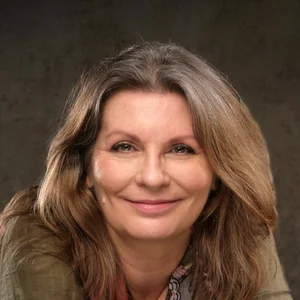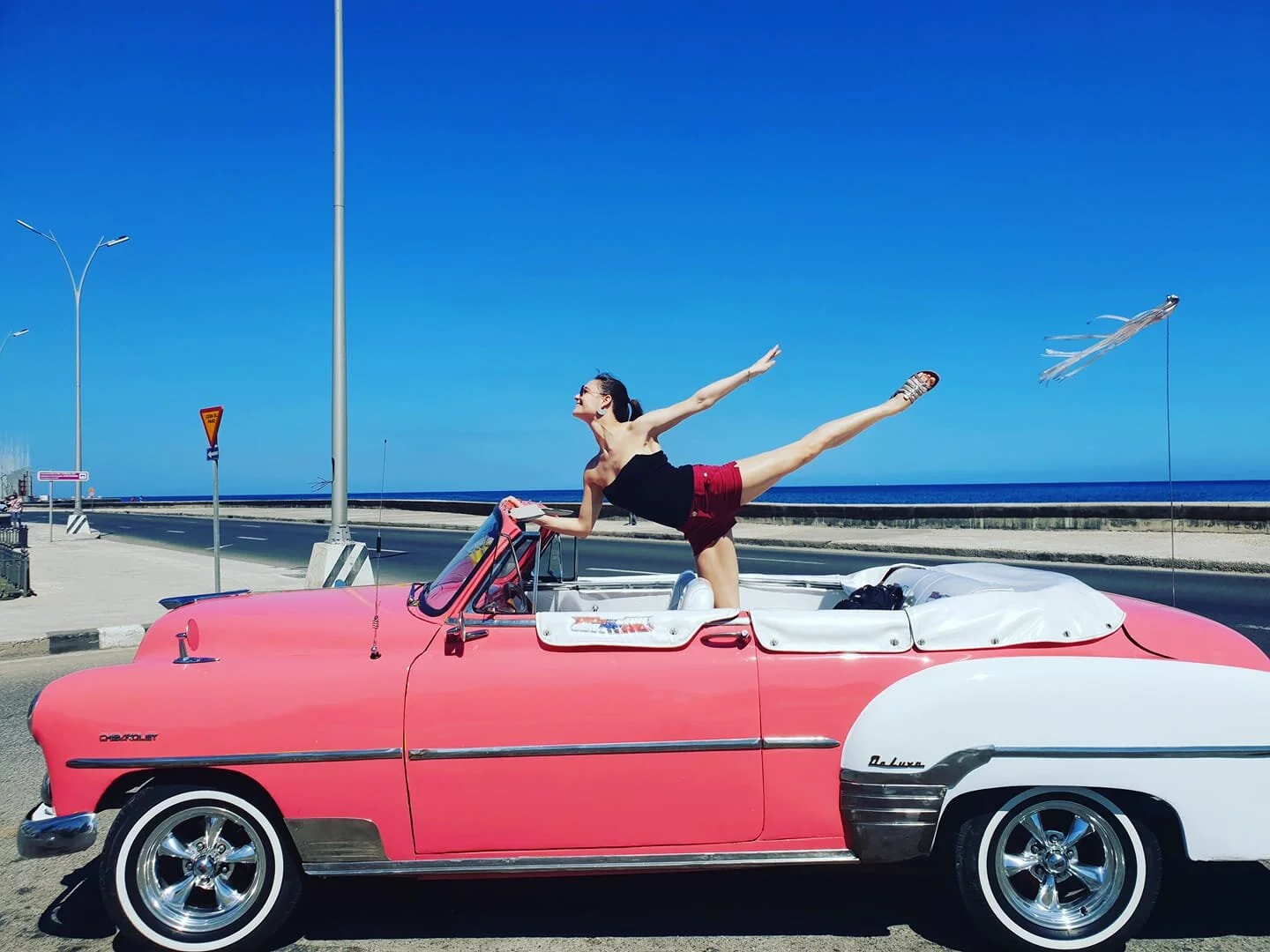
Photo Eve Maury
In short: Dance isn’t here to replace yoga, but it can do many of the same lovely things for you: strength, balance, body awareness, a lighter mood and less tension, with music and joy as the way in. The best form of movement is simply the one you enjoy enough to keep doing. If the mat has never quite called you, or you’d like something new beside it, dance could be yours.
A song you love comes on while you’re cooking. Before you’ve thought about it, your shoulders are moving, your hips join in, and the wooden spoon has become a microphone. For those three minutes you aren’t exercising, you aren’t counting anything, and you feel wonderful. What if movement could feel like that more often?
Dance is one of the most joyful ways there is to move your body. Whether it’s a structured class or pure free expression, there’s something liberating about it, especially in a group, with music you love. And because movement is one of the true pillars of health, finding a way to move that you look forward to matters far more than any particular workout.
You’ve probably heard of Zumba, but it’s only the start. There are countless styles to explore, some with a creative or even spiritual side that nourishes your heart and mind as much as your body.
Why is movement a form of nourishment?
In my coaching philosophy, movement is a form of primary food: the nourishment that comes from how you live, not just from what you eat. You can have the most beautiful plate in front of you and still feel flat if you never move, never laugh and never lose yourself in something you enjoy.
Dance feeds several of those hungers at once. Your body gets to move. Your mind gets a rest from its lists, because it’s hard to worry about tomorrow while you’re trying to remember which foot comes next. And if you dance with others, you get company, too.
So, is dance the new yoga?
I have taught yoga for more than 30 years. The two have a lot in common. Like yoga, dance builds strength, balance and body awareness, lifts your mood and releases tension. It simply gets there through joy and music.
For some people, the quiet of a yoga class is exactly what they need. Others find stillness difficult, and come alive the moment the music starts. Neither is better. The “best” exercise is simply the one you enjoy enough to keep doing, so it’s worth trying a few styles until something clicks. And nothing stops you from having both: a calm practice for some days, music for the others.
Learning steps has another gift. Following a sequence, moving arms and legs in different directions, keeping time: all of that asks your brain to work together with your body. I’ve written more about this in keeping your brain fit through coordination.
Meet Eve Maury
I’m delighted to introduce my niece, Eve Maury, a professional classical dancer and ballet teacher. She took her first dance steps at four and a half, trained at the Royal Ballet School in Antwerp, the Royal Ballet School in London, the Bolshoi Ballet in Boston and the School of American Ballet in New York, with further training at the Paris and Milan opera houses. She won silver at the Biarritz International Competition and reached the quarter-finals of the prestigious Prix de Lausanne. Today she teaches, including a “ballet workout” designed for adults.
You can get a taste of her classes here and follow her here.
What is a ballet workout, and is it for you?
A ballet workout takes the principles of ballet and turns them into a full-body workout open to everyone. No experience, no tutu and no perfect splits required. A few things worth knowing:
You don’t need to be flexible, coordinated or any particular shape to start
That image of effortless, willowy dancers puts a lot of people off before they begin. But a ballet workout begins exactly where you are and builds strength, tone, posture and balance over time, whether you’re 20 or 70.
It works the whole body
Using small, controlled movements and good alignment, a ballet workout engages muscles you didn’t know you had. It gently builds strength and stability through your core, back, legs and arms, mostly using your own body for resistance. If you’d like to add a few exercises at home, have a look at my five exercises for a strong core.
It’s more of a workout than it looks
The focus on control and placement means it quietly becomes more demanding as your technique improves. You might finish your first class wondering whether you did much, and then feel it the next day. Over time, it builds the kind of strength, control and ease of movement that helps to protect you from injury and carries over into everything else you do.
How can you start dancing this week?
You don’t need a studio or a special outfit to begin. A few easy ways in:
One song in the kitchen. Choose a song that makes you smile and move to it from the first note to the last. That’s it. Tomorrow, choose another.
Try a class online first. If walking into a room of strangers feels like a lot, start at home, where nobody is watching.
Taste several styles. Ballet workout, Zumba, salsa, folk dancing, free movement. Give each one two or three tries before you decide.
Take someone with you. A friend, a neighbour, your daughter. You’ll laugh more, and you’re more likely to go back.
Keep the other days gentle. A walk, some stretching, a few slow breaths. You’ll find ideas in gentle ways to move every day.
Notice how you feel afterwards: warmer, lighter, a bit more yourself? That feeling is worth following. Joy isn’t a luxury on top of health, it’s part of it, as I explain in why joy does your brain so much good.
Movement should be both nourishing and enjoyable. Try a few styles until you find the one that makes you want to come back. That’s the one that will do you the most good.
Frequently asked questions
Is dance good exercise?
Yes. Dance builds strength, flexibility, balance and coordination, it gets your heart working and it lifts your mood. And because it is enjoyable, it is one of the easiest forms of movement to keep up.
Do I need to be fit or flexible to start dancing?
Not at all. Like any movement practice, dance starts from where you are today. The point is not to look a certain way. It is to feel stronger, freer and more at home in your body.
Am I too old to start a ballet workout?
No. A ballet workout is designed for adults of every age, whether you are 20 or 70. You work at your own level, the movements are small and controlled, and strength, posture and balance build up over time.
Should I choose dance or yoga?
You do not have to choose. Both build strength, balance and body awareness, and both calm the mind. Yoga does it through stillness and breath, dance through music and joy. Try each and keep the one you look forward to, or enjoy both.
When should I talk to my doctor?
If you have a heart condition, joint or back problems, dizziness or balance trouble, are recovering from an injury or an operation, or have not exercised for a long time, check with your doctor before you start. Tell your teacher too, so that the movements can be adapted for you.
Would you like some help?
Finding the movement that suits you, alongside the food that gives you the energy for it, is one of the things we work on in my group programmes in nutrition and health, such as Six Tuesdays in Montignac. If you’d like to hear when the next group opens, write to me at hello@catherinepolet.coach.
Would you rather work one to one? I also coach online. Book a free 20-minute call, and tell me what you loved doing as a child: it’s often the best clue to the movement you’ll enjoy now.
About Catherine
I’m Catherine Polet, a holistic nutrition health coach, yoga and autogenic training teacher for more than 30 years, author and speaker. I help people find a way of eating and living that suits their own body, online in English, French, Spanish and German, and in person in Southwest France.