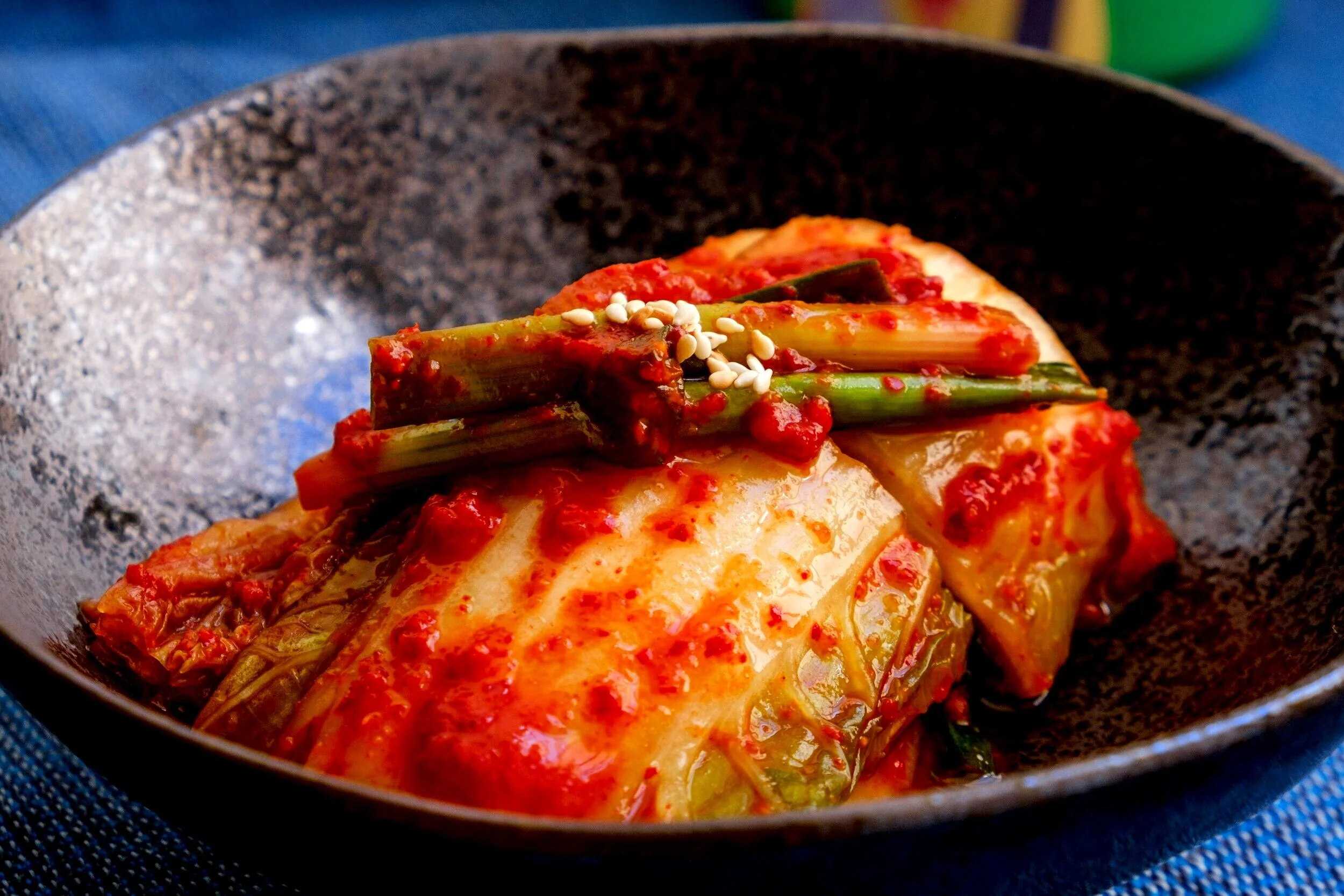
Eating fermented foods such as kimchi have beneficial effects due to the bacteria found in fermented foods boosting the action of your immune system.
Kimchi, the Korean salted and fermented pickle, can be made with any kind of vegetable, though cabbage and daikon radishes are the most common.
Kimchi, a staple in Korean cuisine, is a traditional side dish of salted and fermented vegetables, such as cabbage and Korean radish, made with a widely varying selection of seasonings including gochugaru (chili powder), spring onions, garlic, ginger, and jeotgal (salted seafood), etc. It is also used in a variety of soups.
There are hundreds of varieties of kimchi made with different vegetables as the main ingredients. Traditionally, kimchi was stored in-ground in large earthenware to prevent it from being frozen during the winter months. It was the primary way of storing vegetables throughout the seasons. In the summer the in-ground storage kept the kimchi cool enough to slow down the fermentation process. Nowadays, kimchi is stored in the refrigerator.
Different types of kimchi were traditionally made at different times of the year, based on when various vegetables were in season and also to take advantage of hot and cold seasons before the era of refrigeration.
Kimchi is made of various vegetables and contains a high concentration of dietary fiber, while being low in calories. The vegetables used in kimchi also contribute to intake of vitamin A, thiamine (B1), riboflavin (B2), calcium, and iron.
Dishes usually served with kimchi
Kimchi is known to be a traditional side dish as it is almost always served along with other side dishes in most Korean family households and restaurants. Kimchi can be eaten alone or with white or brown rice, but it is also included in recipes of other traditional dishes, including porridges, soups, and rice cakes.
Kimchi is also the basis for many derivative dishes such as kimchi stew (gimchijjigae), kimchi pancake (gimchibuchimgae), kimchi soup (gimchiguk), and kimchi fried rice (gimchibokkeumbap).
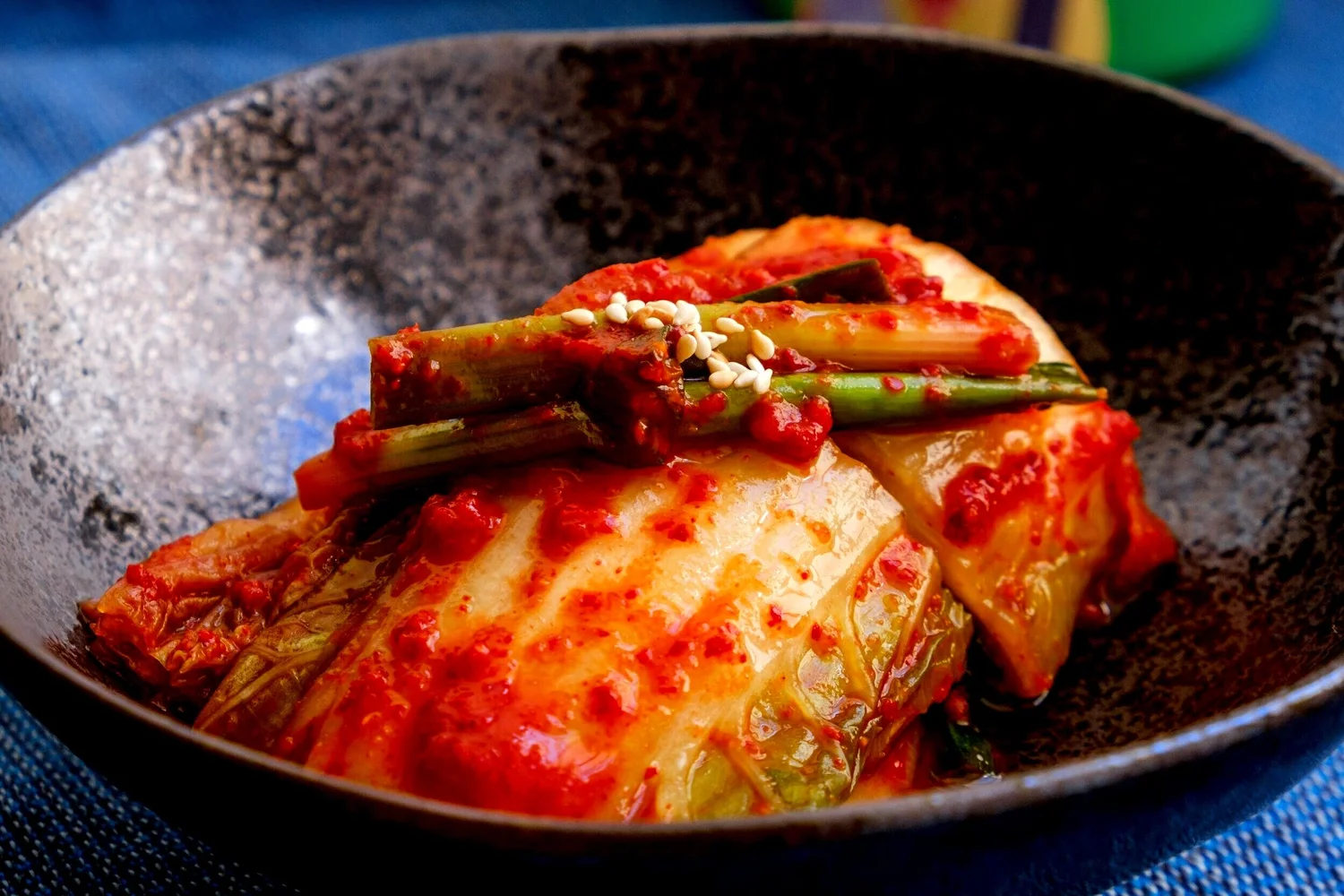
Homemade Kimchi
Ingredients
Instructions
Salt: use salt that is free of iodine and anti-caking agents, which can inhibit fermentation.
Water: Chlorinated water can inhibit fermentation, so use spring, distilled, or filtered water if you can.
Storage: Kimchi can be refrigerated for up to 6 months. Be sure that the vegetables are submerged the whole time. Use clean utensils each time to take kimchi from the jar. The older it gets, the stronger it will become.
Origin: Korea
Flavor: sour, spicy and/or sweet
Nutritional information: fermented food, contains probiotics